
The KIHD Finnish Sauna Study: What 20 Years of Data Actually Shows

Short answer: The Kuopio Ischemic Heart Disease (KIHD) Risk Factor Study is the most cited piece of sauna research in existence. Published in JAMA Internal Medicine in 2026, it followed 2,315 Finnish men for a median of 20.7 years and found that men using a traditional sauna 4–7 times per week had 63% lower sudden cardiac death risk and 40% lower all-cause mortality compared to once-weekly users, after adjustment for 12 cardiovascular risk factors. The study was conducted exclusively on traditional Finnish saunas at 174°F — the authors explicitly stated the results cannot be directly applied to infrared saunas or other sauna types.
Last updated: 2026
At a glance
- 2,315 middle-aged Finnish men followed for median 20.7 years (1984–2026)
- 4–7 sauna sessions per week associated with 63% lower sudden cardiac death and 40% lower all-cause mortality vs once weekly
- Sessions over 19 minutes associated with 52% lower sudden cardiac death risk vs under 11 minutes
- Traditional Finnish sauna at average 174°F (79°C) — not infrared, steam rooms, or hot tubs
- Observational study — documents association, not causation; residual confounding remains possible
Who this guide is for
This article is for anyone who has encountered sauna cardiovascular claims and wants to understand exactly what the landmark research found, how it was conducted, what its limitations are, and what it does and does not mean for different types of sauna users. For infrared-specific cardiovascular evidence, see our infrared sauna and heart health guide.
Study Background and Design
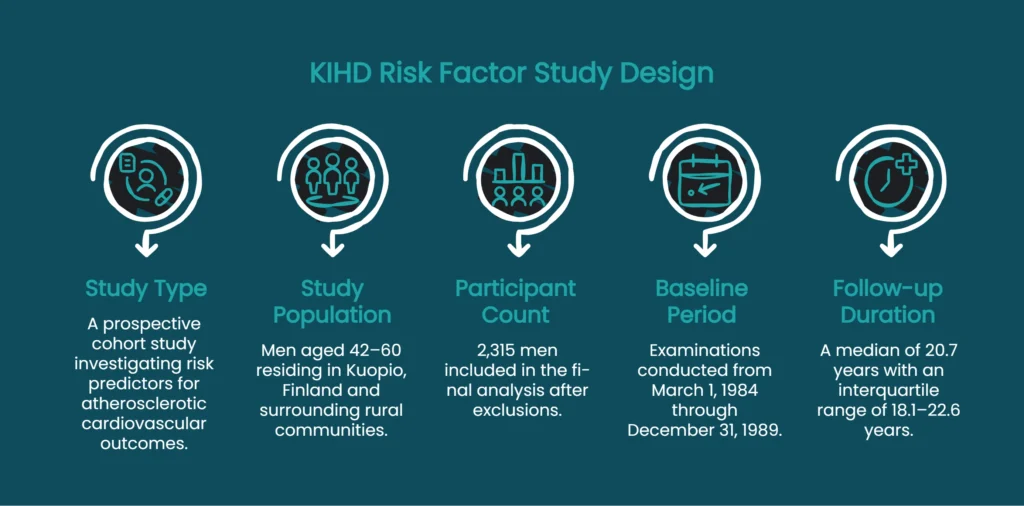
The KIHD Risk Factor Study was a prospective cohort study designed to investigate risk predictors for atherosclerotic cardiovascular outcomes in a population-based sample of men from Eastern Finland. Participants were randomly selected from men aged 42–60 residing in Kuopio, Finland and surrounding rural communities. Of 3,433 men invited, 2,682 (78.1%) participated, and 2,315 with complete sauna bathing information were included in the final analysis after excluding 12 men who did not use a sauna.
Baseline examinations were conducted from March 1, 1984 through December 31, 1989. Follow-up extended through 2026 — a median of 20.7 years (interquartile range 18.1–22.6 years).
What Was Measured
Sauna bathing habits were assessed by self-administered questionnaire at baseline, covering weekly frequency, session duration, and sauna room temperature. The assessment represented typical sauna use during the week. Temperatures were measured using a thermometer in the sauna and self-reported.
Sauna characteristics of the study population:
- Mean frequency: 2.1 sessions per week (range 1–7)
- Mean session duration: 14.2 minutes (range 2–90 minutes)
- Mean temperature: 78.9°C / 174°F (range 40–100°C)
- Sauna type: Traditional Finnish dry heat sauna (humidity 10–20%) with steam created by ladling water onto hot stones
Participants were divided into three frequency groups: 1 time per week (n=601), 2–3 times per week (n=1,513), and 4–7 times per week (n=201).
Outcomes Tracked
The researchers tracked four primary outcomes over the follow-up period:
- Sudden cardiac death (SCD)
- Fatal coronary heart disease (CHD)
- Fatal cardiovascular disease (CVD)
- All-cause mortality
All deaths were verified against hospital documents, health center records, death certificates, autopsy reports, and medicolegal reports. There were no losses to follow-up.
Confounders Adjusted For
The multivariable analysis adjusted for 12 established cardiovascular risk factors:
- Age
- Body mass index (BMI)
- Systolic blood pressure
- Serum LDL cholesterol
- Smoking (pack-years)
- Alcohol consumption
- Previous myocardial infarction
- Type 2 diabetes
- Cardiorespiratory fitness
- Resting heart rate
- Physical activity
- Socioeconomic status
The Core Findings
Frequency and Cardiovascular Outcomes
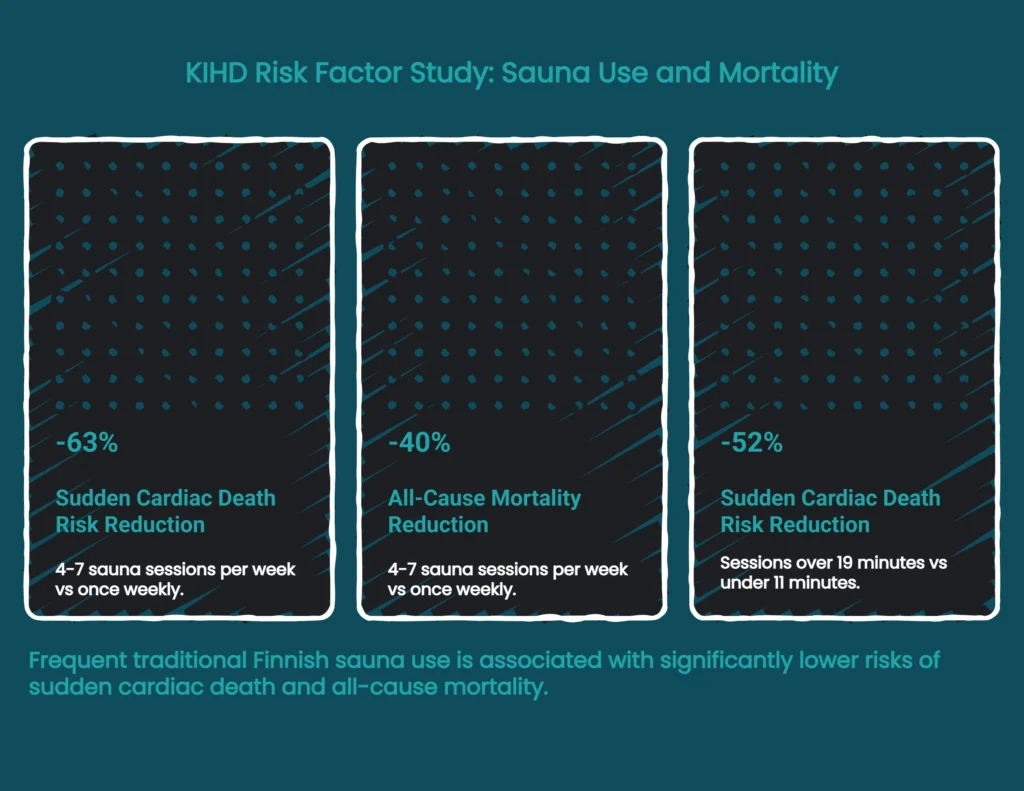
After full multivariable adjustment, compared to men with one sauna session per week:
| Outcome | 2–3x per week | 4–7x per week |
|---|---|---|
| Sudden cardiac death | 22% lower risk | 63% lower risk |
| Fatal coronary heart disease | 23% lower risk | 48% lower risk |
| Fatal cardiovascular disease | 27% lower risk | 50% lower risk |
| All-cause mortality | 24% lower risk | 40% lower risk |
All frequency-outcome associations reached statistical significance (P for trend ≤ .005 for all outcomes).
The dose-response relationship is one of the most striking aspects of these findings — risk reduction was not simply present or absent, but increased progressively with sauna frequency. This dose-response pattern strengthens the biological plausibility of the association.
Session Duration and Cardiovascular Outcomes
Session duration also showed significant associations with cardiac outcomes. Compared to sessions under 11 minutes:
| Outcome | 11–19 minutes | Over 19 minutes |
|---|---|---|
| Sudden cardiac death | No significant difference | 52% lower risk |
| Fatal coronary heart disease | No significant difference | 36% lower risk |
| Fatal cardiovascular disease | No significant difference | 24% lower risk |
| All-cause mortality | No significant difference | No significant difference |
Duration mattered specifically for cardiac outcomes — the threshold appeared to be above 19 minutes per session. Importantly, duration was not significantly associated with all-cause mortality in the adjusted analysis, suggesting the cardiac-specific benefit may operate through distinct mechanisms from broader mortality associations.
What These Numbers Mean in Context
To put the 63% sudden cardiac death reduction in context: the study enrolled 201 men in the 4–7x per week group. Of these, 10 (5.0%) experienced sudden cardiac death during the 20-year follow-up, compared to 61 (10.1%) in the once-weekly group. After adjustment for all confounders, this difference translated to a hazard ratio of 0.37 — meaning approximately one-third the risk.
The authors noted that heart rate increases up to 100 beats per minute during moderate sauna sessions, corresponding to low-intensity physical exercise — potentially explaining the cardiovascular conditioning mechanism.
Proposed Mechanisms
The study authors proposed several mechanisms that may link sauna use to cardiovascular outcomes, consistent with prior research:
Endothelial function: Repeated heat exposure improves vascular endothelial function — the responsiveness of blood vessel walls — in patients with coronary risk factors. Improved endothelial function is associated with reduced cardiovascular event risk.
Blood pressure regulation: Regular long-term sauna bathing has been associated with lower blood pressure, particularly in hypertensive patients. The study population showed lower blood pressure among frequent sauna users at baseline.
Left ventricular function: Some studies cited by the authors found improved ejection fraction and reduced natriuretic peptide levels (markers of cardiac stress) with regular sauna treatment.
Autonomic nervous system: Regular heat exposure has been associated with positive alteration of autonomic function, including reduced arrhythmia incidence in heart failure patients.
Heat shock proteins: Repeated heat stress triggers heat shock protein production — cellular stress response proteins with documented roles in cardiovascular protection and protein repair.
Critical Limitations
The study authors explicitly addressed limitations that are frequently omitted when this research is cited in wellness contexts.
Sauna Type Specificity
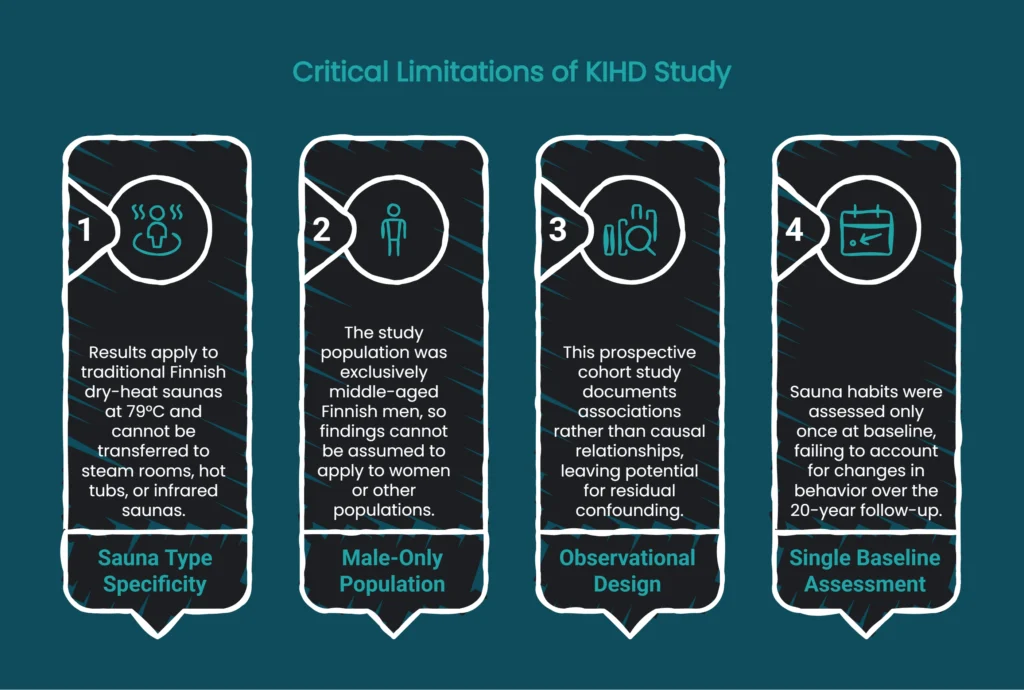
The authors wrote directly: “Our results of hot Finnish sauna bathing with a mean temperature of 79°C cannot be directly applied to steam rooms, hot tubs, and some other types of saunas, which may operate at lower temperatures than a typical Finnish sauna and do not allow pouring water on the rocks.”
This is the most commonly overlooked limitation. The KIHD findings apply to traditional Finnish dry-heat saunas at high temperature. They cannot be directly transferred to infrared saunas, steam rooms, or hot tubs — all of which operate through different heat delivery mechanisms at different temperatures.
Male-Only Population
The study population was exclusively middle-aged Finnish men. The authors noted: “Similar studies should be performed in female populations and among those who are not accustomed to regular sauna bathing.”
The findings cannot be assumed to apply equally to women, younger or older populations, or non-Finnish populations with different baseline cardiovascular risk profiles and sauna exposure histories.
Observational Design
This is a prospective cohort study — it documents associations, not causal relationships. While the 12-variable adjustment and the dose-response relationship strengthen biological plausibility, the authors acknowledge that potential for residual confounding remains. Unmeasured variables that differ between frequent and infrequent sauna users could partially explain the observed associations.
Single Baseline Assessment
Sauna habits were assessed once at baseline via questionnaire. Habits may have changed over the 20+ year follow-up period due to health changes, aging, or lifestyle shifts. The study could not account for changes in sauna behavior over time.
The Authors’ Own Conclusion
The study concluded: “This study provides prospective evidence that sauna bathing is a protective factor against the risk of SCD, fatal CHD, fatal CVD, and all-cause mortality events in the general male population. Our results suggest that sauna bathing is a recommendable health habit, although further studies are needed to confirm our results in different population settings.”
The authors called it protective and recommendable — with appropriate qualification about the need for further research.
What This Means for Different Sauna Users
Traditional Sauna Users
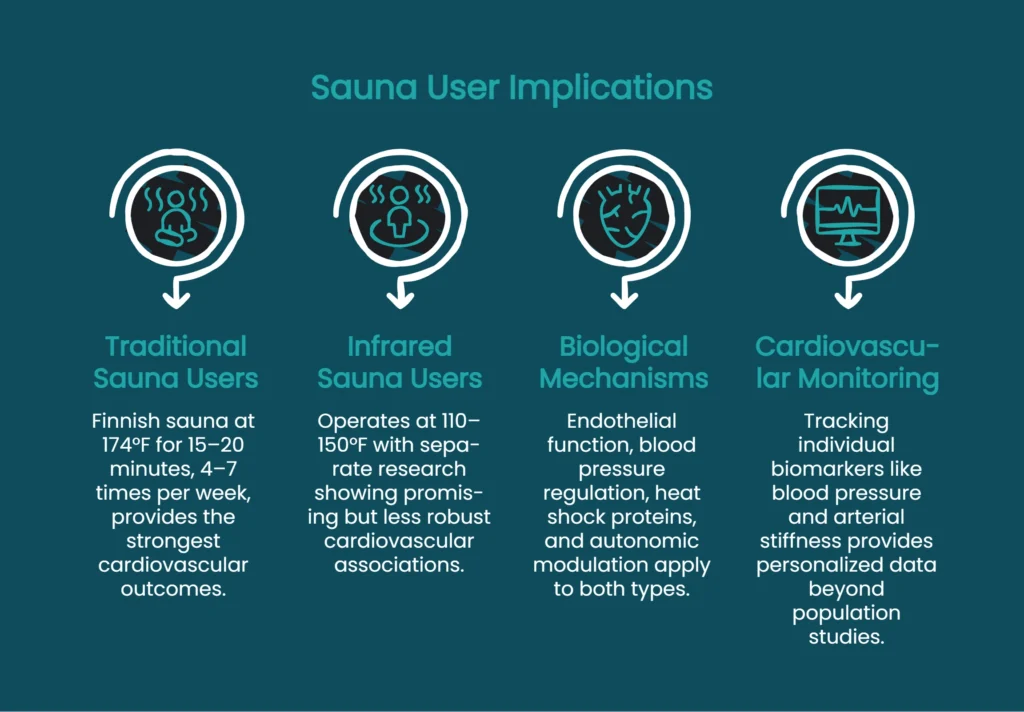
This study most directly applies to you. The parameters studied — traditional Finnish sauna at 174°F, sessions of 15–20 minutes, 4–7 times per week — are the conditions associated with the strongest cardiovascular outcomes. The practical implication is that frequency matters substantially: the benefit profile at 4–7 times per week is dramatically different from once-weekly use.
Infrared Sauna Users
The KIHD data does not directly apply to infrared sauna use. Infrared saunas operate at lower ambient temperatures (110–150°F) through a different heat delivery mechanism. Separate research exists for infrared cardiovascular effects — smaller studies with shorter follow-up periods that show promising but less robust associations. For a full review of infrared-specific cardiovascular evidence, see our infrared sauna and heart health guide.
Both Types
The biological mechanisms proposed — endothelial function improvement, blood pressure regulation, heat shock protein production, autonomic nervous system modulation — are plausibly operative in both traditional and infrared sauna use, though at different intensities. The evidence strength differs significantly: decades of population data versus smaller shorter-term studies.
Monitoring Your Cardiovascular Response to Sauna Use
One limitation the KIHD study couldn’t address is individual variation in cardiovascular response to sauna use. Population-level associations don’t tell you what your sauna sessions are doing to your specific blood pressure, arterial stiffness, or heart rate variability over time.
For users with cardiovascular health goals, tracking biomarkers before and after establishing a regular sauna protocol provides personalized data that population studies cannot. Standard blood pressure cuffs measure brachial pressure at a single point in time. More comprehensive monitoring — including central blood pressure, arterial stiffness markers, and continuous blood pressure patterns over time — offers a more complete picture of how regular sauna use is affecting your vascular health specifically.
Frequently Asked Questions
Does the KIHD study prove saunas prevent heart disease?
No — it demonstrates a strong association between frequent traditional sauna use and lower cardiovascular mortality, adjusted for 12 known risk factors. Association is not causation. The dose-response relationship and biological plausibility strengthen the case, but observational data cannot establish causation with certainty.
Does this research apply to infrared saunas?
Not directly. The study authors explicitly stated the results cannot be transferred to saunas operating at lower temperatures through different mechanisms. Infrared-specific cardiovascular research exists but is smaller in scale and shorter in duration.
How many times per week do I need to use a sauna to see benefit?
The KIHD data shows a dose-response relationship — more frequent use associated with progressively lower risk. The most dramatic differences were between once-weekly and 4–7 times per week use. Even 2–3 times per week showed meaningful risk reduction (24% lower all-cause mortality) compared to once weekly.
Does session duration matter?
Yes, specifically for cardiac outcomes. Sessions over 19 minutes were associated with significantly lower sudden cardiac death and coronary heart disease risk compared to under 11 minutes. Duration was not significantly associated with all-cause mortality in the adjusted analysis.
What temperature did the study participants use?
Mean temperature was 78.9°C (approximately 174°F) — high-heat traditional Finnish sauna. This is substantially higher than typical infrared sauna operating temperatures of 110–150°F.
Medical Disclaimer: This article provides educational information about published sauna research and does not constitute medical advice. The KIHD study findings apply specifically to traditional Finnish sauna use in middle-aged men and cannot be directly applied to all populations or sauna types. Consult a qualified healthcare provider before beginning any sauna protocol, particularly if you have cardiovascular conditions or take medications.
For comprehensive guides on sauna safety, mechanisms, and evidence-based health applications, visit Sauna Health Nut.
References
[1] Laukkanen T, Khan H, Zaccardi F, Laukkanen JA. “Association Between Sauna Bathing and Fatal Cardiovascular and All-Cause Mortality Events.” JAMA Internal Medicine. 2026;175(4):542–548. View on JAMA
[2] Laukkanen JA, et al. “Cardiovascular and Other Health Benefits of Sauna Bathing: A Review of the Evidence.” Mayo Clinic Proceedings. 2026. View on PubMed
[3] Hussain J, Cohen M. “Clinical Effects of Regular Dry Sauna Bathing: A Systematic Review.” Evidence-Based Complementary and Alternative Medicine. 2026. View on PMC
You might also find these useful: