
Does Sauna Use Actually Lower Blood Pressure?

Short answer: Both traditional and infrared saunas produce acute blood pressure reductions during and immediately after sessions through heat-induced vasodilation. Evidence from Finnish population studies and smaller controlled trials suggests that regular sauna use is associated with lower resting blood pressure over time, particularly in hypertensive individuals. However, people with cardiovascular conditions require medical clearance before sauna use, and blood pressure responses vary significantly between individuals — making personal monitoring more valuable than relying on population averages alone.
Last updated: 2026
At a glance
- Heat-induced vasodilation during sauna sessions typically reduces systolic blood pressure acutely
- Finnish population data shows frequent traditional sauna users have lower resting blood pressure than infrequent users
- Far-infrared sauna studies show modest blood pressure reductions in hypertensive individuals over 4–8 week protocols
- Blood pressure typically drops immediately post-session then returns to baseline — long-term reduction requires consistent regular use
- Uncontrolled hypertension is a contraindication for sauna use, and medical clearance required before starting
Who this guide is for
This article is for adults with blood pressure concerns or cardiovascular health goals evaluating sauna use as a complementary lifestyle approach. It covers the mechanisms linking heat exposure to blood pressure change, the available evidence for both traditional and infrared saunas, safety considerations for hypertensive individuals, and how to monitor blood pressure in relation to sauna use. This is not medical advice, so consult your healthcare provider before using saunas if you have hypertension or cardiovascular disease.
How Sauna Heat Affects Blood Pressure
Blood pressure is a dynamic measurement and it changes continuously throughout the day in response to physical activity, stress, sleep, meals, and temperature. Understanding how sauna heat specifically influences these measurements helps set realistic expectations for what regular sauna use can and cannot do.
The Acute Response: What Happens During a Session
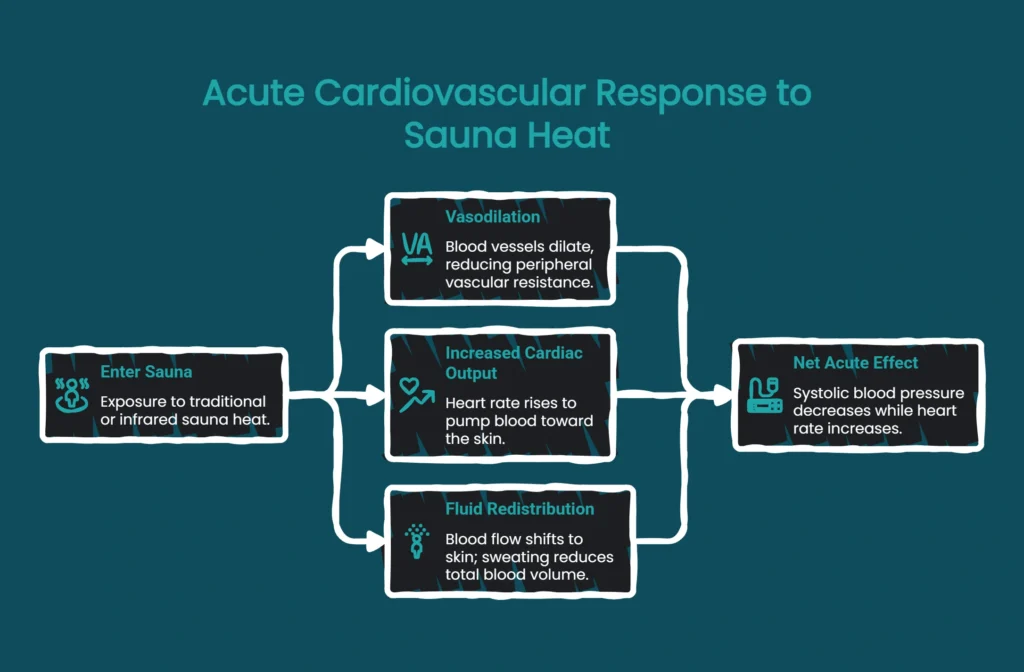
When you enter a sauna, such as traditional or infrared, your cardiovascular system responds to the thermal challenge through several interconnected mechanisms:
Vasodilation: Heat causes blood vessels to dilate throughout the body, reducing peripheral vascular resistance. When resistance decreases, blood flows more easily, which typically reduces systolic blood pressure during the session. This is the primary mechanism behind the acute blood pressure reduction observed in sauna research.
Increased cardiac output: To maintain circulation and pump blood toward the skin for heat dissipation, heart rate increases and cardiac output rises. This creates a cardiovascular stimulus similar to moderate physical activity.
Fluid redistribution: Blood flow is redirected toward the skin and away from internal organs. Combined with fluid loss through sweating, this changes the total volume of blood in circulation, which also influences blood pressure readings.
The net effect during a typical sauna session: systolic blood pressure often decreases moderately while heart rate increases. The body is working harder while blood vessel walls are more relaxed and similar in some respects to the hemodynamic profile during moderate aerobic exercise.
The Post-Session Response
Immediately after exiting a sauna, blood pressure can drop further as the body continues to dilate blood vessels and redistribute heat. This post-session hypotensive effect is why some people feel lightheaded when standing up quickly after a sauna, particularly individuals who are dehydrated or taking blood pressure medications.
Over the following 30–60 minutes, blood pressure typically returns to baseline as the body thermoregulates back to normal core temperature.
What the Research Shows
Traditional Sauna — Long-Term Evidence
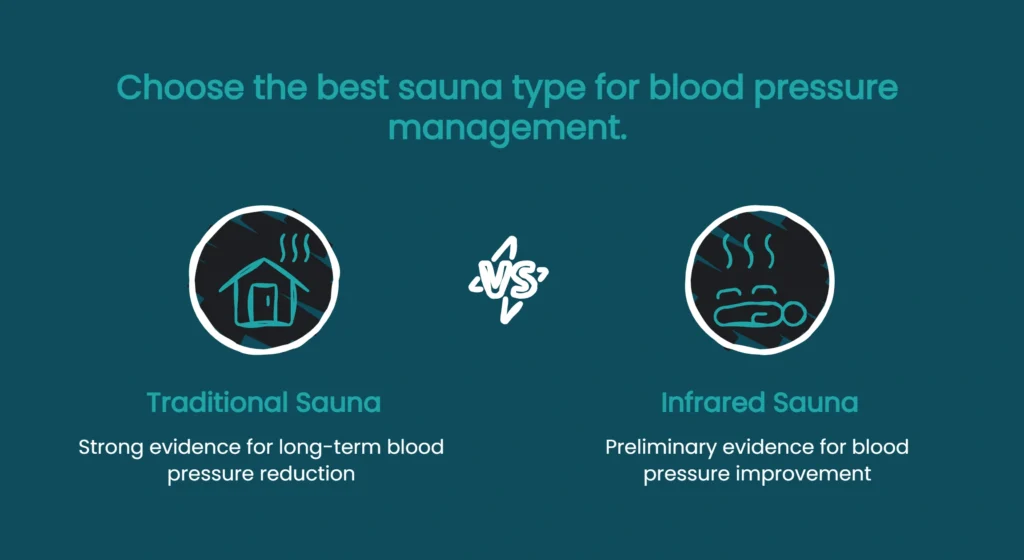
The strongest blood pressure evidence comes from Finnish population research and small controlled trials on traditional high-heat saunas.
The KIHD study population of 2,315 Finnish men followed for 20+ years showed lower baseline blood pressure among frequent sauna users compared to infrequent users at enrollment. [1] While this is correlational, the consistency of the finding across a large population over decades is notable.
Controlled studies have found more specific effects. Regular sauna bathing twice per week over several months has been associated with significant reductions in systolic blood pressure in hypertensive patients, with one study showing mean reductions of approximately 8 mmHg systolic with consistent use. [2] Regular long-term sauna bathing has also been associated with improvements in left ventricular function and lower blood pressure in hypertensive patients in controlled settings. [1]
Evidence rating: Moderate — consistent direction across population data and small trials; no large randomized controlled trials specifically on blood pressure as primary outcome.
Infrared Sauna — Targeted Evidence
Far-infrared sauna research on blood pressure is more limited but directionally consistent. A review of far-infrared sauna studies identified cardiovascular risk factor improvements including blood pressure changes across multiple small trials, though the authors noted the evidence base required larger studies to confirm findings. [3]
The mechanism for infrared blood pressure effects mirrors the traditional sauna pathway — vasodilation — but occurs at lower ambient temperatures (110–150°F vs 170–195°F). The lower thermal intensity means the acute vasodilatory response may be less pronounced per session, potentially requiring longer or more frequent sessions to achieve comparable long-term effects.
Evidence rating: Preliminary, consistent direction but smaller, shorter-term studies than traditional sauna evidence.
Blood Pressure Patterns vs Single Readings
One critical limitation of most sauna blood pressure research is reliance on single-point measurements taken before and after sessions or at clinical visits. Blood pressure is inherently variable, a single reading captures one moment, not the full pattern of how blood pressure behaves across a day, during sleep, and in different contexts.
A single post-sauna blood pressure reading that looks favorable may not reflect what is happening to blood pressure overnight, during stress, or across a week of variable activity. Understanding blood pressure patterns over time rather than snapshots, provides more meaningful data about how regular sauna use is affecting your cardiovascular system.
This is where continuous or frequent blood pressure monitoring tools offer an advantage over clinic measurements alone. Devices that capture blood pressure patterns across daily life can reveal whether regular sauna sessions are producing sustained reductions or only temporary acute effects.
Who Should Be Most Careful
Uncontrolled Hypertension
Sauna use is contraindicated for individuals with uncontrolled high blood pressure. The cardiovascular load of a sauna session and elevated heart rate, vasodilation, fluid loss can produce unpredictable blood pressure responses in individuals whose blood pressure is already dysregulated. Medical clearance and appropriate blood pressure control must come first.
Individuals on Antihypertensive Medications
Several blood pressure medication classes interact with sauna heat in ways that require awareness:
Diuretics: Increase fluid loss, compounded by sauna sweating, creating significant dehydration and electrolyte imbalance risk. Blood pressure may drop excessively.
Beta blockers: Blunt the heart rate response to heat. Your heart rate may not rise as expected during a sauna session, but cardiovascular load is still present. The usual heart rate signal of overexertion is dampened.
Vasodilators and ACE inhibitors: Already lower peripheral resistance and combined with sauna-induced vasodilation, blood pressure may drop to symptomatic levels (dizziness, fainting) particularly when standing after a session.
Always consult your prescribing physician before beginning sauna use if you take any antihypertensive medication.
Individuals with Low Blood Pressure (Hypotension)
Sauna-induced vasodilation can cause blood pressure to drop further in individuals already running low. Dizziness and fainting risk increases significantly. If you have a history of low blood pressure or orthostatic hypotension (dizziness when standing), approach sauna use with caution and rise slowly after sessions.
Safe Sauna Use for Blood Pressure Management
For individuals with medical clearance who are using sauna as part of a blood pressure management approach:
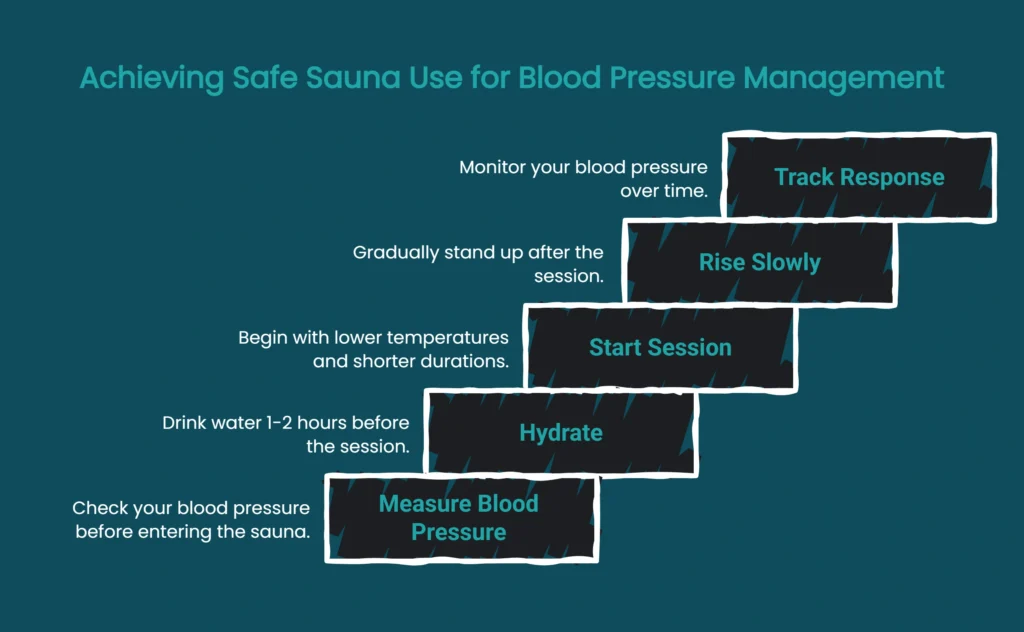
Session parameters: Temperature: Start at lower ranges (110–120°F infrared; 160–170°F traditional). Duration: Begin with 10–15 minutes per session. Frequency: 2–3 times per week initially, increasing to 4–5 times with consistent tolerance.
Before each session: Measure blood pressure before entering. If systolic is above 160 mmHg, skip the session and consult your physician.
Hydration is non-negotiable: Drink 16–24 oz of water 1–2 hours before each session. Dehydration significantly increases blood pressure instability risk during and after sauna use.
Post-session protocol: Rise slowly from the bench. Sit at the edge for 30–60 seconds before standing. Have water available immediately after exiting. Avoid standing in a hot shower directly after a sauna session, the combined vasodilatory effect can cause fainting.
Tracking your response: For individuals with hypertension or cardiovascular goals, measuring blood pressure before and after sessions consistently over 4–8 weeks provides the most meaningful personal data about how sauna use is affecting your specific blood pressure patterns.
Infrared vs Traditional Sauna for Blood Pressure
| Factor | Traditional Sauna | Infrared Sauna |
|---|---|---|
| Acute vasodilation | Strong — high ambient heat | Moderate — lower ambient temp |
| Post-session BP drop | More pronounced | Less pronounced |
| Long-term BP evidence | Stronger (Finnish population data) | Preliminary (smaller trials) |
| Cardiovascular load per session | Higher | Lower |
| Suitability for heat-sensitive individuals | Lower | Higher |
| Session duration for effect | 10–20 minutes | 20–30 minutes |
Frequently Asked Questions
Can sauna use lower blood pressure permanently?
Regular sauna use is associated with lower resting blood pressure over time in population studies, but “permanent” is not the right framing. Like exercise, the benefit likely requires consistency, blood pressure advantages appear to diminish if regular sauna use stops. It is a lifestyle tool, not a one-time fix.
How much can sauna use lower blood pressure?
Small controlled studies have found reductions of approximately 5–8 mmHg systolic with consistent regular use over several weeks to months. This is clinically meaningful but modest, comparable to the effect of moderate aerobic exercise. It does not substitute for prescribed antihypertensive medication in individuals who require medication.
Can I use a sauna if I have high blood pressure?
Not without medical clearance. Controlled hypertension with physician supervision is a different situation from uncontrolled hypertension. Discuss sauna use specifically with your cardiologist or primary care physician, the answer depends on your specific blood pressure levels, medication regimen, and overall cardiovascular risk profile.
Should I measure my blood pressure before every sauna session?
For individuals with hypertension or on blood pressure medications, yes, particularly when establishing a new sauna routine. A pre-session reading above 160 mmHg systolic is a signal to skip that session. For healthy individuals without cardiovascular conditions, routine pre-session measurement is not necessary but can be informative.
Is infrared sauna safer than traditional sauna for blood pressure?
The lower ambient temperature of infrared saunas makes them more accessible for heat-sensitive individuals and produces less intense acute cardiovascular responses per session. However, “safer” depends entirely on individual health status — both types require medical clearance for individuals with hypertension or cardiovascular disease.
Medical Disclaimer: This article provides educational information about sauna use and blood pressure and does not constitute medical advice. Hypertension and cardiovascular conditions require individualized medical management. Do not substitute sauna use for prescribed antihypertensive medications or begin sauna use with uncontrolled blood pressure without explicit medical clearance.
For comprehensive guides on sauna safety, mechanisms, and evidence-based health applications, visit Sauna Health Nut.
References
[1] Laukkanen T, et al. “Association Between Sauna Bathing and Fatal Cardiovascular and All-Cause Mortality Events.” JAMA Internal Medicine. 2026;175(4):542–548. View on JAMA
[2] Laukkanen JA, et al. “Cardiovascular and Other Health Benefits of Sauna Bathing: A Review of the Evidence.” Mayo Clinic Proceedings. 2026. View on PubMed
[3] Beever R. “Far-infrared saunas for treatment of cardiovascular risk factors: summary of published evidence.” Canadian Family Physician. 2009. View on PMC
You might also find these useful: