
Sauna Health Nut
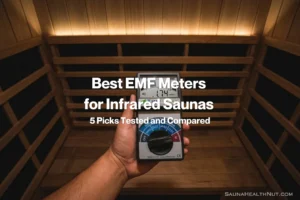
If you’ve read a “low EMF” claim on your infrared sauna’s product page, you’re not alone in wondering whether it’s true. Manufacturer testing methods vary a lot. The only way…

Short answer: Start shorter and cooler than you think you need to. A first session of 10-15 minutes at a moderate temperature (around 130-140°F for infrared, or the lower bench…
Short answer: The most common and best-supported contrast therapy protocol is sauna first, then cold plunge, repeated for two to three rounds, ending on cold. Spend 10-20 minutes in the…
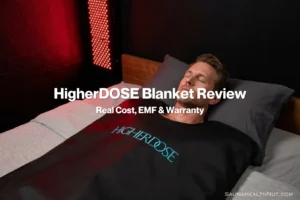
If you want infrared heat therapy but can’t fit a cabin sauna in your apartment, the HigherDOSE Infrared Sauna Blanket is probably already on your shortlist. At $699 and up,…
Short answer: There isn’t a single validated answer here, since no controlled study has directly compared these three sequencing approaches against each other. The mechanism-based case for doing red light…
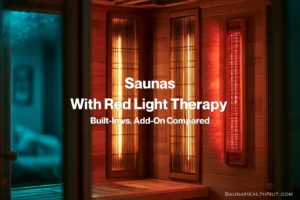
Short answer: A handful of sauna brands now build red light therapy directly into the cabin rather than selling it as a separate add-on, most notably Jacuzzi’s JS-series (a standard…

Shopping for an infrared sauna gets confusing fast. Almost every brand claims “low EMF,” “premium wood,” and a “lifetime warranty.” But those words don’t always mean the same thing from…

If you’re shopping for an infrared sauna on a budget, you’ve probably already run into JNH Lifestyles. The brand shows up everywhere from Amazon to Walmart. It’s usually priced hundreds…
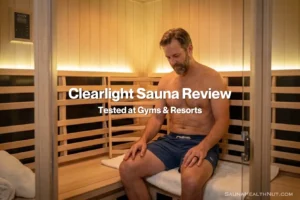
A Clearlight quote can land anywhere from around $3,400 for an entry Premier up past $10,000 for a larger Sanctuary with add-ons, and the company doesn’t post a fixed price…
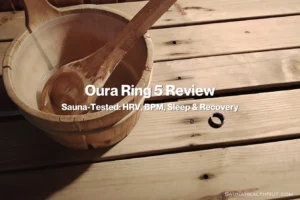
If you like to sauna and want real numbers on what the heat is doing to your heart rate, sleep, and recovery, you’ve probably looked at the Oura Ring 5.…