
Does Sauna Use Improve Arterial Stiffness? What the Evidence Shows

Short answer: Arterial stiffness, the loss of elasticity in artery walls, is a stronger independent predictor of cardiovascular events than brachial blood pressure alone, yet it goes unmeasured by standard blood pressure cuffs. Regular sauna use, particularly traditional Finnish sauna and far-infrared sauna, has been associated with improvements in arterial stiffness markers including augmentation index (AIx) and pulse wave velocity (PWV) in small studies. The mechanism is heat-induced endothelial function improvement and vasodilation, the same pathways behind sauna’s blood pressure effects.
Last updated: 2026
At a glance
- Arterial stiffness is independent of blood pressure: arteries can be stiff even when brachial blood pressure appears normal
- Standard blood pressure cuffs measure only brachial pressure and do not detect arterial stiffness
- Augmentation index (AIx) and pulse wave velocity (PWV) are the primary clinical markers of arterial stiffness
- Regular sauna use has been associated with reduced AIx and improved endothelial function in small controlled studies
- Central blood pressure, what your heart actually exerts, is a more accurate cardiovascular risk predictor than brachial blood pressure and is influenced by arterial stiffness
- Subendocardial viability ratio (SEVR), a newer marker derived from the same pulse wave data as AIx, reflects how well coronary perfusion is keeping up with cardiac workload
Who this guide is for
This article is for adults interested in cardiovascular health optimization who want to understand arterial stiffness, why it matters beyond blood pressure, and what sauna research shows about its effects on vascular stiffness markers. It covers the physiology, the relevant research, and how to monitor arterial stiffness at home. This is not medical advice, consult your healthcare provider for cardiovascular risk assessment.
What Is Arterial Stiffness and Why Does It Matter?
Most people think of cardiovascular health primarily in terms of blood pressure. But blood pressure measured at the upper arm, brachial blood pressure, tells only part of the vascular story. Arterial stiffness is a separate but equally important dimension of cardiovascular health that brachial blood pressure measurements cannot detect.
The Physiology of Arterial Stiffness
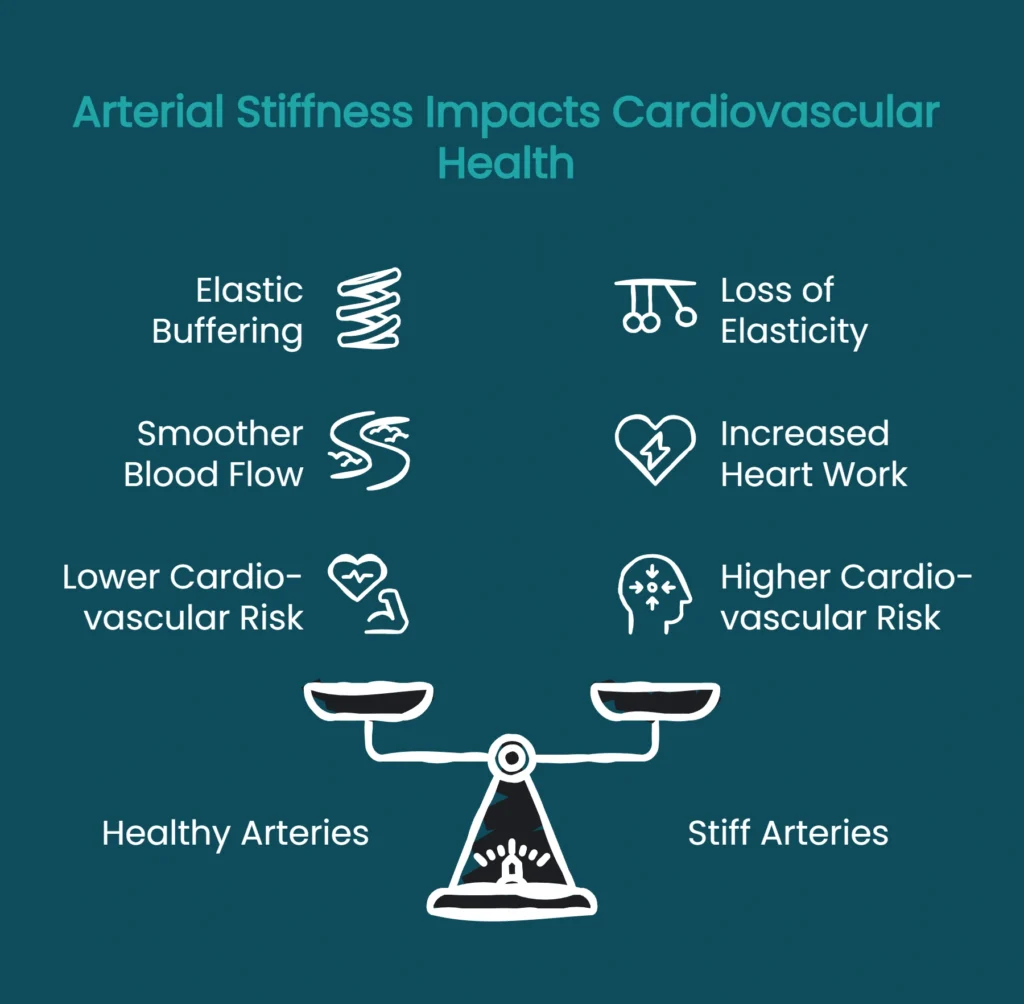
Healthy, young arteries are elastic: they expand when the heart pumps blood and recoil between beats, acting as a pressure buffer. This elastic buffering capacity is what researchers call arterial compliance: the artery’s ability to expand and recoil in response to each heartbeat. This elasticity smooths out the pulsatile nature of cardiac output into more continuous blood flow to organs and tissues.
As arteries stiffen with age, cardiovascular disease, hypertension, diabetes, or chronic inflammation, they lose this elastic buffering capacity. The heart must work harder against stiffer walls, peak systolic pressure increases, and the protective cushioning effect diminishes. This creates greater stress on the heart itself and on the organs receiving blood, particularly the brain, kidneys, and coronary arteries.
Why Arterial Stiffness Is Clinically Important
Multiple large studies have established arterial stiffness as an independent predictor of cardiovascular events, independent of, and additive to, brachial blood pressure. [1] Two people with identical brachial blood pressure readings can have substantially different cardiovascular risk profiles if their arterial stiffness differs.
This is particularly relevant because arterial stiffness can be elevated even when brachial blood pressure appears normal, a phenomenon that makes it an important risk marker that standard blood pressure screening misses entirely.
The Standard Measurement Problem
The technology to measure arterial stiffness in clinical settings (applanation tonometry, pulse wave analysis) has existed for decades and is used in hospital and research settings. Until recently, it was not available outside clinical environments. Standard blood pressure cuffs measure only the pressure at one point in the brachial artery. They provide no information about arterial wall elasticity, pulse wave characteristics, or the pressure your heart is actually generating centrally.
Key Arterial Stiffness Markers
Pulse Wave Velocity (PWV)
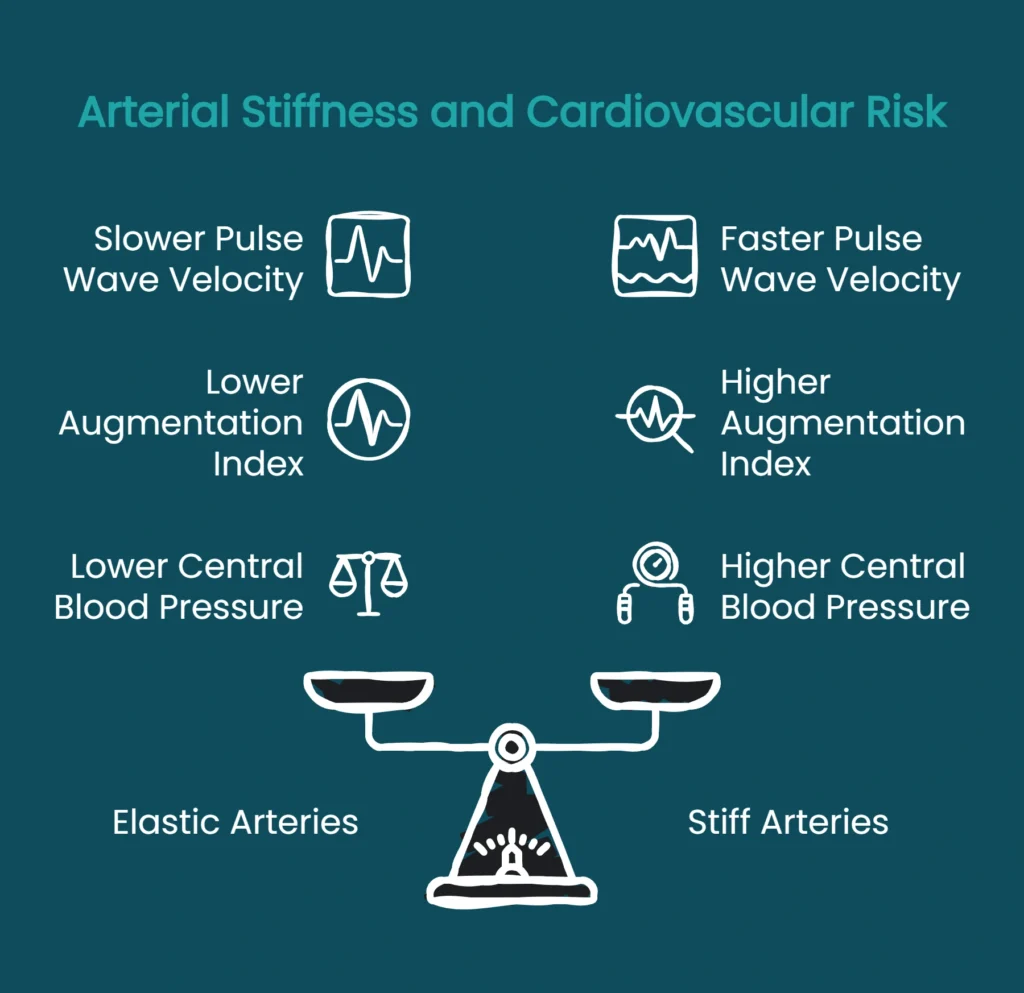
PWV measures how fast a pressure wave travels through the arterial system. In elastic arteries, the wave travels more slowly: the artery walls absorb and dampen the wave. In stiff arteries, the wave travels faster. PWV is measured in meters per second and is considered the gold standard clinical measure of arterial stiffness. Higher PWV = stiffer arteries = greater cardiovascular risk.
Augmentation Index (AIx)
AIx measures the additional load placed on the heart due to arterial stiffness, specifically the percentage of central pulse pressure contributed by wave reflection. When arteries are elastic, reflected pressure waves return to the heart during diastole (between beats), when the heart is relaxed. When arteries stiffen, reflected waves return during systole (when the heart is contracting), adding to the workload. AIx quantifies this effect as a percentage. Higher AIx = greater arterial stiffness-related cardiac workload.
Subendocardial Viability Ratio (SEVR)
SEVR estimates how well the heart’s own blood supply is being maintained relative to its workload. It is calculated from the ratio of diastolic pressure-time, when the coronary arteries are perfused, to systolic pressure-time, when the heart is working hardest, both derived from the same pulse wave analysis used to calculate AIx. As arteries stiffen and wave reflection shifts earlier into systole, SEVR tends to fall, signaling that coronary perfusion reserve is shrinking relative to cardiac demand. It’s one of the newer arterial stiffness markers now available in some at-home central blood pressure devices.
Central Blood Pressure (CBP)
Central blood pressure is the pressure exerted at the aorta, what the heart actually generates. It differs from brachial blood pressure because the pulse wave amplifies as it travels from the central aorta to the peripheral brachial artery. Standard cuffs measure peripheral (brachial) pressure, which can overestimate the pressure the heart is actually working against.
Central blood pressure is a stronger predictor of subclinical cardiovascular disease and target organ damage than brachial blood pressure. Two people with the same brachial BP can have significantly different central BP depending on their arterial stiffness, making CBP a more accurate cardiovascular risk indicator. [2]
What Sauna Research Shows About Arterial Stiffness
Traditional Sauna Evidence
The cardiovascular benefits documented in traditional sauna research, particularly the KIHD study’s findings on cardiac mortality, are believed to operate partly through endothelial function improvement and vascular remodeling that reduce arterial stiffness over time.
Repeated heat exposure improves vascular endothelial function in patients with cardiovascular risk factors. [3] Improved endothelial function is directly linked to reduced arterial stiffness: the endothelium (the inner lining of blood vessels) plays a central role in regulating vascular tone and elasticity through nitric oxide production and other vasoactive signals.
Long-term traditional sauna use has been associated with improved ejection fraction and reduced natriuretic peptide levels, markers consistent with reduced cardiac workload that would be expected with improved arterial compliance. [3]
Infrared Sauna Evidence
Far-infrared sauna research has directly examined arterial stiffness markers. Small studies examining far-infrared sauna effects in cardiovascular patient populations have found improvements in endothelial-dependent vasodilation, a mechanism directly relevant to arterial stiffness reduction. [4]
Waon therapy, the Japanese far-infrared dry sauna protocol used in congestive heart failure research, has shown improvements in flow-mediated dilation, a measure of endothelial function, alongside the cardiac function improvements documented in CHF patients. Improved flow-mediated dilation reflects reduced endothelial dysfunction, one of the primary drivers of arterial stiffening. [4]
Evidence rating: Preliminary. The endothelial function mechanism is well-characterized; direct arterial stiffness marker (AIx, PWV) data from sauna-specific trials is limited and requires larger studies.
The Proposed Mechanism
The connection between regular sauna use and potential arterial stiffness improvement runs through several overlapping pathways:
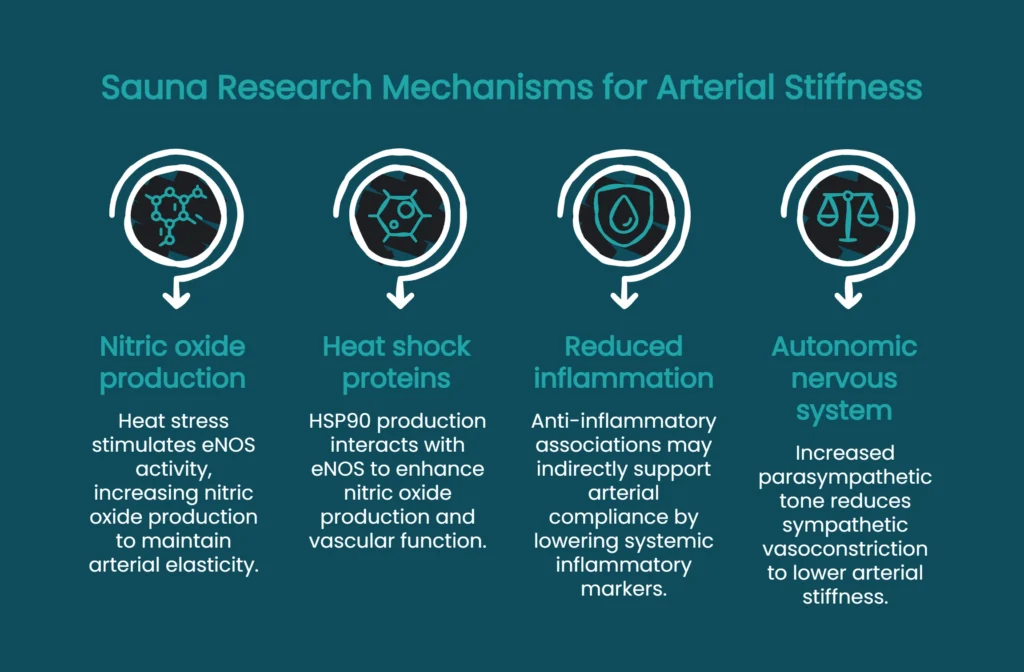
Nitric oxide production: Heat stress stimulates endothelial nitric oxide synthase (eNOS) activity, increasing nitric oxide production in blood vessel walls. Nitric oxide is the primary vasodilatory signal that maintains arterial elasticity and reduces vascular tone.
Heat shock proteins: HSP production triggered by sauna sessions includes HSP90, which interacts with eNOS to enhance nitric oxide production. This creates a molecular link between heat stress and vascular function improvement.
Reduced inflammation: CRP and other systemic inflammatory markers are associated with arterial stiffness. Inflammation directly damages endothelial function and promotes arterial wall changes that increase stiffness. Sauna’s documented anti-inflammatory associations may therefore indirectly support arterial compliance over time.
Autonomic nervous system: Improved autonomic balance with regular sauna use, specifically increased parasympathetic tone, is associated with lower arterial stiffness through reduced sympathetic vasoconstriction.
Why This Matters for Home Sauna Users
The practical gap in most home sauna use is the absence of feedback. Users know they are using their sauna, but they typically have no way to measure whether sessions are producing meaningful changes in the vascular markers most relevant to long-term cardiovascular health.
Brachial blood pressure provides one data point. But arterial stiffness markers (AIx, central blood pressure, pulse wave characteristics) provide a more complete picture of what is happening to vascular health over time.
For users with cardiovascular health goals, particularly those with hypertension, elevated cardiovascular risk, or family history of cardiovascular disease, monitoring arterial stiffness markers alongside blood pressure offers substantially more informative feedback about whether a sauna protocol is producing the vascular adaptations associated with reduced cardiovascular risk.
Until recently, monitoring these markers outside a clinic was not possible. Devices that now bring arterial stiffness assessment to home users, measuring central blood pressure, augmentation index, and related markers alongside standard brachial pressure, represent a meaningful development for individuals who want to understand their vascular health at this level of depth.
Infrared vs Traditional Sauna for Arterial Health
| Factor | Traditional Sauna | Infrared Sauna |
|---|---|---|
| Endothelial function evidence | Stronger (multiple studies) | Moderate (Waon therapy research) |
| Direct AIx/PWV data | Limited but consistent with benefit | Limited but directionally positive |
| Heat intensity (stiffness mechanism) | High: strong nitric oxide stimulus | Moderate: gentler stimulus |
| Frequency achievable | 2–5x per week typical | 3–6x per week more accessible |
| Long-term vascular remodeling evidence | Strongest overall (KIHD population data) | Smaller, shorter-term studies |
Frequently Asked Questions
What is a normal augmentation index?
AIx varies by age, sex, and heart rate. Generally, AIx below 20–25% is considered normal in younger adults; values increase with age as arteries naturally stiffen. In clinical research, lower AIx relative to age and sex is associated with better cardiovascular outcomes. AIx is best interpreted in context with other vascular markers and clinical information.
Can sauna use reverse arterial stiffness?
The research suggests regular sauna use may improve endothelial function and reduce some markers of arterial stiffness in people with cardiovascular risk factors. “Reversing” stiffness is too strong a claim, but improving the trajectory of vascular aging through consistent heat exposure alongside other lifestyle interventions (exercise, diet, stress management) is supported by the available evidence.
How is central blood pressure different from regular blood pressure?
Standard blood pressure cuffs measure brachial blood pressure, the pressure in your upper arm artery. Central blood pressure is the pressure your heart actually generates at the aorta. Due to pulse wave amplification as blood travels from the aorta to the periphery, brachial BP can overestimate central BP. Central BP more accurately reflects the pressure your heart, brain, and kidneys are actually exposed to. Standard home cuffs do not measure central blood pressure.
How long does it take for sauna use to affect arterial stiffness?
The available studies suggesting endothelial function improvements used protocols of 4–12 weeks of regular sauna sessions. Meaningful arterial stiffness changes likely require consistent use over this timeframe rather than short-term sessions. This mirrors the pattern seen with exercise: acute sessions produce temporary effects, but consistent practice over weeks to months produces structural vascular adaptations.
Medical Disclaimer: This article provides educational information about arterial stiffness and sauna research and does not constitute medical advice. Cardiovascular risk assessment and management require individualized evaluation by a qualified healthcare provider. Do not substitute information from this article for medical evaluation of cardiovascular risk.
For comprehensive guides on sauna cardiovascular research, safety, and evidence-based health applications, visit Sauna Health Nut.
References
[1] Laurent S, et al. “Aortic stiffness is an independent predictor of all-cause and cardiovascular mortality in hypertensive patients.” Hypertension. 2001. View on PubMed
[2] Roman MJ, et al. “Central pressure more strongly relates to vascular disease and outcome than does brachial pressure.” Hypertension. 2007. View on PubMed
[3] Laukkanen JA, et al. “Cardiovascular and Other Health Benefits of Sauna Bathing: A Review of the Evidence.” Mayo Clinic Proceedings. 2026. View on PubMed
[4] Kihara T, et al. “Repeated sauna treatment improves vascular endothelial and cardiac function in patients with chronic heart failure.” Journal of the American College of Cardiology. 2002. View on PubMed
You might also find these useful: