
How Does Sauna Use Affect Inflammation in the Body?

Short answer: Regular sauna use is associated with reductions in systemic inflammatory markers — particularly C-reactive protein (CRP) and interleukin-6 (IL-6) — in population studies and controlled trials. The primary mechanisms are heat-induced vasodilation improving tissue perfusion, heat shock protein production modulating cellular stress responses, and cortisol reduction lowering stress-related inflammatory burden. Evidence is strongest for cardiovascular-related inflammation and weakest for acute inflammatory conditions, where heat exposure can worsen rather than reduce inflammation.
Last updated: 2026
At a glance
- Population studies show regular sauna users have lower CRP levels — a key marker of systemic inflammation — than non-users
- Heat shock proteins (HSPs) produced during sauna sessions have documented anti-inflammatory cellular effects
- Both infrared and traditional saunas show anti-inflammatory associations, with traditional saunas having the larger evidence base
- Acute inflammation (active infection, injury, arthritis flare) is a contraindication — heat worsens acute inflammatory responses
- The inflammation reduction evidence complements but does not replace anti-inflammatory medications for diagnosed inflammatory conditions
Who this guide is for
This article is for adults with chronic inflammatory conditions or general wellness goals who are evaluating sauna use as a complementary approach to inflammation management. It covers the mechanisms linking heat exposure to inflammation, the available evidence across different conditions, and important distinctions between chronic systemic inflammation (where saunas may help) and acute inflammation (where saunas can cause harm). This is not medical advice — consult your healthcare provider for diagnosed inflammatory conditions.
Understanding Inflammation: Chronic vs Acute
Before evaluating sauna evidence, the distinction between acute and chronic inflammation is critical — sauna use has opposite effects on each.
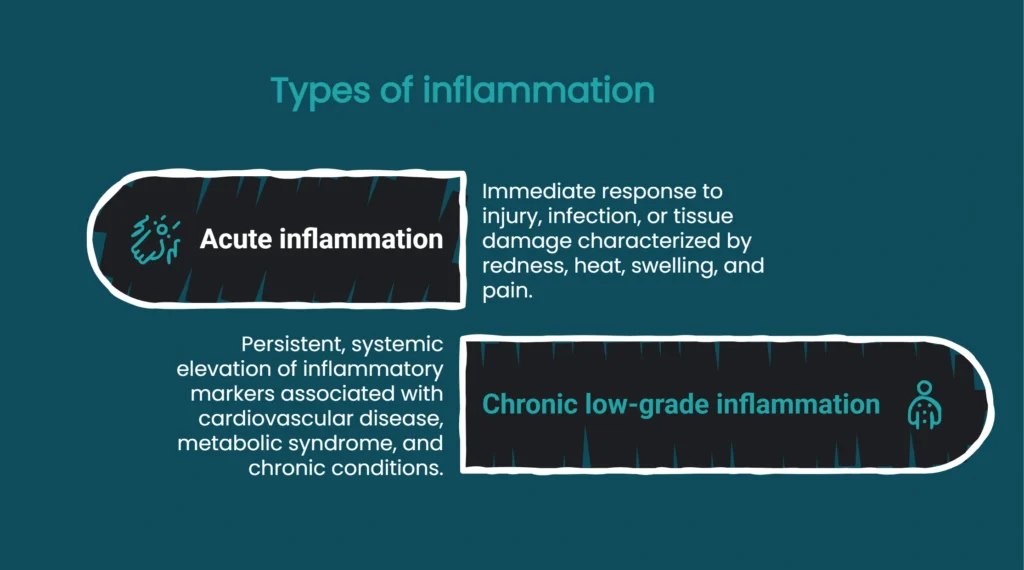
Acute inflammation is the body’s immediate response to injury, infection, or tissue damage. It is characterized by redness, heat, swelling, and pain at the site of injury. This response is protective and necessary — it initiates healing. Applying additional heat to acutely inflamed tissue (a fresh injury, an infected wound, an arthritis flare) intensifies the inflammatory response and is contraindicated. This is why “never use heat on a fresh injury” is standard first-aid guidance.
Chronic low-grade inflammation is a different phenomenon — a persistent, systemic elevation of inflammatory markers without a clear acute trigger. It is associated with cardiovascular disease, metabolic syndrome, autoimmune conditions, accelerated aging, and many chronic diseases. This type of inflammation is where sauna use shows the most relevant evidence for potential benefit. [1]
The practical implication: sauna use for inflammation management applies specifically to chronic systemic inflammation, not to acute inflammatory conditions or flares.
Mechanisms Linking Sauna Use to Reduced Inflammation
Heat Shock Proteins and Inflammatory Modulation
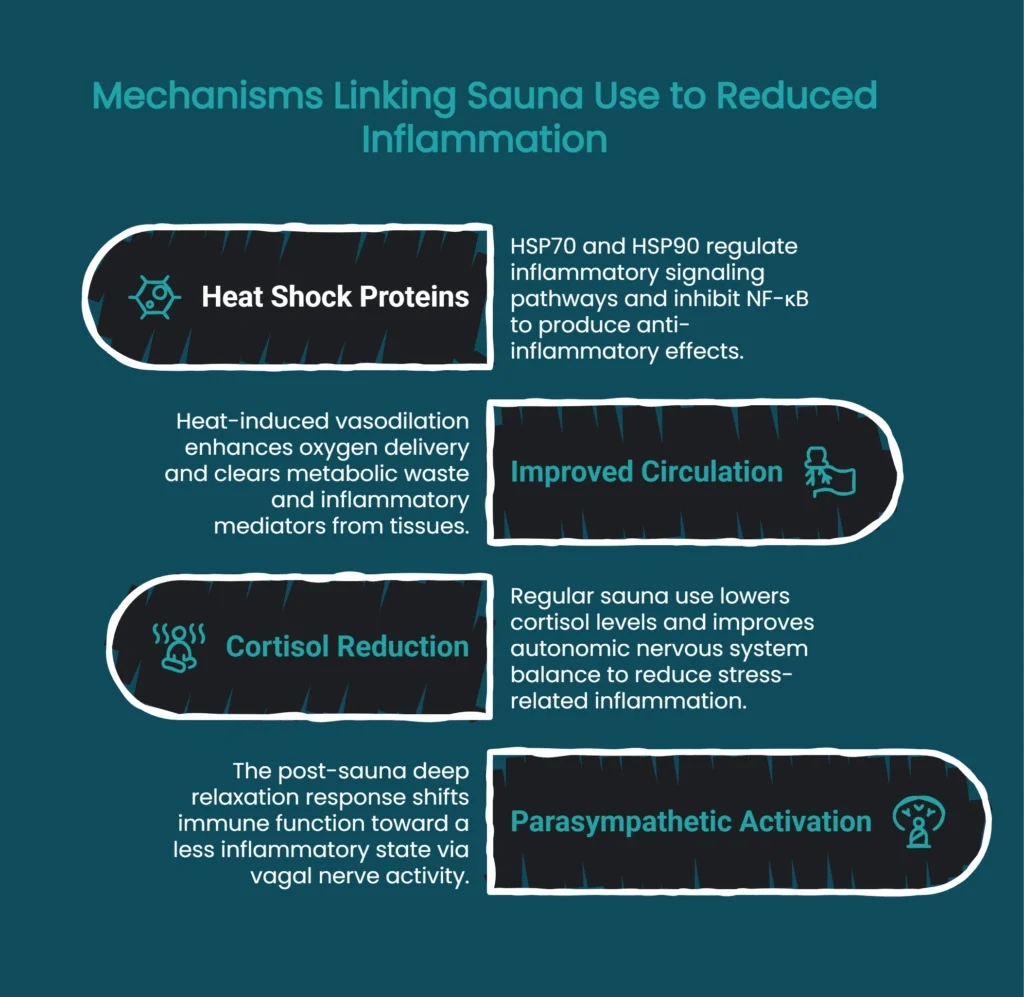
Heat shock proteins (HSPs) are cellular stress proteins produced in response to elevated temperature. Several HSPs — particularly HSP70 and HSP90 — have documented roles in regulating inflammatory signaling pathways. HSP70 has been shown to inhibit NF-κB, a key transcription factor that drives inflammatory gene expression. [2] Regular heat-induced HSP production through sauna use may therefore produce cumulative anti-inflammatory effects at the cellular level.
This mechanism is well-characterized at the molecular level. The clinical translation — whether the HSP induction from regular sauna sessions produces measurable reductions in systemic inflammation in humans — is supported by the population data discussed below.
Improved Circulation and Tissue Perfusion
Heat-induced vasodilation improves blood flow to tissues throughout the body. Improved microcirculation enhances delivery of oxygen and nutrients to tissues while clearing metabolic waste products and inflammatory mediators that accumulate in poorly perfused tissue. In conditions where chronic inflammation is partly driven by tissue hypoxia — as in some cardiovascular and metabolic conditions — improved circulation may directly reduce inflammatory burden. [1]
Cortisol Reduction and Stress-Related Inflammation
Chronic psychological stress drives systemic inflammation through the sustained elevation of cortisol and other stress hormones that dysregulate immune function. Regular sauna use has been associated with reduced cortisol levels and improved autonomic nervous system balance. By reducing chronic stress load, sauna use may indirectly reduce the inflammatory burden driven by stress-related immune dysregulation. [3]
Parasympathetic Activation and Immune Modulation
The autonomic nervous system directly regulates immune function. Chronic sympathetic dominance (the sustained fight-or-flight state associated with chronic stress) is pro-inflammatory. The parasympathetic rebound that follows sauna sessions — the deep relaxation response — actively shifts immune function toward a less inflammatory state through vagal nerve activity. [3]
What the Research Shows
CRP and Cardiovascular Inflammation
C-reactive protein (CRP) is the most widely used clinical marker of systemic inflammation. Elevated CRP is associated with increased cardiovascular risk, metabolic disease, and all-cause mortality. The most relevant sauna inflammation data comes from the KIHD (Kuopio Ischemic Heart Disease) cohort studies examining Finnish men over 20 years.
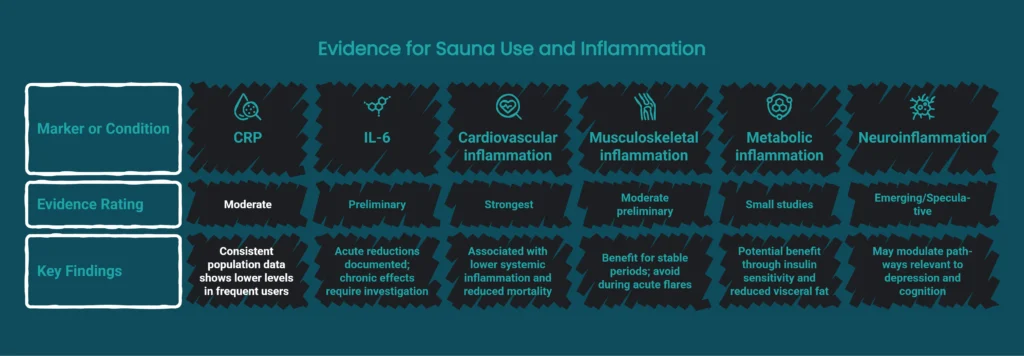
A retrospective pilot study examining biomarkers in a multi-modal wellness intervention that included regular sauna use found significant reductions in high-sensitivity CRP (hsCRP) over the study period. [4] Finnish population data consistently shows lower CRP levels in frequent sauna users compared to infrequent users, with a dose-response relationship — more frequent sauna use associated with lower CRP. [1]
Evidence rating for CRP reduction: Moderate — consistent across population studies; mechanistically coherent; limited by confounding (sauna users may have healthier lifestyles overall).
IL-6 and Systemic Inflammatory Markers
Interleukin-6 (IL-6) is a cytokine that plays a central role in coordinating systemic inflammatory responses. Elevated IL-6 is associated with cardiovascular disease, metabolic syndrome, and inflammatory conditions. Some studies examining heat therapy have found acute reductions in IL-6 following sessions, though the sustained effect with regular use requires further investigation. [2]
Evidence rating for IL-6: Preliminary — acute reductions documented; chronic effects with regular use less well-characterized.
Specific Inflammatory Conditions
Cardiovascular inflammation: The strongest evidence. Finnish population data shows regular sauna use associated with lower systemic inflammation and reduced cardiovascular mortality — mechanisms likely involving both direct anti-inflammatory effects and cardiovascular conditioning. [1]
Musculoskeletal inflammation (stable periods): Moderate preliminary evidence from studies on fibromyalgia, rheumatoid arthritis (stable), and chronic low back pain. Far-infrared specifically has been studied in these populations. Heat should only be applied during stable periods — never during acute flares.
Metabolic inflammation: Small studies suggest potential benefit for metabolic syndrome-related inflammation through improved insulin sensitivity pathways and reduced visceral fat-associated inflammatory signaling, though this area needs larger trials.
Neuroinflammation: Emerging area with very preliminary evidence. Some researchers propose that regular heat stress may modulate neuroinflammatory pathways relevant to depression and cognitive function, but this is speculative in the current evidence base.
What Saunas Cannot Do for Inflammation
Replace anti-inflammatory medications: For diagnosed inflammatory conditions requiring medication (biologics for RA, corticosteroids, NSAIDs), sauna use is a complementary tool — not a substitute. Do not reduce or discontinue prescribed anti-inflammatory medications based on sauna use.
Treat acute inflammation: As established above, heat on acutely inflamed tissue worsens the response. This applies to injuries, infections, arthritis flares, and any condition presenting with active local inflammation signs (redness, warmth, swelling, pain).
Produce clinically equivalent effects to pharmaceutical intervention: The magnitude of inflammation reduction associated with regular sauna use is meaningful but modest compared to targeted pharmaceutical anti-inflammatory therapy. It supports overall inflammatory burden reduction as part of a lifestyle approach.
Infrared vs Traditional Sauna for Inflammation
| Factor | Traditional Sauna | Infrared Sauna |
|---|---|---|
| CRP reduction evidence | Strongest (KIHD population data) | Smaller studies, consistent direction |
| HSP production | High (intense thermal stress) | Moderate |
| Musculoskeletal inflammation | Less specific research | FIR specifically studied in RA, fibromyalgia |
| Acute inflammation risk | High if used during flares | Same — avoid during flares regardless of type |
| Overall evidence base | Larger, longer-term | Smaller, shorter-term but growing |
Safe Usage for Inflammation Management
Session parameters (chronic inflammation management): Temperature: 120–140°F infrared; 160–180°F traditional. Duration: 20–30 minutes infrared; 10–15 minutes traditional. Frequency: 3–5 times per week — population data suggests frequency matters for cumulative benefit.
Absolute contraindications:
- Any active inflammatory flare (joint, skin, or systemic)
- Acute infection or fever
- Recent injury (within 48–72 hours)
- Acute cardiovascular event
Conditions requiring medical clearance:
- Autoimmune conditions with active disease management
- Inflammatory bowel disease
- Lupus or other systemic autoimmune conditions
- Anyone on immunosuppressant or biologic medications
Frequently Asked Questions
Does sauna reduce inflammation?
Population studies and smaller controlled studies associate regular sauna use with reduced systemic inflammatory markers, particularly CRP. The mechanisms — HSP production, improved circulation, cortisol reduction — are well-characterized. The effect is most relevant for chronic systemic inflammation and is not appropriate for acute inflammatory conditions.
Which is better for inflammation — infrared or traditional sauna?
Traditional saunas have the larger evidence base through Finnish population studies. Far-infrared saunas have specific evidence for musculoskeletal inflammatory conditions (RA, fibromyalgia) where the lower ambient temperature allows use by patients who cannot tolerate traditional sauna heat. Both appear to produce anti-inflammatory effects through overlapping mechanisms.
Can I use a sauna during an inflammatory flare?
No. Heat applied to actively inflamed tissue intensifies inflammation. Whether an arthritis flare, an acute infection, a fresh injury, or a psoriasis flare — wait until the acute phase has fully resolved before resuming sauna use. If uncertain, consult your healthcare provider.
How long before sauna use reduces inflammation?
Population data suggests cumulative benefit develops over weeks to months of regular use (3–5 sessions per week). Single sessions produce acute effects but sustained inflammatory marker reduction requires consistency over time, consistent with the HSP conditioning and autonomic nervous system adaptation mechanisms.
Can sauna use replace anti-inflammatory diet approaches?
No — these are complementary strategies. Anti-inflammatory diet (Mediterranean-style, reduced ultra-processed foods, omega-3 adequacy) addresses dietary contributors to systemic inflammation. Sauna use addresses stress-related, circulatory, and cellular stress mechanisms. Both work through different pathways and combine effectively as part of a comprehensive anti-inflammatory lifestyle approach.
Medical Disclaimer: This article provides educational information about sauna use and inflammation and does not constitute medical advice. Inflammatory conditions require individualized medical management. Do not substitute sauna use for prescribed anti-inflammatory medications or treatments without consulting your healthcare provider.
For comprehensive guides on sauna safety, mechanisms, and evidence-based health applications, visit Sauna Health Nut.
References
[1] Laukkanen JA, et al. “Cardiovascular and Other Health Benefits of Sauna Bathing: A Review of the Evidence.” Mayo Clinic Proceedings. 2026. View on PubMed
[2] Krause M, et al. “Heat shock proteins and heat therapy for type 2 diabetes: pros and cons.” Current Opinion in Clinical Nutrition and Metabolic Care. 2026. View on PubMed
[3] Hannuksela ML, Ellahham S. “Benefits and risks of sauna bathing.” The American Journal of Medicine. 2001. View on PubMed
[4] Stanford Lifestyle Medicine. “The Healthspan Project: A Retrospective Pilot of Biomarkers and Biometric Outcomes after a 6-Month Multi-Modal Wellness Intervention.” View study
You might also find these useful: