
Can Traditional Sauna Really Protect Your Heart Long-Term?
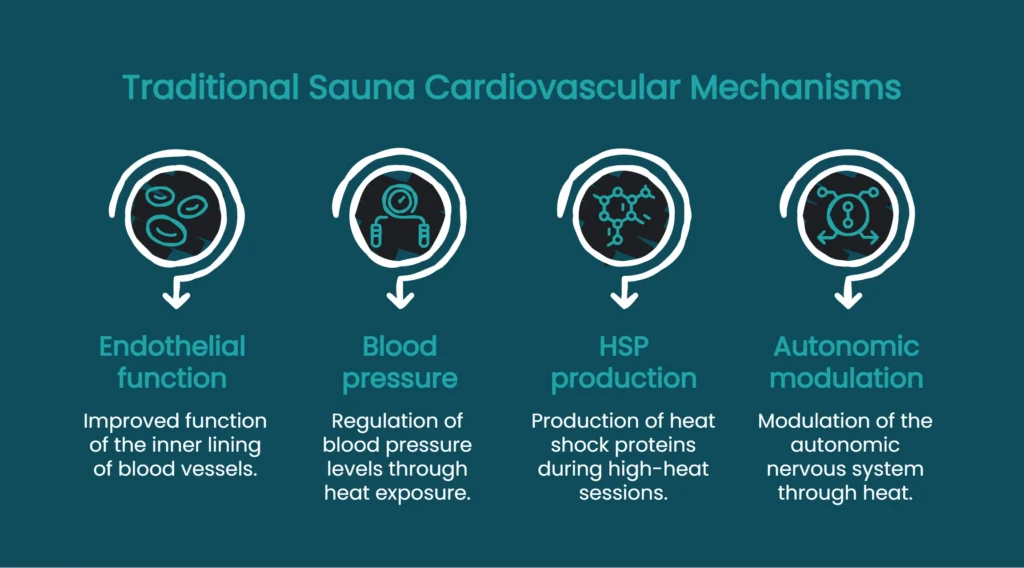
Short answer: The most robust long-term cardiovascular evidence for sauna use comes exclusively from traditional Finnish high-heat saunas, not infrared saunas. Decades of Finnish population research, including the landmark KIHD study following 2,315 men for 20+ years, document strong associations between frequent traditional sauna use and reduced cardiovascular mortality, sudden cardiac death, and all-cause mortality. The mechanisms include improved endothelial function, blood pressure regulation, heat shock protein production, and autonomic nervous system modulation, all well-characterized in traditional sauna research
Last updated: 2026
At a glance
- The KIHD study found 4–7x weekly traditional sauna use associated with 63% lower sudden cardiac death and 50% lower cardiovascular mortality
- Traditional Finnish saunas operate at 170–195°F using convection heat, a fundamentally different mechanism than infrared at 110–150°F
- Long-term cardiovascular benefits are linked to frequency (4–7x/week), duration (over 19 minutes), and consistent practice over years
- The mechanisms, endothelial function, HSP production, blood pressure regulation, are well-supported across multiple study types
- These findings apply to traditional sauna specifically and cannot be directly transferred to infrared saunas per the study authors themselves
Who this guide is for
This article is for traditional sauna users, people considering a traditional sauna purchase, and anyone who wants to understand the cardiovascular evidence base that is frequently misattributed to infrared saunas. It covers the Finnish research specifically, the mechanisms, practical protocols, and the important distinction between traditional and infrared sauna evidence. For infrared-specific cardiovascular research, see our infrared sauna and heart health guide.
Reader Disclosure: This post contains affiliate links. If you purchase through them, we may earn a small commission at no extra cost to you. We only link to products
we've evaluated against our editorial standards.
Why Traditional Sauna Has the Strongest Cardiovascular Evidence
The Finnish relationship with sauna is unlike any other culture’s relationship with any wellness practice. Finland has approximately 3.3 million saunas for a population of 5.5 million people, roughly one sauna per household. Sauna bathing has been practiced regularly by virtually the entire Finnish adult population for centuries.
This cultural saturation created a unique epidemiological opportunity: researchers could study large populations of people who had been using saunas consistently for decades, across different frequencies and durations, and observe health outcomes over long follow-up periods. No other sauna tradition in the world has been studied with this rigor or at this scale.
The result is a body of cardiovascular research for traditional Finnish sauna that no other sauna type can match in scope, duration, or population size. When wellness content refers to “sauna cardiovascular benefits” without specifying the sauna type, it is almost always drawing on this Finnish traditional sauna research, whether or not that attribution is made explicit.
The Core Research
The KIHD Study (2026 — JAMA Internal Medicine)
The most cited and most comprehensive piece of sauna cardiovascular research was published in JAMA Internal Medicine in 2026 by Laukkanen and colleagues. [1]
Study design: 2,315 middle-aged Finnish men (ages 42–60), prospective cohort, median follow-up 20.7 years.
Sauna parameters: Traditional Finnish dry-heat sauna, mean temperature 174°F (79°C), mean session 14.2 minutes.
Key findings (multivariable-adjusted):
Compared to once-weekly sauna use:
| Frequency | Sudden Cardiac Death | Cardiovascular Mortality | All-Cause Mortality |
|---|---|---|---|
| 2–3x per week | 22% lower | 27% lower | 24% lower |
| 4–7x per week | 63% lower | 50% lower | 40% lower |
Sessions over 19 minutes versus under 11 minutes: 52% lower sudden cardiac death risk.
Adjusted for: age, BMI, systolic blood pressure, LDL cholesterol, smoking, alcohol, previous MI, type 2 diabetes, cardiorespiratory fitness, resting heart rate, physical activity, socioeconomic status.
The dose-response relationship, progressively lower risk with higher frequency, strengthens the biological plausibility of the association beyond what correlation alone would suggest. For the complete breakdown of this study including limitations, see our dedicated KIHD study analysis.
The 2026 Systematic Review (Mayo Clinic Proceedings)
A comprehensive review of sauna health evidence published in Mayo Clinic Proceedings examined the accumulated research across cardiovascular function, blood pressure, mortality, and other outcomes. [2]
The review found consistent evidence across multiple study types that regular traditional sauna bathing is associated with reduced cardiovascular risk, improved hemodynamic function, and lower mortality. The mechanisms were identified as consistent with those proposed in the KIHD study: endothelial function, blood pressure effects, autonomic modulation, and heat shock protein production.
The 2026 systematic review examining traditional dry sauna bathing identified 40 separate clinical studies involving 3,855 participants exploring benefits from cardiovascular function to respiratory health. [3]
Mechanisms: How Traditional Sauna Affects Cardiovascular Health
Endothelial Function Improvement
The endothelium, the single-cell layer lining blood vessels, is central to cardiovascular health. Endothelial dysfunction precedes and predicts atherosclerosis, hypertension, and cardiovascular events. Traditional sauna’s high heat produces strong endothelial stimulation through increased shear stress (blood flow against vessel walls) and nitric oxide production.
Repeated traditional sauna treatment has been shown to improve endothelial function in patients with coronary heart disease risk factors, a finding replicated across multiple studies. [2] Improved endothelial function translates to better vascular tone regulation, reduced arterial stiffness progression, and lower cardiovascular event risk.
Blood Pressure Regulation
Regular traditional sauna use is associated with lower resting blood pressure, particularly in hypertensive individuals. The mechanism involves both acute vasodilation during sessions and longer-term vascular remodeling with consistent use. Studies have documented mean reductions of 5–8 mmHg systolic with regular sauna protocols in hypertensive patients. [2]
Heat Shock Protein Production
Traditional sauna’s high thermal load (174°F ambient temperature) produces substantial heat shock protein (HSP) induction. HSPs, particularly HSP70 and HSP90, have multiple cardiovascular-relevant functions: protein quality control in cardiac cells, anti-inflammatory effects through NF-κB inhibition, and endothelial nitric oxide synthase activation supporting vascular function.
The high heat of traditional saunas produces more intense HSP induction than the lower temperatures of infrared saunas, one proposed reason why traditional sauna evidence for cardiovascular outcomes is stronger.
Cardiovascular Conditioning
Heart rate during traditional sauna sessions typically reaches 100–150 beats per minute depending on temperature and individual response, corresponding to low-to-moderate intensity cardiovascular exercise. [1] This cardiovascular stimulus, repeated regularly over time, is associated with adaptations similar to those from moderate aerobic exercise: improved cardiac output efficiency, better heart rate variability, and enhanced cardiovascular reserve.
Autonomic Nervous System Modulation
Regular traditional sauna use has been associated with positive changes in autonomic nervous system function, specifically improved heart rate variability (HRV) and reduced sympathetic dominance. Better autonomic balance is independently associated with lower cardiovascular mortality and improved cardiac resilience to stress.
Traditional Sauna Protocol for Cardiovascular Benefit
Based on the KIHD study parameters and supporting research, the protocol most associated with cardiovascular benefit in the available evidence:
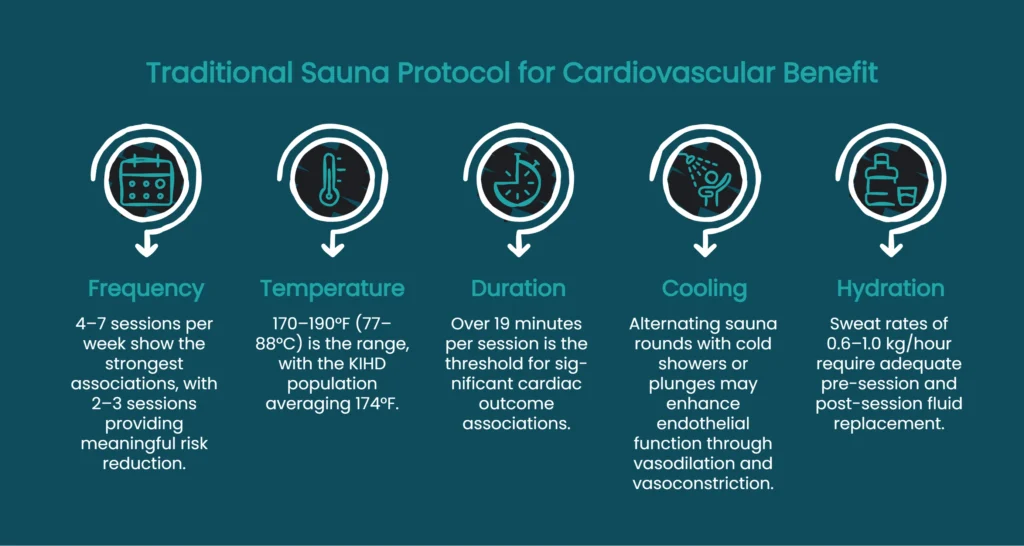
Frequency: 4–7 sessions per week (the frequency showing the strongest associations). Even 2–3 sessions per week showed meaningful risk reduction compared to once weekly.
Temperature: 170–190°F (77–88°C). The KIHD population averaged 174°F. Higher temperatures within this range are tolerated by experienced users.
Duration: Over 19 minutes per session, the threshold at which the study showed significant cardiac outcome associations. The KIHD population averaged 14.2 minutes, suggesting many participants were below the threshold showing the strongest duration effects.
Cooling: The traditional Finnish practice of alternating sauna rounds with cooling (cold shower, cold plunge, or outdoor cooling in winter) is culturally integrated but not specifically studied as the mechanism of benefit in the KIHD research. However, contrast protocols are common in Finnish sauna practice and may enhance endothelial function through repeated vasodilation/vasoconstriction cycles.
Hydration: Traditional sauna produces 0.6–1.0 kg/hour sweat rate at 80–90°C. Adequate pre-session hydration and post-session replacement is essential.
Given how central blood pressure and vascular function are to this evidence base, some readers prefer to monitor these markers directly rather than relying on how a session subjectively feels. CONNEQT Health’s central blood pressure monitor is one option built for exactly that kind of at-home tracking.
Important Cardiovascular Contraindications
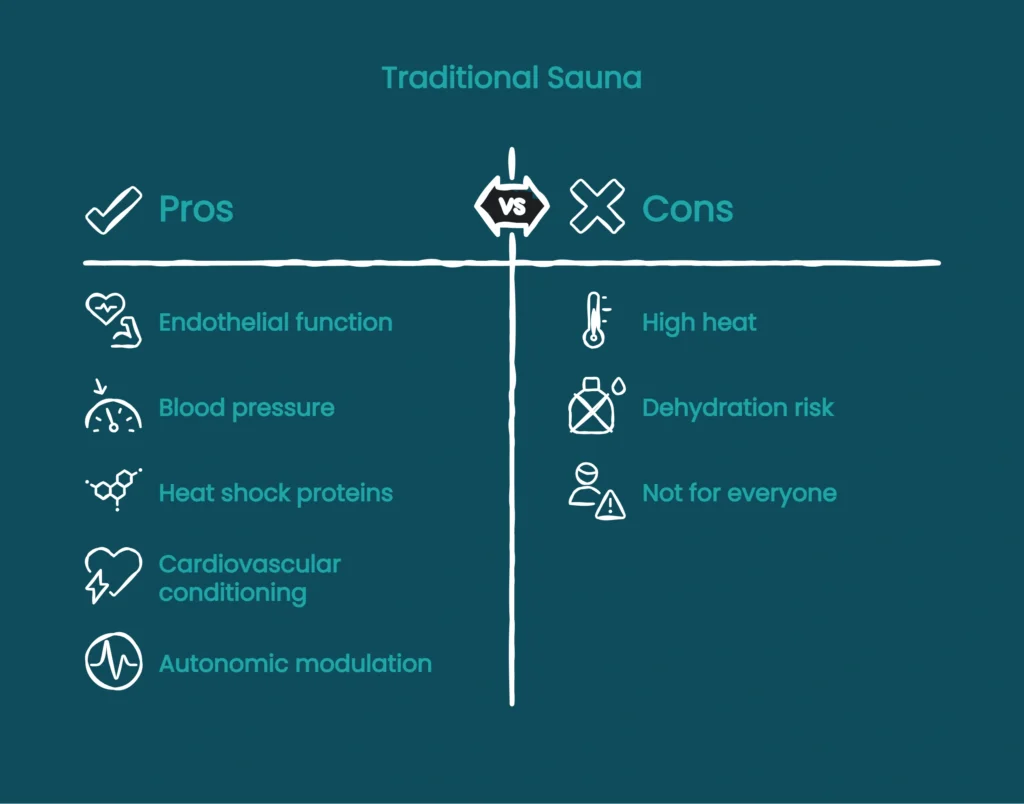
The high thermal load of traditional saunas creates specific contraindications that apply with particular force given the intensity of the cardiovascular challenge:
Absolute contraindications:
- Unstable angina or recent acute coronary syndrome
- Uncontrolled hypertension (systolic consistently above 160–180 mmHg)
- Severe aortic stenosis
- Decompensated heart failure
- Significant uncontrolled arrhythmias
Require medical clearance:
- Any history of cardiovascular events
- Controlled hypertension on medication
- Stable heart failure (note: Waon therapy research used carefully supervised infrared sauna in this population, not traditional sauna)
- Implanted cardiac devices
The KIHD study’s own discussion noted that only 1–2% of sudden deaths occurred within 24 hours of sauna bathing, and most of these involved alcohol consumption, which is an important safety note is alcohol and sauna use is a dangerous combination.
Traditional vs Infrared: Why Both Matter
This article focuses on traditional sauna specifically because the cardiovascular evidence base is distinct and stronger than for infrared. This is not an argument that infrared saunas lack value, they have their own evidence base for cardiovascular and other health applications. The comparison below summarizes how the two stack up on the specific question this article covers.
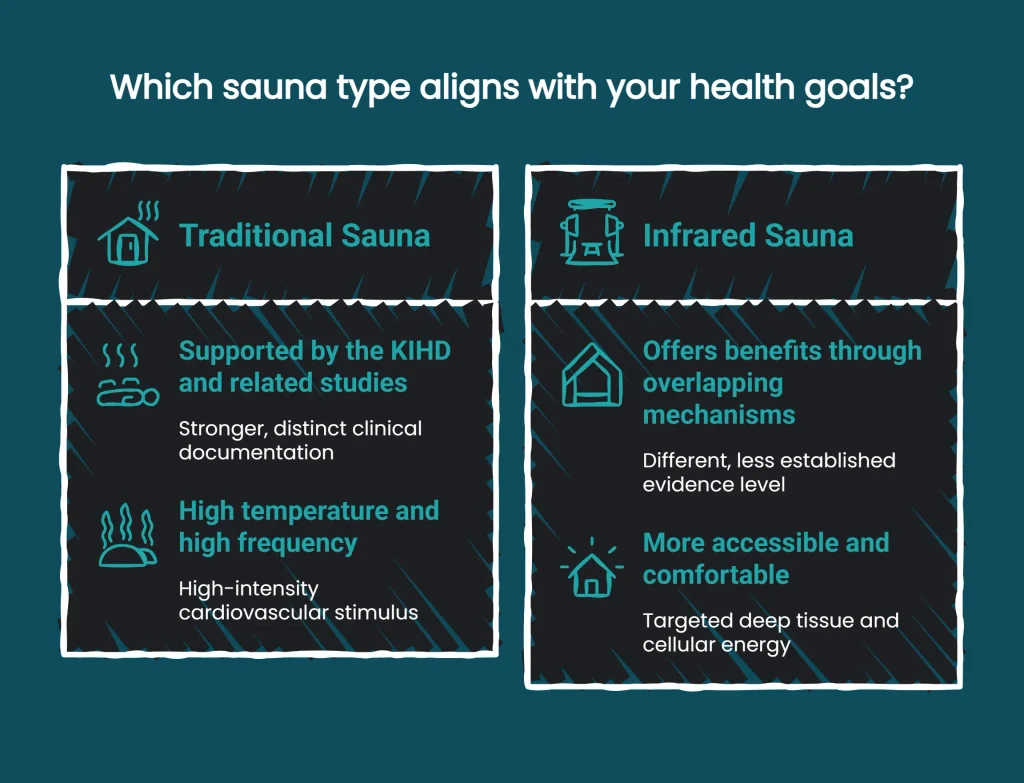
If cardiovascular longevity and mortality risk reduction, the outcomes documented in the KIHD and related studies, are your primary motivation, traditional Finnish sauna at high temperature and high frequency is what the evidence specifically studied. If heat tolerance, specific wavelength effects (NIR for cellular energy, FIR for targeted deep tissue), or accessibility are priorities, infrared sauna has a different but legitimate evidence profile, even though its cardiovascular research is comparatively newer and smaller in scale.
The most cardiovascularly-oriented sauna users might consider combining both: traditional sauna for the high-intensity cardiovascular stimulus on some days, infrared for recovery and targeted applications on others.
Frequently Asked Questions
Is traditional sauna better for heart health than infrared?
The traditional sauna evidence base is stronger and longer-term, particularly the KIHD mortality data. Infrared sauna cardiovascular research is smaller and shorter-term but directionally consistent. For cardiovascular longevity specifically, traditional sauna has the evidence; infrared has promising but more limited support.
How hot does a traditional sauna need to be for cardiovascular benefit?
The KIHD study participants averaged 174°F (79°C). Research on cardiovascular benefits generally uses temperatures of 160–195°F. The high ambient temperature is part of the stimulus. Lower temperatures reduce the intensity of the cardiovascular and endothelial response.
Can I get the same cardiovascular benefit from a traditional sauna 2–3 times per week?
The KIHD data showed meaningful cardiovascular risk reduction at 2–3x per week (27% lower cardiovascular mortality) compared to once weekly. The strongest associations were at 4–7x per week (50% lower). More frequent use appears better, but 2–3 times weekly still shows substantial benefit over occasional use.
Why does the steam (löyly) matter in Finnish sauna?
Löyly, steam created by ladling water onto hot stones, temporarily spikes humidity in the sauna, intensifying the heat experience and increasing the cardiovascular stimulus. The KIHD study population used traditional Finnish saunas that include this practice. The precise contribution of löyly versus dry heat alone to the cardiovascular outcomes has not been isolated in research.
Should I use a cold plunge after a traditional sauna for heart health?
The contrast protocol (sauna + cold exposure) is a Finnish tradition but is not specifically what the KIHD study measured as the cardiovascular intervention. Cold plunging adds its own cardiovascular stimulus and potential benefits but also its own risks, particularly for individuals with cardiovascular conditions. If you have any cardiovascular concerns, consult your physician before adding cold plunge to your sauna protocol.
Medical Disclaimer: This article provides educational information about traditional sauna use and cardiovascular health research and does not constitute medical advice. Cardiovascular conditions require individualized medical management. Consult a cardiologist or qualified healthcare provider before beginning traditional sauna use, particularly if you have any cardiovascular history, take medications, or are new to high-heat sauna exposure.
For comprehensive guides on sauna safety, mechanisms, and evidence-based health applications, visit Sauna Health Nut.
References
[1] Laukkanen T, et al. “Association Between Sauna Bathing and Fatal Cardiovascular and All-Cause Mortality Events.” JAMA Internal Medicine. 2026;175(4):542–548. View on JAMA
[2] Laukkanen JA, et al. “Cardiovascular and Other Health Benefits of Sauna Bathing: A Review of the Evidence.” Mayo Clinic Proceedings. 2026. View on PubMed
[3] Hussain J, Cohen M. “Clinical Effects of Regular Dry Sauna Bathing: A Systematic Review.” Evidence-Based Complementary and Alternative Medicine. 2026. View on PMC
You might also find these useful: