
Does Infrared Sauna Help Fibromyalgia Symptoms?

Short answer: A small randomized, sham-controlled trial found that whole-body infrared-A heat therapy significantly reduced pain intensity in fibromyalgia patients compared to a sham condition, with the effect still measurable six months later. That trial builds on an earlier, similarly designed randomized controlled trial that found comparable benefits, and a separate, smaller pilot study using an actual far-infrared dry sauna found consistent pain and symptom improvements, though without a control group. Together, this is genuinely promising evidence rather than proven treatment. The controlled trials used a specialized medical heat-therapy device, not an off-the-shelf home sauna cabin, so how well the results translate to a typical consumer infrared sauna isn’t fully established.
Last updated: 2026
At a glance:
- A 2026 randomized, sham-controlled trial (n=41) found significantly reduced pain intensity after 6 sessions of whole-body infrared-A heat therapy, with benefits still present at 6-month follow-up
- This builds on an earlier 2007 randomized controlled trial (Brockow et al.) using the same general approach as part of a broader rehabilitation program, with consistent results
- A small, uncontrolled 2008 pilot study (n=13) using an actual far-infrared dry sauna at 60°C found consistent reductions in pain and fibromyalgia symptom scores
- The controlled trials used a specialized medical hyperthermia device (near-infrared, water-filtered) rather than a typical consumer far-infrared sauna cabin, a meaningful distinction for how confidently the results apply to home use
- Blood testing in the 2026 trial found changes in immune cell counts (lymphocytes, neutrophils) that correlated with reduced pain, suggesting an immune-mediated mechanism alongside any relaxation effect
- Side effects in the RCT were generally mild (skin warmth/burning sensation, occasional dizziness) but included two participants with more significant circulatory symptoms during treatment
- Evidence tier: Preliminary. Real signal from controlled research, but small sample sizes, a small number of research groups, and a device that differs from most home saunas mean this isn’t yet established treatment.
Who this guide is for: People with a fibromyalgia diagnosis considering infrared sauna as a complementary approach to symptom management, and anyone who wants an honest read on what the actual clinical trials found rather than a rounded-up marketing summary.
What Did the Strongest Available Trial Actually Find?
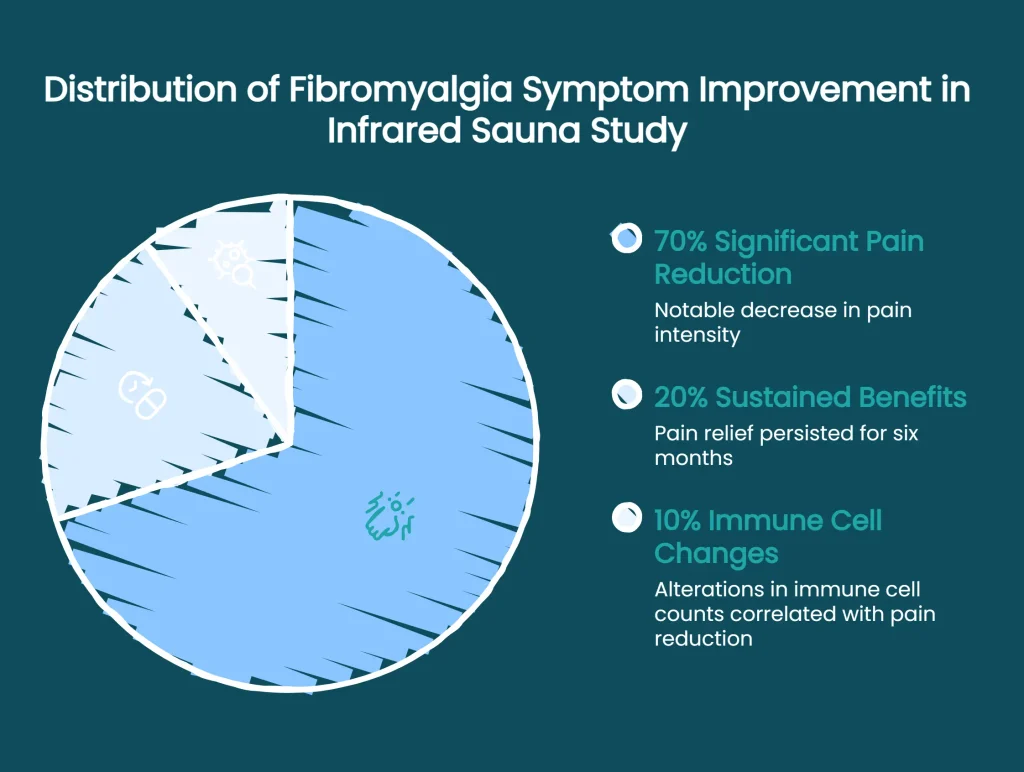
The best-designed study on this topic is a 2026 randomized, sham-controlled trial published in the Journal of Clinical Medicine.[1] Researchers randomized 41 people with a confirmed fibromyalgia diagnosis (per American College of Rheumatology 2026 criteria) to either six sessions of mild water-filtered infrared-A whole-body hyperthermia (WBH) or a visually identical sham session using an insulating foil that blocked roughly 98% of the radiation, delivered over three weeks with at least a day between sessions.
The results: pain intensity, measured on the Brief Pain Inventory, dropped by 30.7% in the treatment group by one week after treatment, compared to a 9.5% reduction in the sham group, a statistically significant difference (p=0.015). Notably, the benefit didn’t fully fade afterward: at the 6-month follow-up, the treatment group still showed a 17.0% reduction in pain from baseline (p=0.002), while the sham group’s pain had actually increased slightly from where it started. Mental health scores, measured with a standard quality-of-life questionnaire, also improved more in the treatment group shortly after the sessions ended, though physical quality-of-life scores didn’t differ significantly between groups.
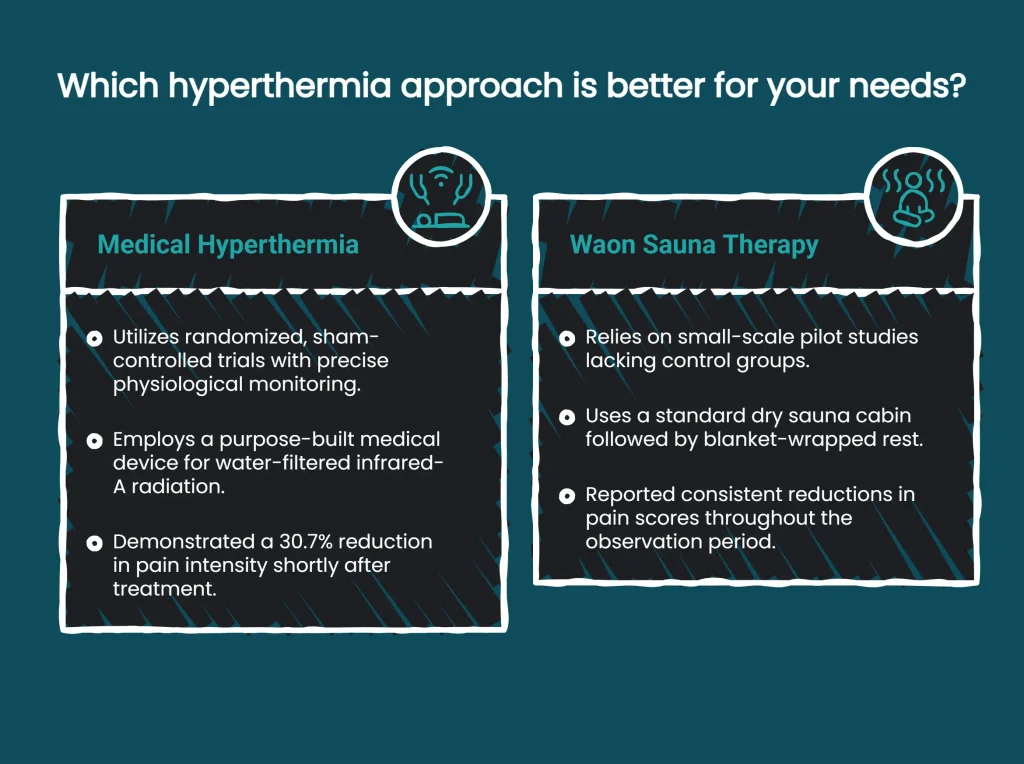
Why this matters, and why it comes with a caveat: this is a real randomized trial with an actual comparison condition, which puts it well ahead of most heat-therapy research on fibromyalgia specifically. The caveat is the delivery method. The study used a purpose-built medical device (the IRATHERM1000) that delivers water-filtered infrared-A (near-infrared) radiation while the patient lies down, reaching a target core body temperature of roughly 38.5–38.7°C over a heating phase of about 45 minutes followed by a plateau phase, then a 30-minute rest period. That’s a meaningfully different setup in wavelength, dose, and continuous physiological monitoring (the study tracked rectal temperature, pulse, and oxygen saturation throughout), compared with sitting in a consumer far-infrared sauna cabin at home without that level of monitoring.
Is This the First Trial to Find This, or a One-Off Result?
It’s not a one-off. The 2026 trial builds directly on an earlier randomized controlled trial by Brockow and colleagues, published in 2007 in the Clinical Journal of Pain, which tested the same general water-filtered near-infrared whole-body hyperthermia approach as an add-on to a standard multimodal rehabilitation program for fibromyalgia patients and found significant benefits in favor of the treatment group.[2] The 2026 researchers note their own results were broadly consistent with this and other earlier trials, though direct comparison is limited because the specific control conditions and measurement tools differed between studies. This matters because a single positive trial can always be a statistical fluke or specific to one research team’s methods. A second, independently designed trial finding a similar direction of effect is a more meaningful signal, even though both trials came from the same general area of hyperthermia research rather than fully separate research traditions.
What Did the Smaller Sauna-Specific Study Find?
A separate, earlier study is actually closer to what a home sauna user would recognize: a 2008 pilot study in Internal Medicine had 13 women with fibromyalgia sit in an actual far-infrared dry sauna maintained at 60°C (140°F) for 15 minutes, then rest wrapped in blankets in a 26–27°C room for 30 minutes, a protocol known as Waon therapy.[3] Sessions were repeated two to five times per week. The study reported consistent reductions in both pain scores and a standard fibromyalgia symptom questionnaire, sustained throughout the observation period.
This study is genuinely encouraging because the delivery method (sitting in a heated dry sauna, then resting under blankets) closely resembles a realistic home or spa protocol, more so than the lying-down medical hyperthermia device used in the larger trials above. The limitation is study design: with only 13 participants and no control group, it can’t rule out that some of the improvement came from expectation, attention, or the rest period itself rather than the heat exposure specifically.
What’s the Proposed Mechanism, and Is It Just Relaxation?
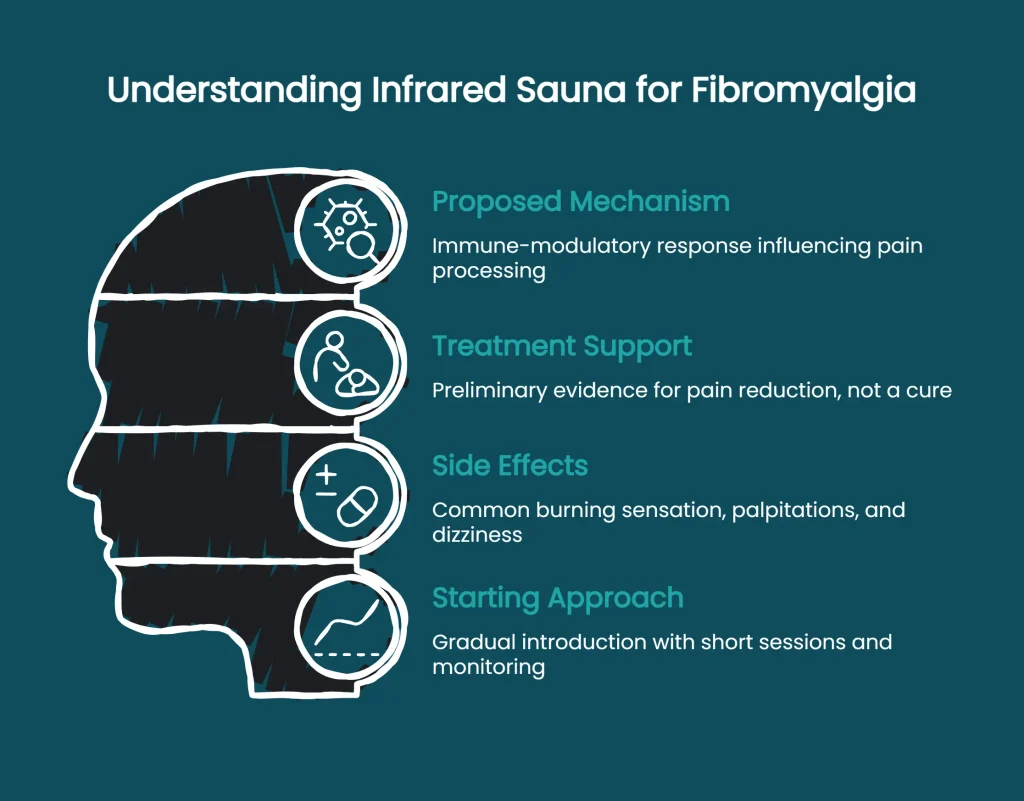
The 2026 trial’s blood testing adds a layer beyond “heat feels relaxing.” Researchers found a statistically significant increase in circulating lymphocyte and neutrophil counts in the treatment group compared to sham, and higher lymphocyte counts and IL-6 (an immune signaling protein) levels were both associated with lower pain intensity in the data. The proposed explanation is that whole-body heating triggers an immune-modulatory response, similar to a mild, controlled fever response, that may influence pain processing through the immune system’s interaction with the nervous system, rather than pain relief being purely psychological or attention-related. This is consistent with a broader, separately documented pattern in chronic pain research connecting autonomic nervous system activity, inflammatory markers, and pain sensitivity, though the researchers themselves are clear this remains an area needing further study, not a settled mechanism.
So Does This Mean Infrared Sauna Treats Fibromyalgia?
No, and that’s an important line to hold. None of these studies support infrared sauna as a treatment for fibromyalgia in the way medication or established therapies like cognitive behavioral therapy and graded aerobic exercise are supported by a larger, more consistent body of research across many independent research groups. What the evidence does preliminarily support is that whole-body heat exposure, whether via a medical hyperthermia device or an actual dry sauna, can meaningfully reduce pain intensity for some people with fibromyalgia over a period of weeks, through mechanisms that likely involve immune and autonomic nervous system changes rather than purely relaxation.
If you’re considering this as a complementary approach alongside your existing treatment plan, that’s a reasonable thing to discuss with your physician, not a reason to replace an existing treatment plan with sauna sessions.
What Side Effects Showed Up in the Research?
The 2026 RCT recorded its side effects carefully, and it’s worth knowing what actually happened rather than assuming heat therapy is risk-free for this population. In the active treatment group: a burning skin sensation was common (about seven in ten participants), along with physical stress symptoms like palpitations or restlessness in a smaller share (roughly four in ten). Headache occurred at similar rates in both the treatment and sham groups, suggesting it wasn’t specifically heat-related. Two participants experienced more significant circulatory symptoms or dizziness during a session, with one receiving supportive treatment before continuing. No one discontinued the full six-session series specifically due to side effects. This underscores why supervised, gradual introduction, not an aggressive first session, matters for anyone with a chronic pain condition trying heat therapy for the first time.
What Would a Reasonable Starting Approach Look Like?
Neither trial gives a validated home-sauna protocol, so this is a reasonable-approach framework rather than a clinically proven one: if your physician approves heat therapy as a complementary approach, starting with shorter sessions (10–15 minutes) at a moderate temperature, monitoring how you feel both during and in the 24 hours after a session, and increasing gradually only if you tolerate it well, mirrors the cautious, supervised approach used in the actual research. This is also consistent with our general safe sauna use guidelines, which apply to any first-time or condition-specific sauna use, not just fibromyalgia specifically.
Frequently Asked Questions
Is infrared sauna a proven treatment for fibromyalgia? No. The evidence is preliminary. A small number of randomized trials and an even smaller pilot study show promising pain reductions, but the research base isn’t yet large or independently replicated enough to call this an established treatment.
What temperature and duration were used in the sauna-specific study? The 2008 Waon therapy pilot used a far-infrared dry sauna at 60°C (140°F) for 15 minutes, followed by 30 minutes resting under blankets at a cooler room temperature, repeated 2–5 times per week.
Is a home infrared sauna the same as the device used in the controlled trials? Not exactly. Those trials used a specialized medical whole-body hyperthermia device delivering water-filtered near-infrared radiation while lying down, with continuous temperature and vital sign monitoring, a different setup in wavelength delivery and monitoring from a typical seated home infrared cabin.
Are there risks specific to using a sauna if you have fibromyalgia? The 2026 trial recorded generally mild side effects (skin warmth, occasional dizziness), though two participants had more notable circulatory symptoms during sessions. If you have fibromyalgia and other health conditions, talk to your physician before starting regular heat therapy sessions.
Does the research suggest a specific number of sessions needed to see benefit? The controlled trials used six sessions over three weeks. That’s the protocol that’s actually been studied; there isn’t validated research on whether fewer sessions produce meaningful benefit, or whether more sessions produce additional benefit beyond that point.
Why did pain relief last six months after only three weeks of treatment? The researchers don’t have a confirmed answer, but they propose it may relate to the immune-modulatory changes observed in blood testing having longer-lasting effects than the heat exposure itself. This is an area they explicitly flag as needing further research rather than a settled explanation.
Medical Disclaimer: This article summarizes clinical research for educational purposes and is not medical advice. Fibromyalgia is a complex chronic condition, and infrared sauna or heat therapy should not replace treatments prescribed by your physician. If you have fibromyalgia, cardiovascular conditions, or are taking medications that affect temperature regulation or blood pressure, consult your healthcare provider before beginning regular sauna use. See our full guide on infrared sauna safety and contraindications before your first session.
Want to explore how sauna use may fit into a broader pain-management approach? See our full chronic pain evidence review →
References:
- Langhorst J, Koch AK, Kehm C, Öznur Ö, Engler H, Häuser W. “Mild Water-Filtered Infrared-A Whole-Body Hyperthermia Reduces Pain in Patients with Fibromyalgia Syndrome: A Randomized Sham-Controlled Trial.” Journal of Clinical Medicine. 2026;12(8):2945. View on PubMed
- Brockow T, Wagner A, Franke A, Offenbächer M, Resch KL. “A Randomized Controlled Trial on the Effectiveness of Mild Water-Filtered Near Infrared Whole-Body Hyperthermia as an Adjunct to a Standard Multimodal Rehabilitation in the Treatment of Fibromyalgia.” Clinical Journal of Pain. 2007;23(1):67-75. View on PubMed
- Matsushita K, Masuda A, Tei C. “Efficacy of Waon Therapy for Fibromyalgia.” Internal Medicine. 2008;47(16):1473-1476. View on PubMed