
Infrared Sauna Benefits for Chronic Pain: What the Research Shows

Short answer: Infrared sauna therapy shows preliminary to moderate evidence for reducing pain perception and improving quality of life in specific chronic pain conditions — particularly fibromyalgia and rheumatoid arthritis. The most consistent mechanism is far-infrared deep tissue warming, which promotes vasodilation, muscle relaxation, and temporary reduction in pain signaling. However, the research base is small, studies are short-term, and infrared saunas should be considered a complementary tool alongside — not a replacement for — established medical treatment.
Last updated: July 2026
At a glance
- Far-infrared sauna use has been studied specifically for fibromyalgia, rheumatoid arthritis, and chronic low back pain with preliminary positive findings
- Mechanisms include deep tissue vasodilation, muscle relaxation, and heat-induced reduction in pain signal transmission
- Most studies are small (10–50 participants), short-term (4–8 weeks), and lack control groups — limiting confidence in findings
- Infrared saunas are contraindicated for acute inflammation flares and should not be used during active disease exacerbation
- Always use as complementary therapy alongside prescribed medical care, not as a substitute
Who this guide is for
This article is for people living with chronic pain conditions who are evaluating infrared sauna therapy as a complementary approach. It covers the current evidence for specific conditions, the mechanisms that may explain observed effects, important contraindications, and how to integrate sauna use safely with existing medical care. This is not medical advice — consult your healthcare provider before beginning any new therapeutic approach.
How Infrared Heat Interacts with Pain Physiology
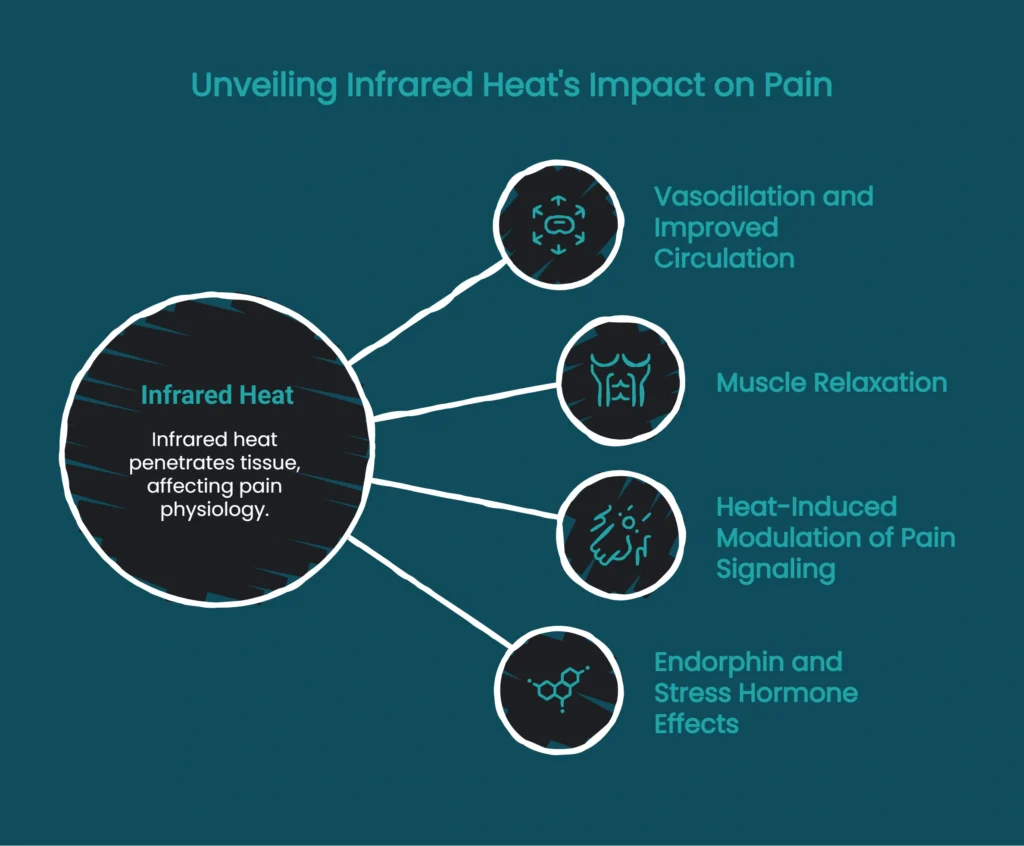
Before examining condition-specific evidence, it helps to understand how infrared heat could plausibly affect pain perception. Several mechanisms have been proposed and studied:
Vasodilation and Improved Circulation
Far-infrared wavelengths (3–14 microns) penetrate tissue up to approximately 1.5 inches, warming deep soft tissue and triggering local vasodilation. Improved blood flow to painful areas delivers oxygen and nutrients while removing metabolic waste products (including lactate and inflammatory mediators) that accumulate in hypoxic or inflamed tissue.
In chronic pain conditions involving tissue hypoxia or restricted circulation — such as fibromyalgia and some forms of arthritis — this mechanism is plausible and supported by the vasodilation evidence from infrared tissue studies.
Muscle Relaxation
Deep tissue warming directly reduces muscle tension by affecting the mechanical properties of collagen and connective tissue (which become more pliable at elevated temperatures) and by reducing hypertonicity in chronically guarded muscle groups. This mechanism is relevant for musculoskeletal pain conditions where muscle tension and spasm contribute to symptom burden.
Heat-Induced Modulation of Pain Signaling
Heat activates TRPV1 receptors (transient receptor potential vanilloid type 1) in sensory neurons — the same receptors activated by capsaicin. In controlled heat exposure, TRPV1 activation can temporarily desensitize pain signaling pathways, reducing perceived pain intensity. This mechanism, well-established in heat therapy research, may contribute to the temporary pain relief reported by chronic pain patients after sauna sessions.
Endorphin and Stress Hormone Effects
Whole-body heat exposure triggers endorphin release and reduces cortisol in some studies. Both effects may contribute to reduced pain perception — endorphins through direct analgesic action, cortisol reduction through decreasing stress-mediated pain amplification common in central sensitization conditions.
Condition-Specific Evidence
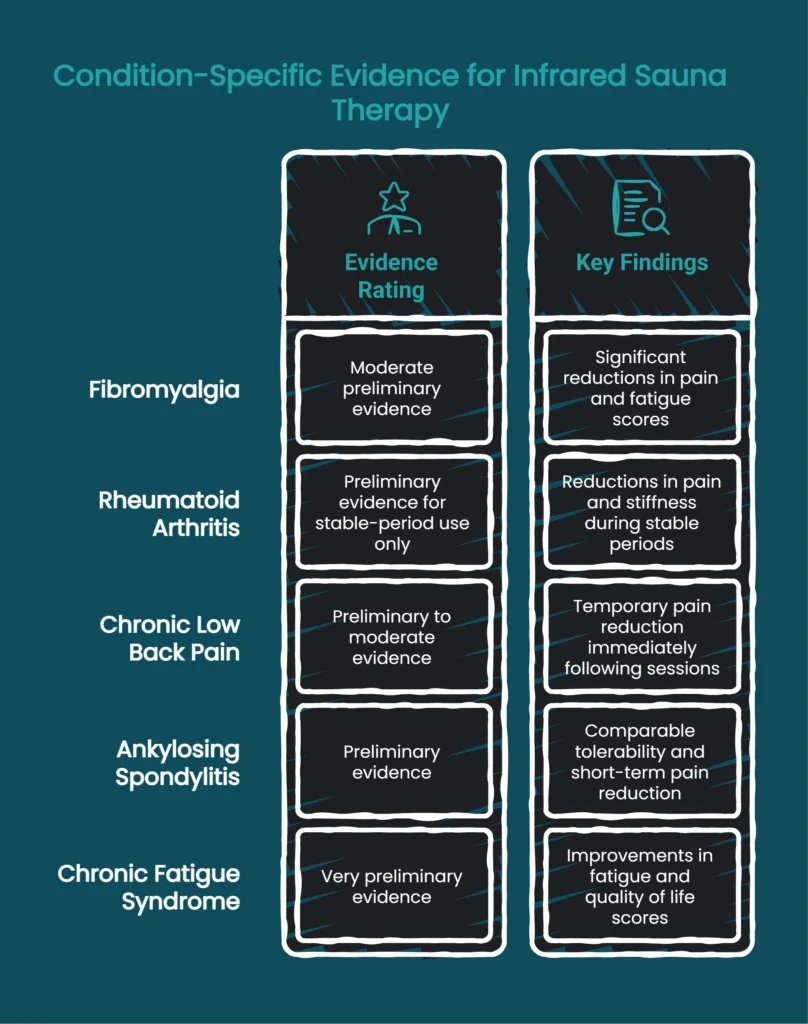
Fibromyalgia
Fibromyalgia is the condition with the most specific infrared sauna evidence. It is characterized by widespread musculoskeletal pain, fatigue, and sleep disturbance — symptoms that align with several of infrared’s proposed mechanisms.
A 2008 study published in Internal Medicine examined far-infrared sauna therapy in fibromyalgia patients over a 12-week period. Patients receiving far-infrared sauna sessions reported significant reductions in pain and fatigue scores, with improvements maintained at 6-month follow-up. [1] The study noted that the improvements were observed alongside standard care, not as a replacement for it.
A separate review of infrared therapy for fibromyalgia noted consistent patient-reported improvements in pain and quality of life measures, while acknowledging that the studies were small and lacked rigorous control designs. [2]
Evidence rating for fibromyalgia: Moderate preliminary evidence. Consistent direction of effect across small studies; no large RCTs to confirm magnitude of benefit.
Rheumatoid Arthritis
Rheumatoid arthritis (RA) involves immune-mediated joint inflammation. Infrared sauna use for RA requires careful consideration because heat can worsen acute inflammation flares while potentially providing relief during stable periods.
A pilot study examined infrared sauna therapy in RA and ankylosing spondylitis patients during clinically stable periods. Short-term infrared sauna sessions were found to be well-tolerated and produced reductions in pain and stiffness during the treatment period, with no significant worsening of disease activity. [3] However, the study was short-term and involved supervised sessions.
Critical caveat: Infrared sauna use during active RA flares — when joints are acutely inflamed — is contraindicated. Heat applied to acutely inflamed joints can intensify inflammation and pain. This makes the timing of sessions critical.
Evidence rating for RA: Preliminary evidence for stable-period use only. Use only under medical guidance.
Chronic Low Back Pain
Chronic low back pain is one of the most common chronic pain conditions and one where infrared therapy has plausible mechanisms through deep muscle warming and vasodilation of lumbar soft tissue.
A systematic review examining far-infrared radiation therapy for musculoskeletal conditions found evidence suggesting beneficial effects for chronic low back pain, though the authors noted the limited number and size of available studies. [4] The most consistent finding was temporary pain reduction immediately following sessions, with variable durability of effect.
Evidence rating for low back pain: Preliminary to moderate evidence for temporary pain reduction. Not established as a long-term disease-modifying intervention.
Ankylosing Spondylitis
Ankylosing spondylitis (AS) is a form of inflammatory arthritis primarily affecting the spine. The same pilot study that examined RA also included AS patients, finding comparable tolerability and short-term pain reduction. [3]
Given the nature of AS — a progressive condition with structural changes — infrared sauna use should be considered strictly a symptom management tool, not a disease-modifying intervention, and requires medical clearance.
Chronic Fatigue Syndrome
Some research has examined infrared sauna use for chronic fatigue syndrome (CFS), where chronic pain, fatigue, and autonomic dysfunction overlap significantly with fibromyalgia. A small study found improvements in fatigue and quality of life scores in CFS patients after repeated infrared sauna sessions. [5] Evidence remains very preliminary given the limited number of studies.
What the Evidence Does Not Show
Clarity on what the research cannot yet support is as important as what it does suggest:
- No large randomized controlled trials exist for infrared sauna use in any chronic pain condition — the evidence base consists primarily of small pilot studies and case series
- Long-term pain modification — the studies showing benefit are typically 4–12 weeks; whether infrared sauna use produces lasting pain reduction beyond the treatment period is unknown
- Disease modification — there is no evidence that infrared sauna use changes the underlying pathology of any chronic pain condition (joint damage in RA, central sensitization in fibromyalgia, etc.)
- Superiority to other heat therapies — it is not established whether infrared specifically is more effective than other forms of heat therapy (hot baths, traditional sauna, heating pads) for chronic pain
Safe Usage Framework for Chronic Pain Conditions
General Protocol Considerations
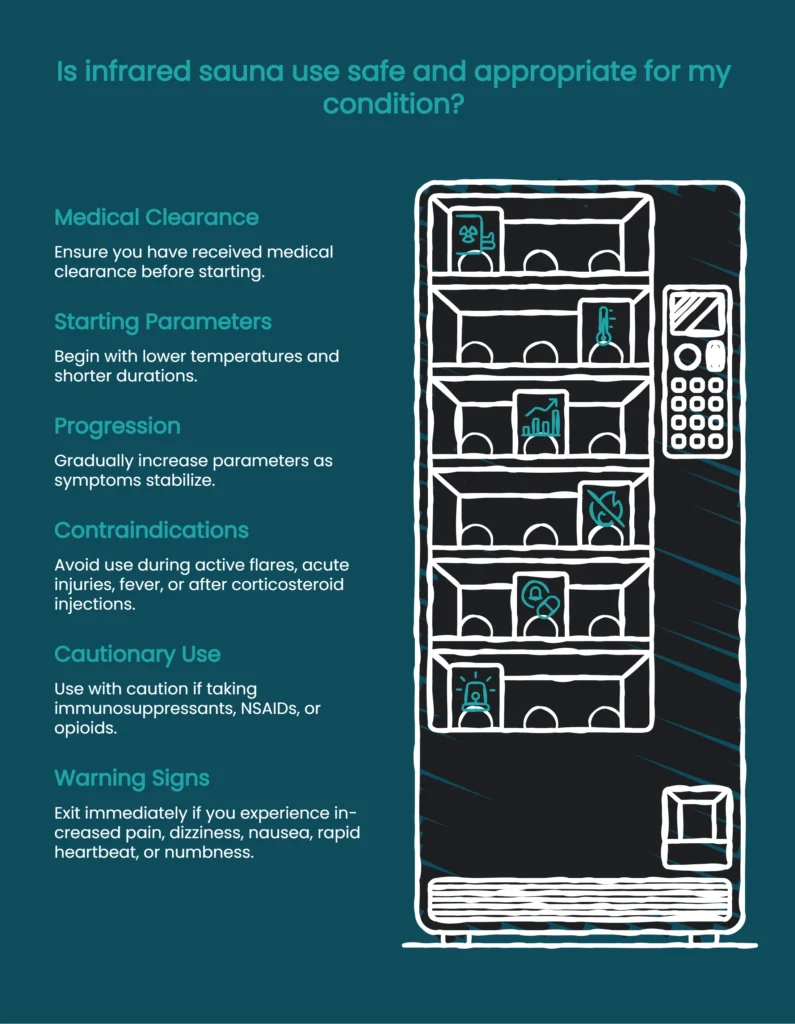
For individuals with chronic pain conditions who have received medical clearance for infrared sauna use:
Starting parameters:
- Temperature: 110–120°F initially (lower than standard wellness protocols)
- Duration: 10–15 minutes per session initially
- Frequency: 2–3 times per week during initial 4–6 week adaptation period
- Position: Adjust seated position to minimize direct heat on most acutely affected joints
Progression (only with stable symptoms):
- Temperature: Increase to 120–135°F over 4–6 weeks if well-tolerated
- Duration: Increase to 20–30 minutes as tolerance develops
- Frequency: Maintain 3–4 times per week
Condition-Specific Contraindications
Do not use infrared saunas during:
- Active inflammatory flares (RA, ankylosing spondylitis, psoriatic arthritis)
- Acute injury or trauma to any affected joint
- Fever (already elevated core temperature)
- Corticosteroid injection within 48–72 hours to treated area
Use with extra caution and medical guidance if:
- Taking immunosuppressant medications (effects on thermoregulation may vary)
- Taking NSAIDs (ensure adequate hydration, as these affect kidney function and hydration status)
- Taking opioid medications (impaired ability to sense heat accurately)
Warning Signs During Sessions
Exit the sauna immediately and do not return to the session if you experience:
- Increased joint pain during the session (not temporary discomfort but acute worsening)
- Dizziness, nausea, or disorientation
- Rapid or irregular heartbeat
- Numbness in affected limbs
How to Integrate Infrared Sauna Into Chronic Pain Management
The available evidence positions infrared sauna as a complementary strategy — one tool within a broader pain management approach rather than a standalone intervention.
It fits alongside: Physical therapy, prescribed medications, cognitive behavioral therapy for pain, exercise programs, and sleep optimization.
It does not replace: Prescribed disease-modifying drugs for conditions like RA, physiotherapy for structural rehabilitation, or medical monitoring of disease activity.
Timing within a pain management routine: For musculoskeletal conditions, sessions after gentle movement or physical therapy (rather than before) may provide better symptomatic relief by combining the warming and vasodilation effects with movement-induced circulation.
Tracking response: Because individual responses to heat therapy vary considerably, tracking pain scores and fatigue levels before and after sessions over a 4–6 week period provides more reliable information about personal effectiveness than single-session impressions.
Frequently Asked Questions
Can infrared saunas help with fibromyalgia?
The most specific evidence for chronic pain comes from fibromyalgia research. Multiple small studies report improvements in pain and fatigue scores with regular far-infrared sauna use as a complementary approach. The evidence is preliminary but consistently directional — improvements are reported across studies. No large randomized controlled trials have been completed.
Is infrared sauna safe during arthritis flares?
No. Heat should not be applied to acutely inflamed joints. Infrared sauna use should be limited to stable periods between flares and requires explicit clearance from your rheumatologist or treating physician.
How long before I might notice pain relief from infrared sauna?
Based on the available studies, most participants who reported benefits did so after 4–8 weeks of regular sessions (2–4 times per week). Single sessions may provide temporary relief through acute muscle relaxation and vasodilation, but sustained benefit appears to require consistent use over weeks.
Can infrared saunas replace pain medication?
No. Infrared saunas are a complementary tool for symptom management. Do not reduce or discontinue prescribed pain medications based on sauna use without consulting your healthcare provider.
Which infrared wavelength is most relevant for pain?
Far-infrared (FIR) at 3–14 microns is the wavelength with the most direct evidence for deep tissue heating and pain-relevant mechanisms (vasodilation, muscle relaxation). Mid-infrared (MIR) has additional potential for circulation enhancement in soft tissue. Most chronic pain studies have used FIR-dominant saunas.
Medical Disclaimer: This article provides educational information about infrared sauna research in relation to chronic pain conditions and does not constitute medical advice. Chronic pain conditions require individualized medical management. Always consult your healthcare provider or specialist before adding infrared sauna use to your treatment approach, particularly if you take prescription medications or have inflammatory conditions.
For comprehensive guides on infrared sauna safety, mechanisms, and evidence-based applications, visit Sauna Health Nut.
References
[1] Matsushita K, et al. “A pilot study of the effects of far infrared ray on fibromyalgia.” Internal Medicine. 2008. https://pubmed.ncbi.nlm.nih.gov/19057192/
[2] Oosterveld FG, et al. “Infrared sauna in patients with rheumatoid arthritis and ankylosing spondylitis.” Clinical Rheumatology. 2009. https://pubmed.ncbi.nlm.nih.gov/18685882/
[3] Oosterveld FG, et al. “Infrared sauna in patients with rheumatoid arthritis and ankylosing spondylitis.” Clinical Rheumatology. 2009. https://pubmed.ncbi.nlm.nih.gov/18685882/
[4] Tsai SR, Hamblin MR. “Biological effects and medical applications of infrared radiation.” Journal of Photochemistry and Photobiology B. 2026. https://www.ncbi.nlm.nih.gov/pmc/articles/PMC3699878/
[5] Masuda A, et al. “The effects of repeated thermal therapy for patients with chronic fatigue syndrome.” Psychosomatic Medicine. 2005. https://pubmed.ncbi.nlm.nih.gov/15992182/
You might also find these useful: