
How to Use a Sauna Safely: A Beginner’s Session Guide

Short answer: To use a sauna safely, enter pre-hydrated, start with shorter sessions at lower temperatures (10–15 minutes at 110–120°F for infrared; 8–10 minutes at 160–170°F for traditional), exit immediately if you feel dizzy or nauseous, and drink 16–24 oz of water after each session. First-time users should start conservatively regardless of sauna type and increase duration and temperature gradually over 4–6 sessions. Anyone with cardiovascular conditions, pregnancy, or medications affecting thermoregulation must consult a healthcare provider before any sauna use.
Last updated: 2026
At a glance
- Pre-session hydration is the single most important safety step — enter every session already hydrated
- Beginners should start at 10–15 minutes maximum regardless of sauna type; increase gradually over multiple sessions
- Warning signs to exit immediately: dizziness, nausea, lightheadedness, headache, or heart pounding
- Alcohol before or during sauna use is dangerous — it accelerates dehydration and impairs heat perception
- Medical clearance is required before sauna use with cardiovascular conditions, pregnancy, or medications affecting thermoregulation
Who this guide is for
This article is for first-time sauna users and people returning to sauna use after a break who want clear, practical guidance on session preparation, duration, temperature, and safety. It covers both infrared and traditional saunas. For evidence-based information on specific health applications, see our related articles on recovery, sleep, and stress reduction.
Before You Enter: Pre-Session Preparation
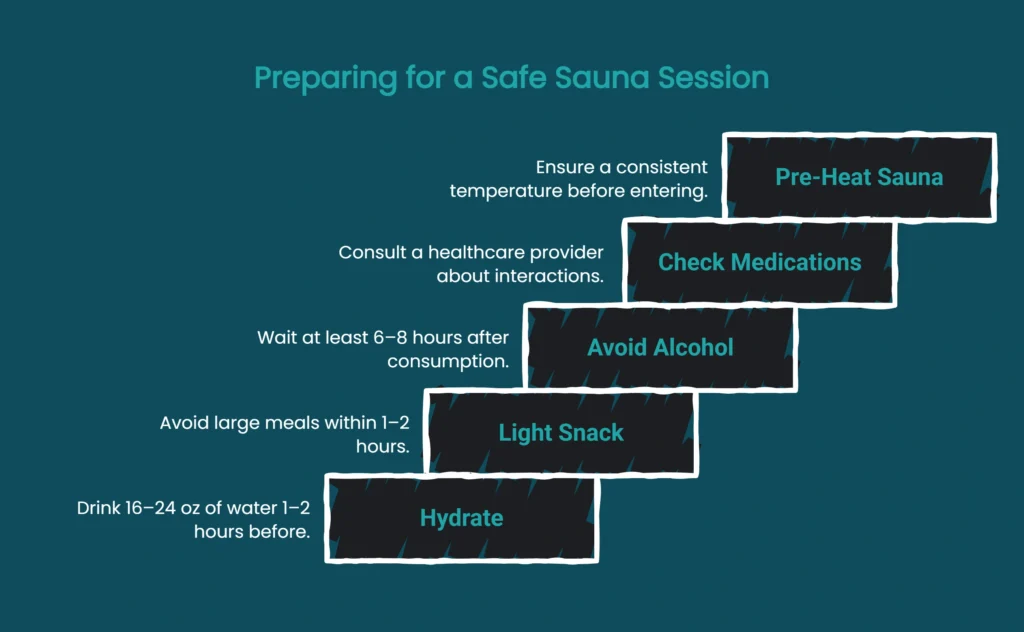
What you do before entering a sauna matters as much as what you do inside it. Most sauna-related adverse events — dizziness, fainting, heat exhaustion — are preventable with proper preparation.
Hydration
Drink 16–24 oz (500–700 ml) of water in the 1–2 hours before your session. Do not enter a sauna if you are already thirsty — thirst is a lagging indicator of dehydration, meaning you are already mildly dehydrated by the time you feel it.
Do not rely on drinking large amounts immediately before the session as a substitute for pre-session hydration — the body cannot absorb fluid fast enough to compensate for entering dehydrated.
Food
Avoid large meals within 1–2 hours of sauna use. The digestive system requires significant blood flow; a sauna session simultaneously redirects blood flow toward the skin for heat dissipation, creating competing demands that can cause discomfort, nausea, or dizziness. A light snack is fine; a full meal is not.
Alcohol
Never use a sauna after consuming alcohol. Alcohol is a diuretic that accelerates fluid loss, compounds the dehydration effect of sweating, and impairs your ability to perceive the warning signs of overheating. Alcohol combined with sauna heat is one of the most common factors in sauna-related medical emergencies. Wait at least 6–8 hours after significant alcohol consumption before any sauna session.
Medications
Some prescription medications interact dangerously with heat stress. Diuretics increase fluid loss and dehydration risk. Beta blockers blunt the cardiovascular response — your heart rate may not rise normally, masking overheating signals. Antihistamines impair sweating and thermoregulation. If you take any prescription medications, consult your healthcare provider or pharmacist before beginning sauna use.
Pre-Heat the Sauna
For both sauna types, pre-heating to your target temperature before entering produces a more consistent session than entering a cold cabin and waiting for it to heat. Infrared saunas typically pre-heat in 10–20 minutes; traditional saunas take 20–40 minutes depending on the heater size and cabin volume.
First Session Guidelines by Sauna Type
Infrared Sauna: First Session
Temperature: 110–120°F (43–49°C). Duration: 10–15 minutes maximum. Stay seated on the bench — do not lie down for your first session, as lying down increases the thermal load. Keep the door slightly open if the heat feels too intense — there is no benefit to forcing discomfort. Drink water during the session if it lasts longer than 10 minutes.
Exit the sauna, cool down for at least 5–10 minutes before showering, and drink 16–24 oz of water. Note how you feel for the next 30–60 minutes — mild fatigue is normal; dizziness, headache, or nausea are signs you pushed too hard and should shorten your next session.
Traditional Sauna: First Session
Temperature: 160–170°F (71–77°C) — lower bench position reduces effective heat exposure significantly. Duration: 8–10 minutes maximum for the first round. Exit and cool down for at least 5–10 minutes — do not rush back in. One round is sufficient for a first session.
The löyly (steam from water on the stones) dramatically intensifies heat perception — avoid it entirely for your first session until you understand your heat tolerance.
Beginner Progression: First 6 Sessions
Most adverse reactions to sauna use happen when new users attempt too much too soon. A gradual progression builds heat tolerance safely.
| Session | Infrared Temperature | Infrared Duration | Traditional Temperature | Traditional Duration |
|---|---|---|---|---|
| 1–2 | 110–120°F | 10–15 min | 160–170°F | 8–10 min (1 round) |
| 3–4 | 120–130°F | 15–20 min | 165–175°F | 10–12 min (1–2 rounds) |
| 5–6 | 125–135°F | 20–25 min | 170–180°F | 12–15 min (2 rounds) |
| Ongoing | 130–150°F | 20–30 min | 170–190°F | 10–15 min (2–3 rounds) |
Increase only one variable at a time — either temperature or duration, not both simultaneously.
What to Do Inside the Sauna
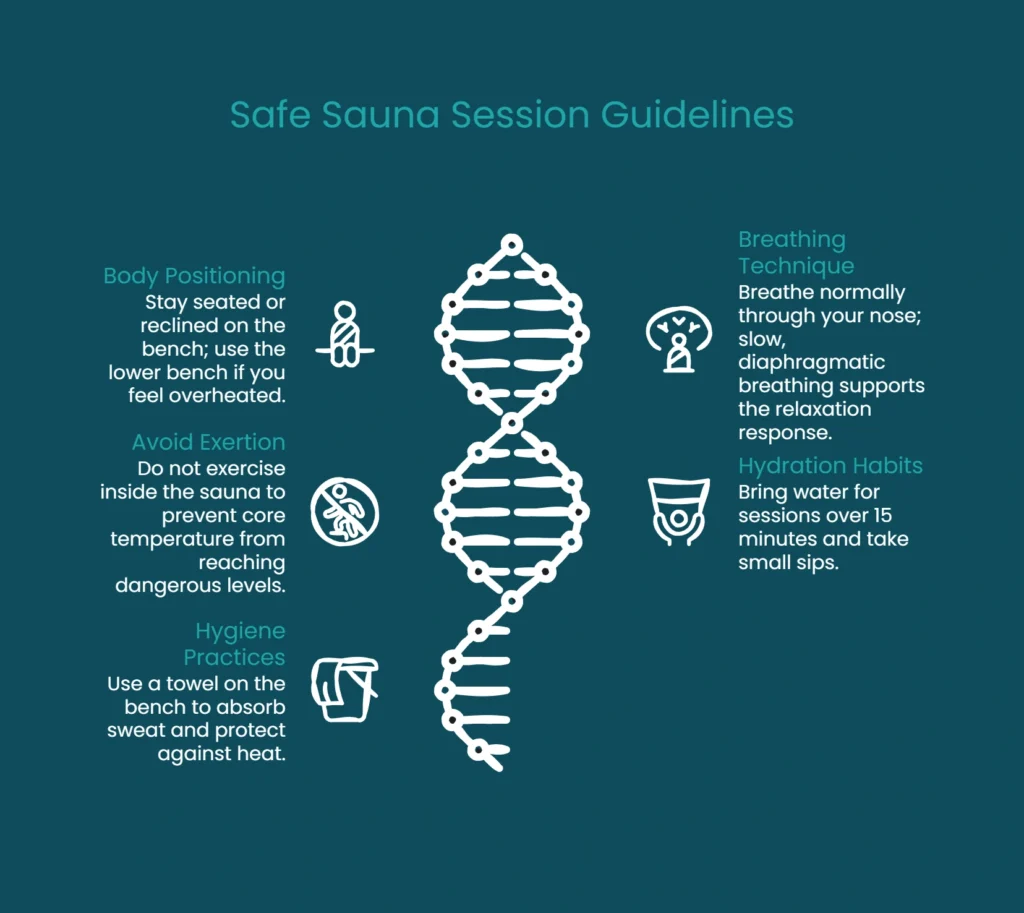
Stay seated or reclined on the bench. The lower bench is cooler in both sauna types — use it if you feel overheated. The upper bench is significantly hotter in traditional saunas.
Breathe normally. Some first-time users instinctively hold their breath or breathe shallowly in hot air — breathe normally through your nose. Slow, diaphragmatic breathing actively supports the relaxation response.
Do not exercise inside the sauna. Yoga poses, stretching routines, or any exertion inside the sauna adds metabolic heat load to the already-elevated ambient thermal load. The combination can rapidly push core temperature to dangerous levels.
Bring water for sessions over 15 minutes. Take small sips rather than large drinks — your stomach is less efficient at absorbing fluid in the heat.
Use a towel on the bench. This is both hygienic and practical — the towel absorbs sweat and prevents the wooden bench from becoming uncomfortably hot to sit on directly.
Warning Signs: Exit the Sauna Immediately
These symptoms indicate your body is struggling to maintain safe core temperature. Exit the sauna immediately — do not wait to see if they pass:
- Dizziness or lightheadedness
- Nausea or the feeling you might vomit
- Headache developing during the session
- Heart pounding noticeably or feeling irregular
- Extreme fatigue or sudden weakness
- Confusion or difficulty thinking clearly
- Tingling in hands or feet
- Skin becomes hot but stops sweating (dangerous sign of impaired thermoregulation)
After exiting for any of these symptoms, sit in a cool area, drink water slowly, and apply a cool wet cloth to your neck and wrists. If symptoms do not resolve within 5–10 minutes or worsen, seek medical attention.
Post-Session Recovery
Cool down gradually — do not go directly from the sauna into ice-cold water for your first several sessions. A cool (not cold) shower or simply sitting in a cool room for 5–10 minutes before a shower is appropriate for beginners.
Rehydrate — drink 16–24 oz of water immediately after your session. For sessions over 25 minutes or in hot ambient conditions, add electrolytes (sodium, potassium, magnesium) to your post-session hydration — water alone does not replace the electrolytes lost through sweating.
Rest — the post-sauna parasympathetic rebound produces significant relaxation and mild fatigue. Plan 20–30 minutes of rest after your first several sessions rather than immediately returning to demanding activities.
Eat if needed — a light snack after a session is fine. A large meal immediately after may cause digestive discomfort given the blood flow redistribution that occurs during heat exposure.
Who Should Not Use a Sauna Without Medical Clearance
The following groups require explicit medical clearance before any sauna use. This is not a suggestion — the cardiovascular and thermoregulatory demands of sauna use pose genuine risk for these populations without prior assessment:
- Anyone with a history of heart disease, heart attack, or stroke
- People with uncontrolled high blood pressure
- Pregnant women (first trimester especially — core temperature elevation is linked to neural tube defects)
- People with implanted cardiac devices (pacemakers, ICDs)
- Anyone with a condition affecting the ability to sweat or sense heat (multiple sclerosis, severe neuropathy)
- People on diuretics, beta blockers, antihistamines, or psychiatric medications that affect thermoregulation
- Anyone recovering from acute illness or currently running a fever
For a comprehensive overview of contraindications and safety considerations, see our infrared sauna safety guide.

Frequently Asked Questions
How long should a beginner stay in a sauna?
10–15 minutes for an infrared sauna first session; 8–10 minutes for a traditional sauna first session. These limits apply regardless of how good you feel — heat tolerance takes time to develop and adverse effects can appear suddenly in less experienced users.
Should I shower before or after a sauna?
Shower after, not before — unless you have cosmetic products (sunscreen, makeup, lotion) on your skin that you want to remove before sweating. Showering before a session removes natural skin oils that protect against heat; showering after removes sweat and allows your pores to close gradually.
How often can a beginner safely use a sauna?
Start with 2 times per week for the first 2–3 weeks. This allows your body to adapt to the heat stress between sessions. After 4–6 sessions with no adverse reactions, gradually increase to 3–4 times per week if desired.
Is it normal to feel tired after a sauna?
Yes — mild fatigue after a sauna session is normal and is caused by the cardiovascular effort of thermoregulation and the post-session parasympathetic shift. Extreme fatigue, weakness, or fatigue that persists for several hours may indicate you stayed too long or became dehydrated.
Can I bring my phone into a sauna?
Infrared saunas: most phones can tolerate the ambient temperatures of infrared saunas (110–150°F) for short periods, though battery performance may be reduced. Traditional saunas at 170–195°F will damage most phones quickly. More practically — leaving your phone outside supports the stress-reduction and relaxation goals of the session.
Medical Disclaimer: This article provides educational information about sauna use and does not constitute medical advice. Individuals with pre-existing health conditions, cardiovascular disease, pregnancy, or medications affecting thermoregulation must consult a qualified healthcare provider before beginning sauna use. Exit the sauna and seek medical attention if you experience chest pain, difficulty breathing, or loss of consciousness.
For comprehensive guides on sauna safety, contraindications, and evidence-based health applications, visit Sauna Health Nut.
References
[1] Hannuksela ML, Ellahham S. “Benefits and risks of sauna bathing.” The American Journal of Medicine. 2001. View on PubMed
[2] Laukkanen JA, et al. “Cardiovascular and Other Health Benefits of Sauna Bathing: A Review of the Evidence.” Mayo Clinic Proceedings. 2026. View on PubMed
You might also find these useful: