How to Combine Cold Plunge and Sauna Safely
Short answer: The most common and best-supported contrast therapy protocol is sauna first, then cold plunge, repeated for two to three rounds, ending on cold. Spend 10-20 minutes in the sauna, followed by 1-3 minutes in cold water (roughly 50-59°F), rather than the reverse order. Going sauna-to-cold trains your blood vessels to constrict and dilate in a predictable, well-tolerated sequence, while starting cold and then heating up is less studied and can mask early warning signs of cardiovascular strain during the heat phase. Anyone with a heart condition, uncontrolled blood pressure, or who is pregnant should get medical clearance before combining the two rather than trying this on their own.
Last updated: 2026
At a glance:
- Standard order: sauna first, cold plunge second, repeated for 2-3 rounds, ending on cold
- Typical sauna phase: 10-20 minutes; typical cold phase: 1-3 minutes at roughly 50-59°F
- Never enter cold water immediately after intense heat if you feel dizzy, lightheaded, or your heart rate hasn’t started to settle
- The vasoconstriction-vasodilation cycle (blood vessels narrowing in cold, widening in heat) is the proposed mechanism behind reported circulation and recovery benefits, though most contrast-therapy specific research is still preliminary
- Contrast therapy is not appropriate for people with uncontrolled hypertension, certain heart conditions, Raynaud’s syndrome, or during pregnancy without medical clearance
- Hydrate before and between rounds; both heat and cold exposure independently increase fluid loss and cardiovascular demand
Who this guide is for: Sauna owners who also have access to a cold plunge, ice bath, or very cold shower and want a sensible, safety-first way to combine the two rather than guessing at order and timing.
Why Does the Order Matter?
Heat and cold exposure each trigger opposite responses in your blood vessels. Sauna heat causes vasodilation, your blood vessels widen to help move heat from your core to your skin for cooling. Cold water immersion causes the opposite: rapid vasoconstriction, where blood vessels narrow to preserve core temperature and reduce heat loss. Doing sauna first means your cardiovascular system is already warmed up and your blood vessels are dilated before you ask them to suddenly constrict, which is a more predictable, better-tolerated sequence than starting cold, since a cold-first approach means your body is constricting blood flow at the exact moment you’re about to add significant heat stress on top of it, a combination that’s less studied and gives you less warning if something feels off.
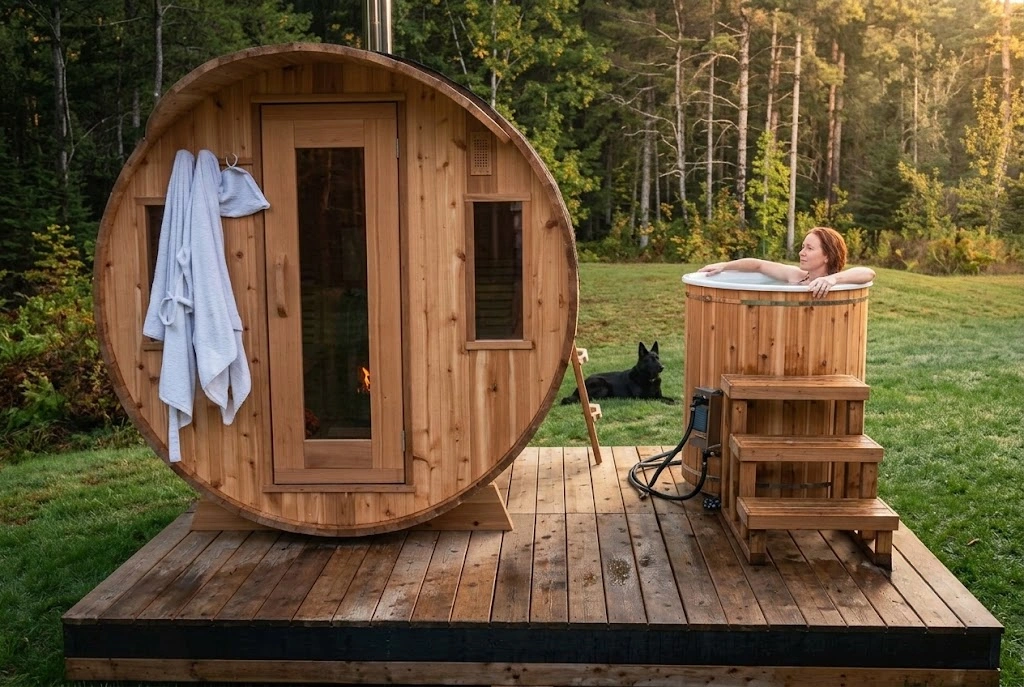
What Does a Standard Contrast Protocol Actually Look Like?
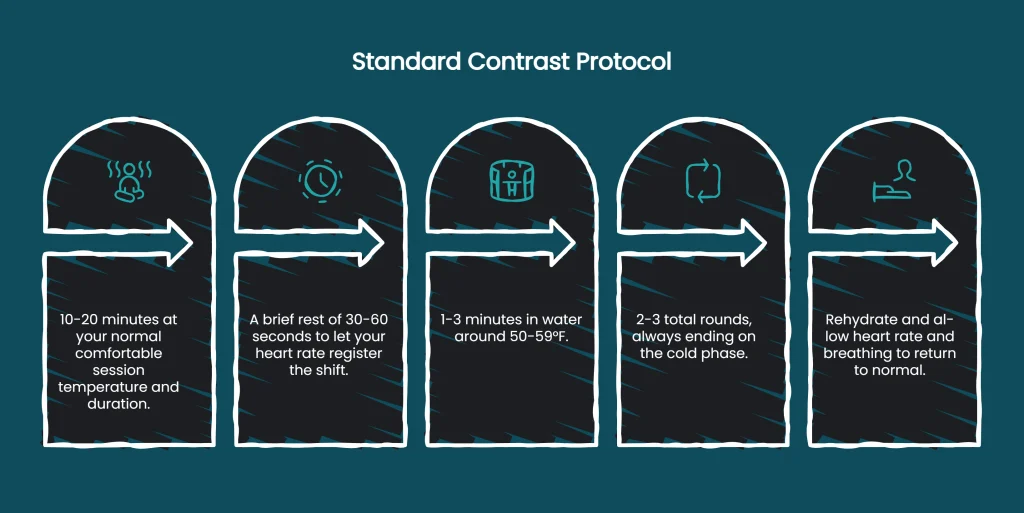
- Sauna phase: 10-20 minutes at your normal comfortable session temperature and duration, per your sauna type’s temperature and time guidelines.
- Transition: A brief rest, even 30-60 seconds, to let your heart rate register the shift before entering cold water, rather than moving directly from bench to plunge.
- Cold phase: 1-3 minutes in water around 50-59°F. Beginners often start at the higher end of that range (or even a cool, not fully cold, shower) and work down over multiple sessions rather than jumping straight into the coldest tolerable water.
- Repeat: 2-3 total rounds is a common protocol, always ending on the cold phase rather than the hot phase, since ending on heat leaves your blood vessels dilated and your body still working to cool down as you finish your session, rather than in the more settled state that follows a final cold exposure.
- Recovery: Rehydrate and allow your heart rate and breathing to return to a normal resting pattern before resuming normal activity, especially before driving or exercising.
How Long and How Cold Should Each Phase Actually Be?
There’s no single validated “optimal” duration and temperature combination for contrast therapy the way there is for some single-modality sauna research, so the ranges above reflect commonly used, generally well-tolerated protocols rather than a number pulled from a specific controlled trial. What matters more than hitting an exact number is scaling the cold exposure to your own tolerance and building it up gradually. A cold plunge that leaves you gasping uncontrollably or unable to catch your breath is too aggressive for a starting point, regardless of what temperature or duration a specific protocol online suggests.
Does the Protocol Change for Infrared vs. Traditional Sauna?
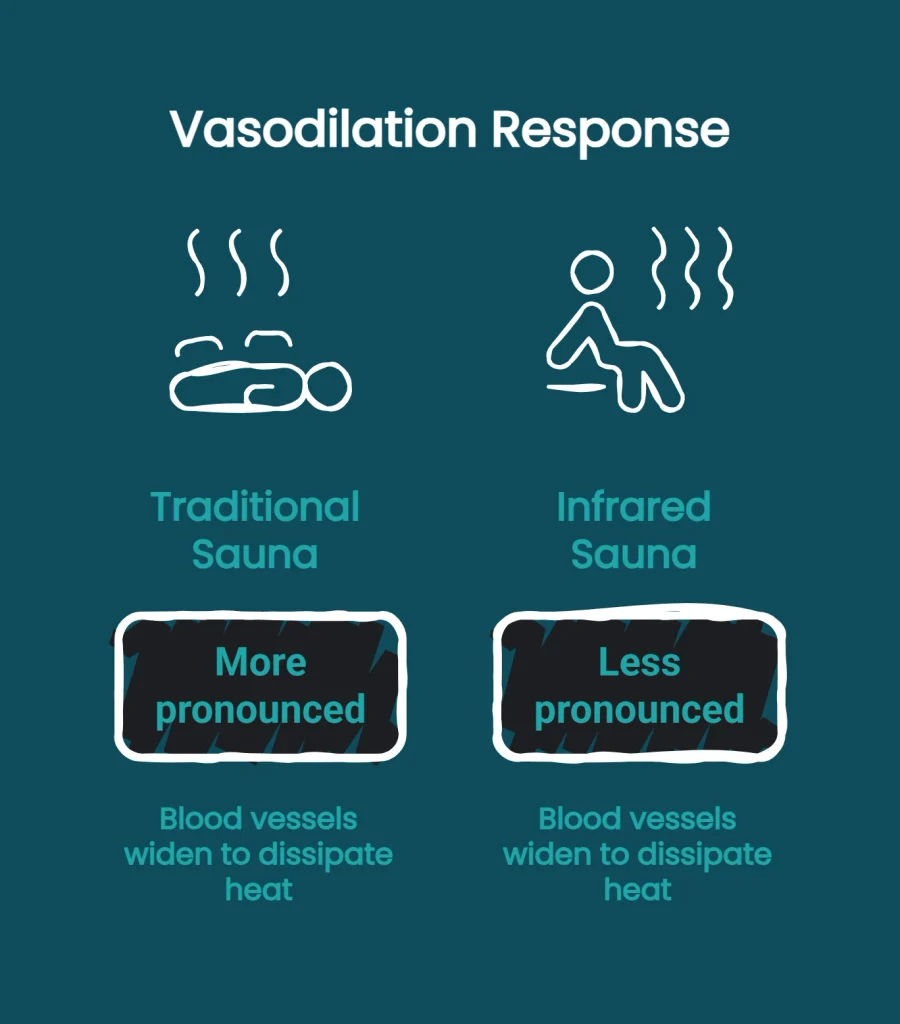
Yes, somewhat, and this is worth knowing before you assume one standard protocol applies identically to both sauna types. Traditional saunas run 150-195°F, meaningfully hotter than a typical infrared session at 120-140°F, which means the vasodilation response, your blood vessels widening to help dissipate heat, is generally more pronounced coming out of a traditional sauna than an infrared one. That has a direct practical implication: the contrast you feel stepping from a traditional sauna into 50-59°F water is likely to feel more intense than the same cold plunge after an infrared session, simply because your body is starting from a hotter, more dilated baseline.
This doesn’t mean infrared and cold plunge is a lesser combination, it just means the two aren’t perfectly interchangeable in a single protocol. If you’re used to traditional sauna and cold plunge and switching to infrared, don’t be surprised if the contrast feels milder at the same cold-water temperature and duration. If you want a comparably intense contrast experience with an infrared sauna, some people compensate with a slightly longer heat phase (toward the upper end of the 10-20 minute range) rather than making the cold phase more extreme, since increasing cold exposure duration or lowering temperature further carries more risk than simply spending more time in a moderate infrared session first.
What Mistakes Do Most Beginners Make With Contrast Therapy?
A few patterns show up repeatedly with people just starting contrast therapy, and most of them are avoidable with a little patience:
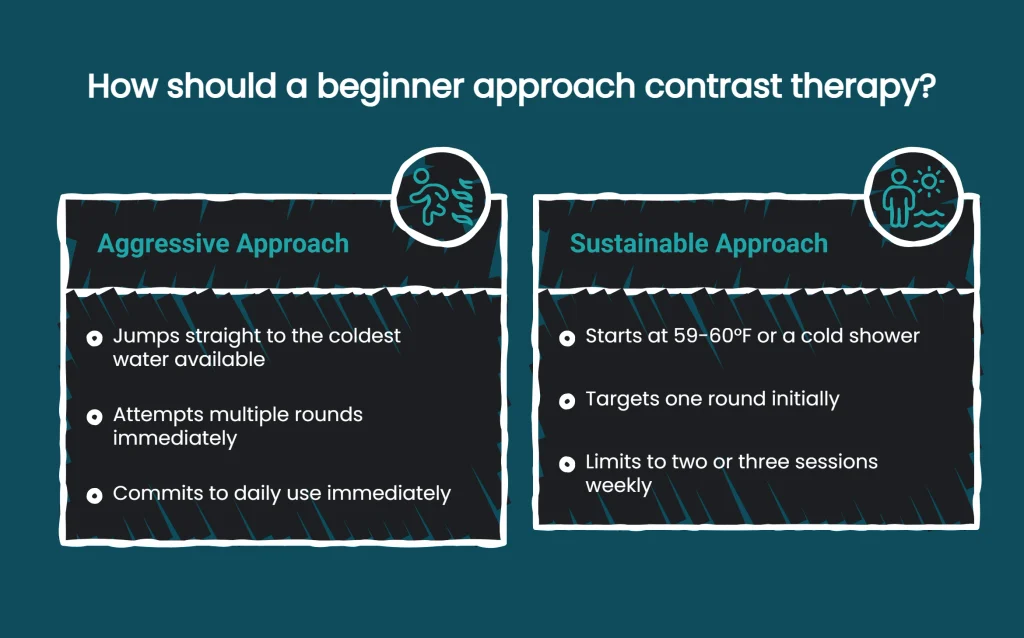
- Jumping straight to the coldest water available. Starting at 39°F because that’s what an experienced practitioner uses is a common way to have a genuinely miserable, breath-stealing first experience that puts people off the practice entirely. Starting at 59-60°F, or even a cold shower, and working colder over weeks is a far more sustainable path to the same eventual tolerance.
- Doing too many rounds too soon. Two to three rounds is a reasonable target, but there’s no rule saying your first session needs to hit that number. One round, done calmly and completed without distress, teaches you more about your own tolerance than three rounds where you’re gritting your teeth through the last one.
- Skipping the transition pause between sauna and cold. Moving directly from bench to plunge without even a 30-60 second pause doesn’t give your body a moment to register the shift, which makes the cold hit feel more jarring than it needs to and gives you less warning if you’re not tolerating the heat phase as well as you thought.
- Treating contrast therapy as a daily requirement immediately. There’s no research establishing that more frequent contrast sessions produce proportionally more benefit, and starting with two to three sessions a week while you learn your tolerance is a more reasonable approach than committing to daily use before you know how your body responds.
- Ignoring how a specific day’s baseline affects tolerance. Poor sleep, dehydration, illness, or a particularly hard workout that same day all lower your practical tolerance for both heat and cold, even if you handled the same protocol fine the week before. Treat contrast therapy as something to scale to how you’re actually feeling that day, not a fixed routine to push through regardless of circumstance.
- Uncontrolled high blood pressure or known heart disease: the rapid vasoconstriction of cold water immersion places acute demand on the cardiovascular system, on top of the demand already placed by the preceding heat exposure. Get medical clearance first.
- Pregnancy: both heat and cold extremes carry separate precautions during pregnancy; combining them without medical guidance isn’t advisable.
- Raynaud’s syndrome or other circulation disorders: cold water immersion can trigger a more severe or prolonged vasoconstrictive response in people with these conditions.
- Recent illness, fever, or significant dehydration: both heat and cold exposure add cardiovascular and fluid-balance demand your body may not be equipped to handle on top of recovering from illness.
- First-time cold exposure of any kind: if you’ve never tried cold water immersion before, test your tolerance to cold alone, separate from a sauna session, before combining the two.
What Should Recovery Look Like After Your Last Round?
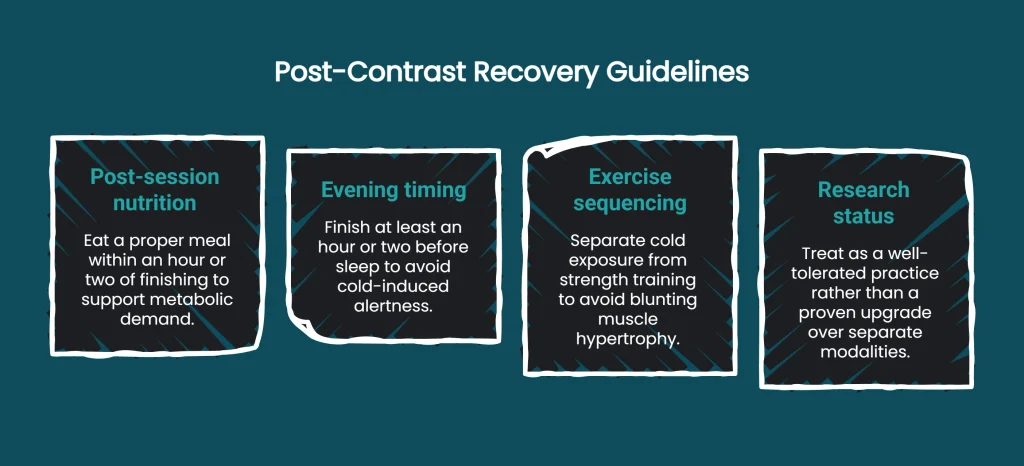
The step-by-step protocol above covers the immediate transition (rehydrate, let your heart rate settle), but a few additional practical details matter for how you feel in the hours afterward. Eating a proper meal within an hour or two of finishing is a reasonable habit, both heat and cold exposure add real metabolic demand, and going straight into a long fasting window immediately after a contrast session isn’t necessary and can leave you feeling more drained than the session itself would otherwise cause. If you’re doing contrast therapy in the evening, leave enough buffer before bed, most people find that finishing at least an hour or two before sleep works better than going straight from a cold plunge into bed, since the alertness spike from cold exposure specifically can work against winding down for sleep, even though the preceding heat phase often has the opposite, more sedating effect on its own.
If you’re combining contrast therapy with exercise, sequencing matters too. Doing contrast therapy immediately after a hard strength training session is common practice, but be aware of what the research on this actually shows: several controlled studies have found that cold water immersion done soon after resistance training blunts the muscle fiber hypertrophy (growth) response, likely by reducing post-exercise anabolic signaling and increasing markers of muscle protein breakdown.[1] A meta-analysis pooling this research found the effect on hypertrophy specifically to be a real, small-to-moderate reduction, while the effect on maximal strength gains is more mixed across individual studies, some show a meaningful reduction in strength adaptation as well, others show hypertrophy blunted without a corresponding strength impairment.[2] If maximizing muscle growth or strength gains from a specific training block is your primary goal, separating your cold exposure from that workout by several hours, or moving it to a different day, is a reasonable, evidence-based precaution rather than just a cautious guess.
What Does the Research Actually Support Here?
Most of the well-documented sauna research on this site (cardiovascular outcomes, blood pressure, arterial stiffness) comes from studies of sauna use alone, not sauna paired with cold exposure. Contrast therapy specifically, alternating hot and cold, has a smaller and more preliminary research base, largely focused on muscle recovery and perceived soreness after exercise rather than the longer-term cardiovascular outcomes better documented for sauna alone. The vasoconstriction-vasodilation cycle itself is well-established physiology, but claims about specific additional benefits from alternating the two beyond what either modality provides on its own remain preliminary rather than well-documented. Treat contrast therapy as a reasonable, generally well-tolerated practice for people without contraindications, not as a proven upgrade over sauna or cold exposure used separately.
Frequently Asked Questions
Should you do sauna or cold plunge first? Sauna first, then cold plunge, is the standard and better-supported order. It lets your blood vessels dilate from the heat before the cold phase asks them to constrict, a more predictable and better-tolerated sequence than starting cold.
How many rounds of contrast therapy should you do? 2-3 rounds is a commonly used protocol, always ending on the cold phase. There’s no single validated ideal number, so this is a reasonable starting point to adjust based on how you feel.
How cold does the water need to be? Roughly 50-59°F is a commonly used range, though beginners often start warmer (a cool shower or higher-temperature plunge) and work colder over multiple sessions rather than starting at the coldest end immediately.
Can you do cold plunge first and sauna second instead? It’s less studied and generally less recommended, since starting cold means your blood vessels are already constricted right before you add significant heat stress, a combination that gives you less warning if you’re not tolerating it well.
Is contrast therapy proven to improve recovery more than sauna or cold plunge alone? Not conclusively. The research specifically on alternating hot and cold is smaller and more preliminary than the research on either modality by itself, mostly focused on exercise recovery rather than broader health outcomes.
Can you do contrast therapy if you have high blood pressure? Not without medical clearance first. The rapid vasoconstriction from cold water immersion adds cardiovascular demand on top of the preceding heat exposure, which is a real consideration for anyone with uncontrolled blood pressure or heart disease.
Does contrast therapy work the same way with an infrared sauna as a traditional one? Not exactly. Traditional saunas run hotter, producing a more pronounced vasodilation response, so the cold plunge afterward tends to feel more intense than the same cold exposure following a cooler infrared session.
Can cold plunging after a workout hurt my muscle gains? Several controlled studies show cold water immersion soon after resistance training blunts muscle hypertrophy specifically, with more mixed effects on strength gains across individual studies. If maximizing muscle growth or strength from a specific training block matters to you, separating cold exposure from that workout by a few hours is a reasonable, evidence-based precaution.
Medical Disclaimer: This guide covers general contrast therapy protocols and is not medical advice. Combining heat and cold exposure places real demand on your cardiovascular system. If you have heart disease, uncontrolled blood pressure, Raynaud’s syndrome, are pregnant, or have any other chronic health condition, consult your physician before combining sauna and cold plunge use. Stop immediately and seek medical attention if you experience chest pain, severe dizziness, or difficulty breathing during either phase.
References:
- Fyfe JJ, Broatch JR, Trewin AJ, et al. “Cold Water Immersion Attenuates Anabolic Signaling and Skeletal Muscle Fiber Hypertrophy, But Not Strength Gain, Following Whole-Body Resistance Training.” Journal of Applied Physiology. 2026. View on PubMed
- “Throwing Cold Water on Muscle Growth: A Systematic Review With Meta-Analysis of the Effects of Postexercise Cold Water Immersion on Resistance Training-Induced Hypertrophy.” View on PubMed/PMC