
Infrared Sauna Temperature, Time, and Frequency Guidelines

Short answer: For most healthy adults, infrared sauna sessions work best at 120–150°F (49–66°C) for 20–30 minutes, used 2–4 times per week. Beginners should start at the lower end of all three ranges — around 110–120°F for 10–15 minutes, once or twice weekly — and increase gradually based on tolerance. These parameters differ from traditional saunas because infrared heat warms tissue directly rather than relying on high ambient air temperature.
Last updated: 2026
At a glance
- Infrared saunas operate at 110–150°F — significantly lower than traditional saunas (175–195°F) because the heat delivery mechanism differs
- Beginner sessions: 10–15 minutes at 110–120°F, 1–2 times per week
- Experienced users: 20–30 minutes at 130–150°F, 3–4 times per week
- Session frequency beyond 4–5 times weekly has not been shown to add meaningful benefit for most health goals
- Hydration before, during, and after every session is non-negotiable regardless of duration or temperature
Who this guide is for
This article is for healthy adults starting or optimizing an infrared sauna routine. It covers temperature settings, session duration, and weekly frequency based on published research and manufacturer-validated guidelines. It is not a medical prescription. Anyone with cardiovascular conditions, pregnancy, or medications affecting thermoregulation should consult a healthcare provider before use.
Why Infrared Sauna Parameters Differ from Traditional Sauna Guidelines
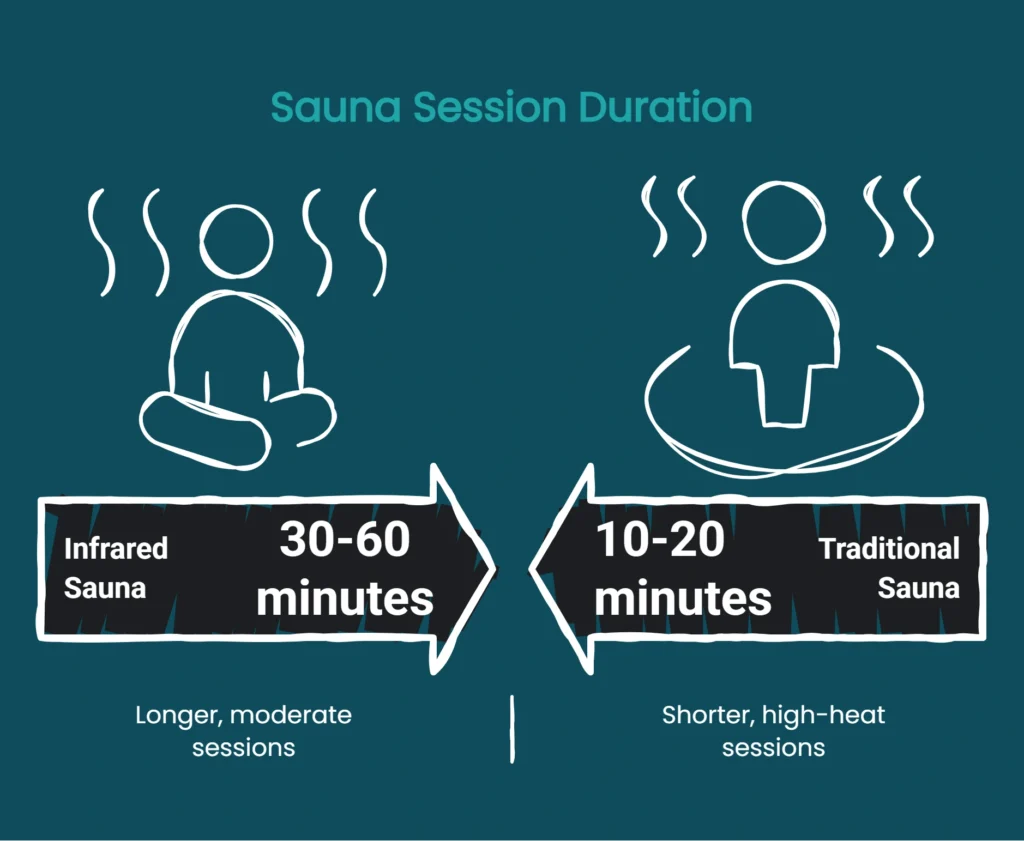
Understanding why infrared saunas run at lower temperatures helps explain why the time and frequency guidelines also differ. Traditional Finnish saunas heat the air to 175–195°F, and the body absorbs heat indirectly through convection. The intense ambient heat creates a rapid, powerful systemic stress response, which is why traditional sauna sessions are typically shorter — 10–20 minutes.
Infrared saunas use radiant emitters to deliver heat directly to tissue through infrared wavelengths, bypassing the need to heat the surrounding air first. This allows the body to absorb thermal energy at a lower ambient temperature while still achieving meaningful core temperature elevation. Sessions feel less immediately intense but produce comparable physiological responses over a longer duration — which is why infrared protocols involve longer, more moderate sessions rather than short, high-heat exposure. The practical implication: time, temperature, and frequency guidelines are not interchangeable between sauna types.
What Temperature Should an Infrared Sauna Be Set To?
Most infrared saunas are capable of reaching 140–150°F at maximum settings, though effective use does not require operating at maximum temperature. The key variable is not peak room temperature — it is how much your core body temperature rises during the session.
| Experience Level | Recommended Temperature | Rationale |
|---|---|---|
| Beginner (first 1–4 weeks) | 110–120°F (43–49°C) | Allows body to adapt to thermal load |
| Intermediate (1–3 months) | 120–135°F (49–57°C) | Supports consistent thermoregulatory response |
| Experienced (3+ months) | 135–150°F (57–66°C) | Full physiological engagement |
Does Higher Temperature Mean Better Results?
Not necessarily. The research on infrared sauna benefits is largely conducted at temperatures in the 120–140°F range. Operating at maximum temperature does not automatically increase benefits — it increases thermal stress, raising the risk of overheating and dehydration without proportional gain in therapeutic effect for most users. The goal is sustained, comfortable heat exposure that elevates core body temperature by approximately 1–3°F over the course of a session.
Pre-Heating the Sauna
Most infrared saunas reach operating temperature in 10–20 minutes. Pre-heating to your target temperature before entering is recommended for consistent sessions. Entering a cold cabin as it heats up extends low-temperature exposure without adding to effective session time at therapeutic temperature.
How Long Should an Infrared Sauna Session Last?
| Experience Level | Recommended Duration | Notes |
|---|---|---|
| Beginner | 10–15 minutes | Exit if any dizziness, nausea, or discomfort |
| Intermediate | 15–25 minutes | Increase by 5-minute increments as tolerance builds |
| Experienced | 20–35 minutes | 30 minutes is the most commonly studied duration |
| Maximum | 45 minutes | Not recommended to exceed without medical supervision |
Why 20–30 Minutes Is the Most Studied Duration
The majority of published research examining infrared sauna effects on cardiovascular markers, muscle recovery, and pain uses session durations of 15–30 minutes. Published infrared sauna protocols most consistently use 15–30 minute sessions at 120–140°F across studies examining physiological outcomes. [1] Sessions shorter than 10 minutes are unlikely to elevate core temperature sufficiently to trigger meaningful thermoregulatory responses. Sessions longer than 45 minutes increase risk of dehydration and heat exhaustion without clear additional benefit in currently available research.
Session Duration by Goal
For stress reduction and relaxation, 20–25 minutes at moderate temperature (120–130°F) is typically sufficient — the parasympathetic relaxation response tends to develop after the initial 10–15 minute warm-up period. For muscle recovery, 20–30 minutes at 130–140°F ideally within 30–60 minutes post-exercise. For general cardiovascular stimulus, 30 minutes at 130–150°F produces the most consistent heart rate elevation and vasodilation response based on available clinical protocols. For sleep quality, 20–30 minutes in the evening at least 1–2 hours before bed — core temperature elevation followed by cooling has been studied in relation to sleep onset improvement.
How Often Should You Use an Infrared Sauna?
| Use Case | Recommended Frequency | Notes |
|---|---|---|
| General wellness (beginner) | 1–2 times per week | Build baseline tolerance first |
| General wellness (experienced) | 3–4 times per week | Most studied frequency range |
| Post-workout recovery | 3–5 times per week | Match to training schedule |
| Stress and sleep support | 3–4 times per week | Evening sessions preferred by many users |
| Chronic pain management | 3–5 times per week | Based on clinical infrared therapy protocols |
| Maximum (healthy adults) | Daily use | No evidence of harm; limited evidence of additional benefit beyond 4–5x/week |
The most cited long-term sauna research (primarily Finnish population studies on traditional saunas) found associations between 4–7 sessions per week and the strongest cardiovascular health correlations. [2] However, these findings are for traditional saunas and cannot be directly transferred to infrared protocols. For infrared specifically, most clinical studies use 2–5 sessions per week over 4–12 week periods. Daily use appears safe for healthy individuals but does not show dramatically superior outcomes compared to 4–5 sessions per week in the limited comparative data available.
Rest Days and Recovery
Unlike exercise, infrared sauna sessions do not create muscular or skeletal stress that requires recovery days. However, fluid and electrolyte loss from sweating does create a physiological demand. Taking 2–3 rest days per week allows for adequate rehydration and electrolyte replenishment, particularly for users sweating heavily in longer sessions.
What Factors Affect How Long and How Hot You Should Go?
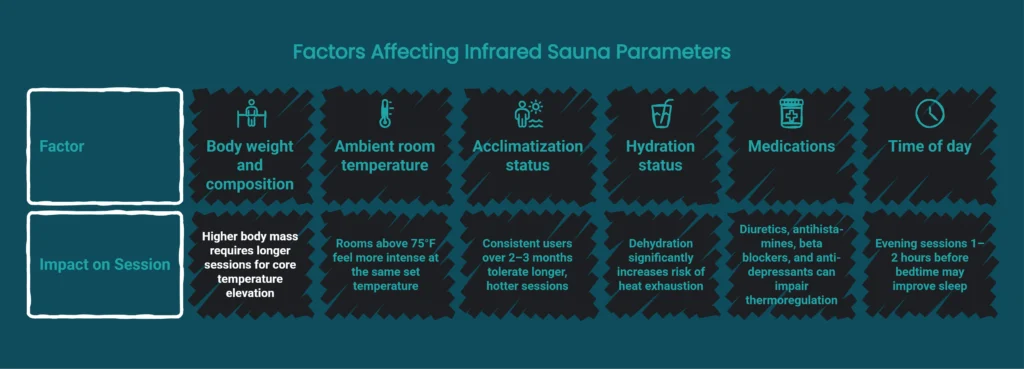
Several individual variables meaningfully affect appropriate session parameters. Body weight and composition: higher body mass generally requires longer sessions to achieve equivalent core temperature elevation. Ambient room temperature: a sauna in a warm room above 75°F will feel more intense at the same set temperature than one in a cool basement. Acclimatization status: the body adapts to repeated heat exposure over 10–14 sessions, increasing sweat rate and improving thermoregulatory efficiency — users consistent for 2–3 months typically tolerate longer, hotter sessions than newcomers. Hydration status: entering a session dehydrated significantly increases risk of heat exhaustion. Medications: diuretics, antihistamines, beta blockers, and certain antidepressants can impair thermoregulation or increase dehydration risk — consult a healthcare provider if you take any prescription medications. Time of day: evening sessions within 1–2 hours of bedtime may improve sleep through the temperature-drop effect on sleep onset.
Hydration Requirements: Non-Negotiable Parameters
Hydration is not a suggestion — it is a safety parameter. You can lose 0.5–1.5 liters of fluid per session through sweating depending on duration, temperature, and individual sweat rate. Drink 16–24 oz (500–700 ml) of water in the 1–2 hours before your session, keep water available during sessions over 20 minutes, and drink 16–24 oz after your session with electrolytes if sessions are frequent or long.
Signs of inadequate hydration during a session include dizziness, headache, nausea, muscle cramps, or decreased sweating despite high temperature. Exit the sauna immediately if any of these occur. For sessions longer than 30 minutes or more than 4 sessions per week, electrolyte replenishment (sodium, potassium, magnesium) becomes increasingly important alongside water intake.
A Practical Progression Plan for New Users
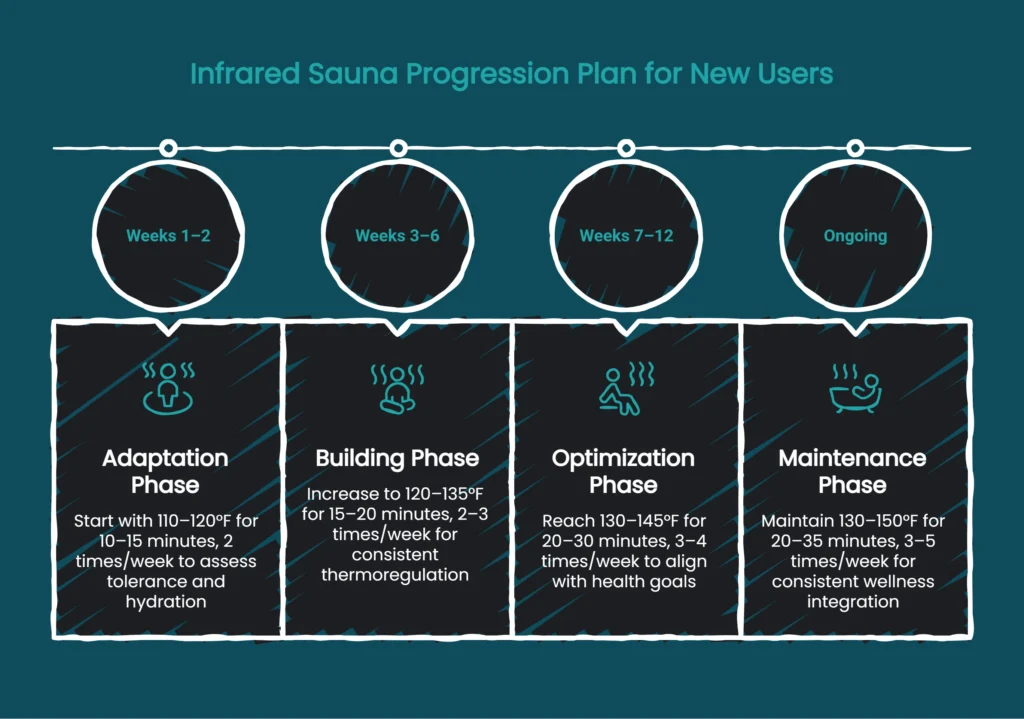
Weeks 1–2 (Adaptation Phase): Temperature 110–120°F, duration 10–15 minutes, frequency 2 times per week. Goal: assess tolerance, establish hydration habits.
Weeks 3–6 (Building Phase): Temperature 120–135°F, duration 15–20 minutes, frequency 2–3 times per week. Goal: consistent thermoregulatory response, identify optimal temperature.
Weeks 7–12 (Optimization Phase): Temperature 130–145°F, duration 20–30 minutes, frequency 3–4 times per week. Goal: align session parameters with specific health goals.
Ongoing (Maintenance Phase): Temperature 130–150°F based on preference, duration 20–35 minutes, frequency 3–5 times per week. Goal: consistency and integration into wellness routine.
Frequently Asked Questions
Is 150°F too hot for an infrared sauna?
150°F is within the operating range of most infrared saunas and is safe for healthy, experienced users with adequate hydration. It is not appropriate for beginners, people with heat sensitivity, or anyone with cardiovascular conditions. Effective sessions can be achieved at 125–135°F if higher temperatures feel uncomfortable.
Can you use an infrared sauna every day?
Daily use is generally safe for healthy adults with proper hydration. Research does not show meaningfully superior outcomes from daily use compared to 4–5 sessions per week. If daily use is chosen, sessions should be moderate in duration (15–25 minutes) and temperature (120–135°F) rather than maximum parameters.
Should sessions be longer or hotter to get better results?
Neither extreme independently produces better results. The effective variable is sustained core temperature elevation over time. A 25-minute session at 135°F typically produces equivalent or better outcomes than a 15-minute session at 150°F for most health goals, with lower risk of overheating or dehydration.
How long before bed should you use an infrared sauna?
At least 60–90 minutes before intended sleep time. The core temperature drop that follows a sauna session supports sleep onset, but if the session ends too close to bedtime, core temperature may still be elevated when you attempt to sleep, which can delay onset.
Is there a minimum effective dose for infrared sauna use?
Based on available research, sessions shorter than 10–15 minutes at temperatures below 120°F are unlikely to produce meaningful thermoregulatory responses in most adults. Occasional shorter sessions are fine, but consistent use below this threshold may not achieve the physiological engagement associated with documented benefits.
Medical Disclaimer: This article provides educational information about infrared sauna usage parameters and is not intended as medical advice. Individual responses to heat therapy vary. Consult a healthcare provider before beginning infrared sauna use, especially if you have cardiovascular conditions, are pregnant, take prescription medications, or have any chronic health conditions.
For detailed guides on infrared sauna mechanisms, safety guidelines, and evidence-based health applications, visit Sauna Health Nut.
References
[1] Beever R. “Far-infrared saunas for treatment of cardiovascular risk factors: summary of published evidence.” Canadian Family Physician. 2009. View on PMC
[2] Harvard Health Publishing. “Can regular sauna sessions support a healthy heart?” Harvard Medical School. View article
You might also find these useful: