
Sauna for Sleep: What the Research Shows

Short answer: Sauna use improves sleep through a well-established thermoregulatory mechanism — core temperature elevation during a session followed by rapid cooling triggers the brain’s sleep-onset signal. Both infrared and traditional saunas produce this effect, with session timing being the most critical practical variable. Using a sauna 1–2 hours before bed is associated with faster sleep onset and improved sleep quality in small studies. The evidence is preliminary but mechanistically coherent and consistent across published research.
Last updated: 2026
At a glance
- The core mechanism linking sauna use to sleep is the post-session temperature drop — the body’s cooling signal that initiates sleep onset
- Both infrared and traditional saunas produce this effect; timing (1–2 hours before bed) is more important than sauna type
- Small studies report faster sleep onset, improved sleep quality scores, and reduced nighttime waking with regular pre-bedtime sauna use
- The effect is strongest for individuals with mild sleep difficulties — evidence for clinical insomnia is limited
- Session temperature and duration interact with timing — higher heat sessions need more cooling time before bed
Who this guide is for
This article is for adults experiencing occasional sleep difficulties or wanting to optimize sleep quality through evidence-informed lifestyle practices. It covers the thermoregulatory mechanism linking sauna use to sleep, the available research for both sauna types, practical session timing guidance, and how sauna fits alongside other sleep hygiene practices. It is not a guide for clinical insomnia — consult a sleep specialist for persistent sleep disorders.
The Thermoregulatory Mechanism: Why Saunas Improve Sleep
The link between sauna use and sleep is not speculative — it is grounded in one of the most well-characterized mechanisms in sleep science: the role of core body temperature in initiating sleep onset.
Core Temperature and Sleep Onset
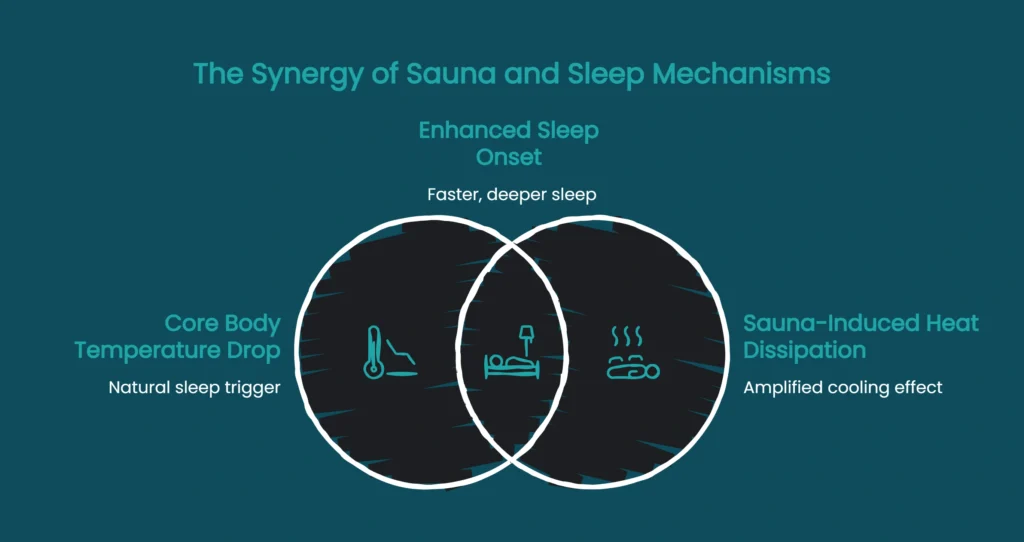
The human body follows a circadian temperature rhythm — core temperature rises during the day, peaks in the late afternoon, and drops by approximately 1–2°F in the 1–2 hours before natural sleep onset. This temperature drop is not a consequence of falling asleep — it is a trigger for it. The preoptic area of the hypothalamus, which regulates both body temperature and sleep, uses the temperature decline as a signal to initiate the cascade of neurochemical changes that produce sleepiness and eventual sleep onset. [1]
Sauna use creates an artificially elevated core temperature — then, when the session ends, the body rapidly dissipates the accumulated heat through vasodilation and sweating. This post-sauna cooling mimics and amplifies the natural pre-sleep temperature drop, potentially accelerating and deepening the sleep onset process.
This is the same mechanism behind the common recommendation to take a warm bath or shower before bed — the warming followed by cooling is the active ingredient, not simply the warmth itself.
What Changes During Post-Sauna Cooling
As core temperature drops after a sauna session, several sleep-relevant physiological changes occur. Melatonin secretion by the pineal gland increases — melatonin is the primary hormone signaling nighttime to the brain. Adenosine, the sleep-pressure molecule that accumulates during wakefulness, is more readily converted to its sleep-promoting effect when core temperature is declining. Heart rate variability (HRV) improves as the autonomic nervous system shifts toward parasympathetic dominance, which is associated with deeper slow-wave sleep. [2]
What the Research Shows
Evidence for Improved Sleep Quality
A systematic review examining passive body heating (including sauna use, warm baths, and hot showers) before sleep found that heating followed by cooling significantly improved both sleep onset latency (time to fall asleep) and sleep quality scores across studies. [1] The effects were most consistent when the heating session ended approximately 1–2 hours before intended sleep time, allowing sufficient cooling before lying down.
Specific to sauna use, small studies have documented improvements in self-reported sleep quality with regular sauna sessions 2–3 times per week. A Finnish population study found that frequent sauna users reported significantly better sleep quality compared to infrequent users, independent of other lifestyle factors. [3]
Evidence rating: Moderate for sleep onset and subjective sleep quality in healthy adults with mild sleep difficulties. The thermoregulatory mechanism is well-established; the sauna-specific evidence builds on a strong mechanistic foundation even if direct sauna sleep trials are limited.
Infrared vs Traditional Sauna for Sleep
Both sauna types produce the temperature elevation and subsequent cooling that drives the sleep mechanism. Key differences in how they affect sleep:
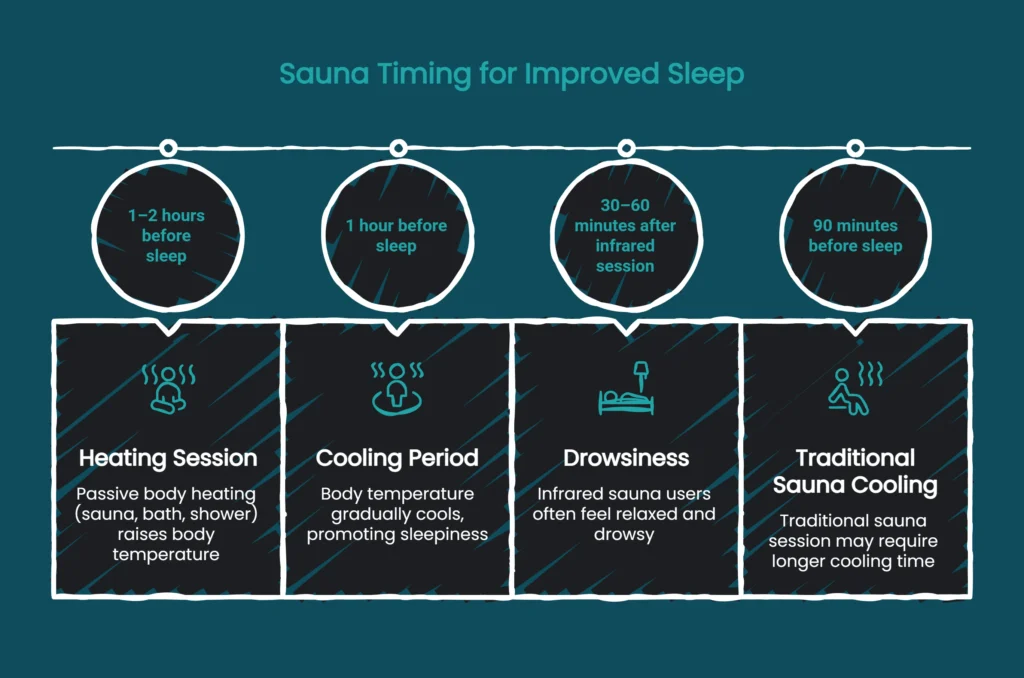
Infrared saunas operate at 110–150°F and produce a more gradual temperature elevation. The lower heat intensity means the post-session cooling is less dramatic but more comfortable. The longer, gentler sessions are easier to incorporate into an evening routine without feeling overheated or physically depleted. Most users report feeling relaxed and drowsy within 30–60 minutes of ending an infrared session.
Traditional saunas at 170–195°F create a more intense temperature spike that requires longer cooling time before bed. A traditional sauna session ending 90 minutes before bed may still leave some users feeling too warm for comfortable sleep. The stronger hormetic stress response can also leave users feeling alert initially before the parasympathetic rebound produces sleepiness. Traditional saunas may suit morning or early evening use better than late-evening use for sleep purposes.
Practical implication: For sleep specifically, infrared saunas have a timing advantage — the gentler heat requires less cooling time, making 1-hour pre-bed timing more practical than with traditional saunas.
Session Timing: The Most Important Variable
Timing is more critical than any other session parameter for sleep benefits.
The Optimal Window
1–2 hours before intended sleep is the most consistently supported timing across passive heating research. [1] This window allows:
- Core temperature to begin declining before lying down
- The parasympathetic rebound to develop fully
- Melatonin secretion to initiate naturally
- Heart rate to return to resting levels
Too close to bedtime (under 45 minutes): Core temperature may still be elevated when you attempt to sleep, potentially delaying onset rather than supporting it. The body needs time to complete the cooling phase.
Too far from bedtime (over 3 hours): The sleep-promoting effect of the temperature drop diminishes as the body returns fully to baseline temperature well before your sleep window.
Timing by Sauna Type
| Sauna Type | Optimal End Time Before Bed | Why |
|---|---|---|
| Infrared (110–130°F) | 60–90 minutes | Gentler heat, faster cooling |
| Infrared (130–150°F) | 75–105 minutes | Higher infrared intensity needs more cooling time |
| Traditional (160–175°F) | 90–120 minutes | More intense heat requires longer cooling |
| Traditional (175–195°F) | 105–135 minutes | Maximum heat; longest cooling window needed |
Practical Sleep Protocol
Session Parameters for Sleep Optimization
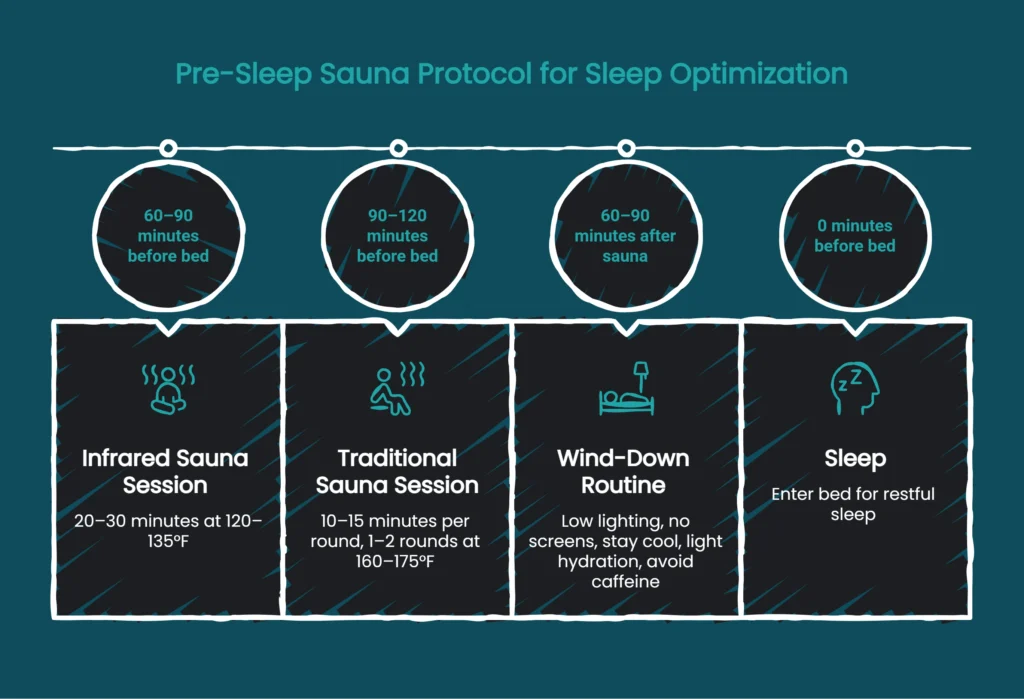
Infrared: Temperature: 120–135°F (moderate — not maximum settings). Duration: 20–30 minutes. Timing: End session 60–90 minutes before bed. Frequency: 3–5 times per week — consistent use produces cumulative benefit beyond single sessions.
Traditional: Temperature: 160–175°F (lower end preferred for evening use). Duration: 10–15 minutes per round, 1–2 rounds maximum. Timing: End session 90–120 minutes before bed. Frequency: 2–4 times per week.
The Post-Sauna Wind-Down Routine
The 60–90 minute window between ending a sauna session and going to bed is when sleep-promoting physiology is most active. How you spend this time affects outcomes.
Keep lighting low — bright light suppresses melatonin and counteracts the sleep-onset mechanism the sauna just initiated. Avoid screens where possible — blue light from phones, tablets, and computers similarly suppresses melatonin. Stay cool — don’t bundle up in warm clothing immediately after a session; allow the natural cooling process to continue. Light hydration — drink water but avoid large volumes that require nighttime bathroom trips. Avoid caffeine — obvious but worth stating; the adenosine effect that builds during the cooling phase is partly blocked by caffeine.
What Not to Do After a Pre-Sleep Sauna Session
Vigorous exercise after the session re-elevates core temperature and cortisol, undermining the sleep preparation effect. Large meals stimulate digestion and can disrupt the parasympathetic shift. Alcohol — while it may feel sleep-inducing, alcohol suppresses REM sleep and reduces overall sleep quality even when sleep onset feels easier.
How Sauna Fits Into a Sleep Hygiene Protocol
Sauna use for sleep works best as one component of a broader sleep hygiene approach rather than a standalone intervention.
| Sleep Practice | Effect on Sleep | Interaction with Sauna |
|---|---|---|
| Consistent sleep/wake timing | Anchors circadian rhythm | Foundational — sauna timing should align with consistent bedtime |
| Dark, cool bedroom | Supports core temperature drop | Synergistic — sauna initiates cooling, cool room continues it |
| Screen reduction before bed | Protects melatonin secretion | Synergistic — avoid screens during post-sauna wind-down |
| Exercise | Increases sleep drive (adenosine) | Compatible — morning/afternoon exercise + evening sauna works well |
| Caffeine cutoff | Protects adenosine sleep pressure | Foundational — don’t undermine the sauna’s adenosine effect |
| Sauna use | Temperature-drop sleep signal | Most effective when other practices are also in place |
Frequently Asked Questions
Does sauna use before bed help you sleep?
Yes, with proper timing. Ending a sauna session 1–2 hours before bed produces the core temperature drop that triggers the brain’s sleep-onset signal. Small studies and passive heating research consistently support this timing for improved sleep onset latency and subjective sleep quality.
Is it better to sauna in the morning or evening for sleep?
Evening use (1–2 hours before bed) produces direct sleep benefits through the temperature-drop mechanism. Morning sauna use can improve daytime cortisol regulation and stress reduction that indirectly supports better sleep at night, but does not produce the same direct pre-sleep timing effect.
Can sauna use help with insomnia?
For mild sleep difficulties and situational insomnia, sauna use shows preliminary promise through the thermoregulatory mechanism. For clinical insomnia disorder — persistent difficulty sleeping for 3+ months that impairs daytime function — cognitive behavioral therapy for insomnia (CBT-I) is the established first-line treatment. Sauna use may complement CBT-I but is not a substitute for it.
How often should I use a sauna for sleep benefits?
3–5 times per week produces more consistent results than occasional use. The thermoregulatory benefit occurs with each session, but the cumulative effects on cortisol regulation and autonomic nervous system balance that support sleep quality develop over 2–4 weeks of regular use.
Does the sauna type matter for sleep?
Both types work through the same core mechanism. Infrared saunas are practically easier to time for pre-sleep use due to their lower heat intensity and shorter required cooling window. Traditional saunas require ending the session 90–120+ minutes before bed to allow sufficient cooling, which may conflict with typical evening schedules.
Medical Disclaimer: This article provides educational information about sauna use and sleep quality and does not constitute medical advice. Persistent sleep disorders require evaluation by a qualified healthcare provider or sleep specialist. Do not substitute sauna use for evidence-based sleep disorder treatment.
For comprehensive guides on sauna safety, protocols, and evidence-based health applications, visit Sauna Health Nut.
References
[1] Haghayegh S, et al. “Before-Bedtime Passive Body Heating by Warm Shower or Bath to Improve Sleep: A Systematic Review and Meta-Analysis.” Sleep Medicine Reviews. 2026. View on PubMed
[2] Laukkanen JA, et al. “Cardiovascular and Other Health Benefits of Sauna Bathing: A Review of the Evidence.” Mayo Clinic Proceedings. 2026. View on PubMed
[3] Laukkanen T, et al. “Sauna bathing is associated with reduced cardiovascular mortality and improves risk prediction in men and women.” BMC Medicine. 2026. View on PubMed
You might also find these useful: