Sauna for Stress and Anxiety: What the Research Shows

Short answer: Both infrared and traditional saunas produce measurable reductions in cortisol, activate the parasympathetic nervous system, and trigger endorphin release — all mechanisms relevant to stress and anxiety reduction. The evidence for subjective stress relief is consistent across studies, though most are small and short-term. Neither sauna type is a treatment for anxiety disorders, but both show promise as complementary tools for stress management in healthy adults.
Last updated: 2026
At a glance
- Both sauna types reduce cortisol levels and activate the parasympathetic (rest-and-digest) nervous system during and after sessions
- Regular sauna use has been associated with improved mood and reduced anxiety scores in small studies
- The heat-induced endorphin release during sauna sessions contributes to the post-sauna sense of calm and well-being
- Infrared saunas may be better suited for anxiety-prone users due to lower ambient temperatures and longer, gentler sessions
- Neither sauna type is a replacement for evidence-based anxiety treatment — consult a healthcare provider for clinical anxiety disorders
Who this guide is for
This article is for healthy adults experiencing everyday stress who are evaluating sauna use as a complementary stress management tool. It covers the physiological mechanisms linking heat exposure to stress reduction, the available evidence for both sauna types, practical usage guidance, and important distinctions between general stress relief and clinical anxiety treatment. It is not intended as medical advice for anxiety disorders.
How Sauna Heat Affects Stress Physiology
The connection between sauna use and stress reduction is not anecdotal — it operates through several well-characterized physiological pathways that overlap significantly with the body’s stress response system.
Cortisol Reduction
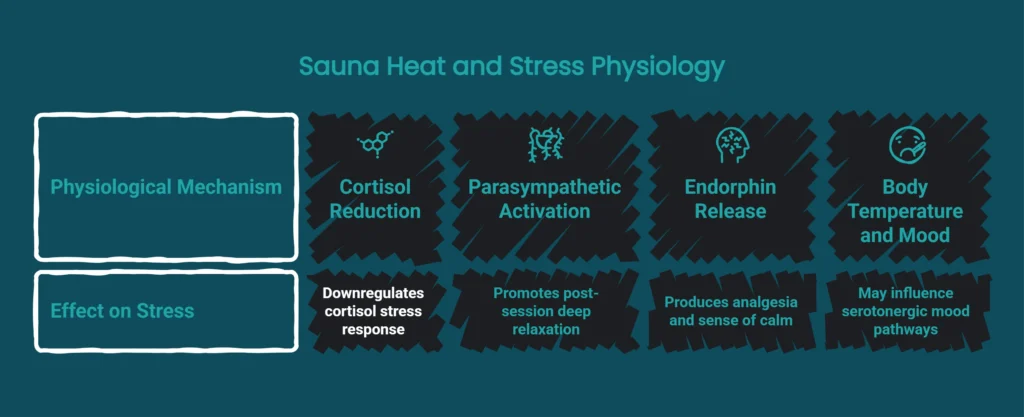
Cortisol is the body’s primary stress hormone, released by the adrenal glands in response to perceived threats. Chronically elevated cortisol — common in people under sustained psychological stress — is associated with impaired sleep, increased appetite, immune suppression, and heightened anxiety. Controlled heat exposure through sauna use has been shown to reduce cortisol levels both acutely during sessions and in longer-term protocols with regular use. [1] The mechanism involves heat-induced activation of the hypothalamic-pituitary axis in a way that temporarily downregulates the cortisol stress response, similar to the effect of moderate exercise.
Parasympathetic Activation
The autonomic nervous system operates on a spectrum between sympathetic (fight-or-flight) and parasympathetic (rest-and-digest) activation. Chronic stress pushes the system toward sustained sympathetic dominance — elevated heart rate, muscle tension, heightened vigilance, and poor sleep. Sauna use creates an initial sympathetic spike (elevated heart rate, vasodilation) followed by a significant parasympathetic rebound after the session ends. This post-sauna parasympathetic shift is associated with the characteristic feeling of deep relaxation that most users report after a session. [2]
Endorphin Release
Heat stress triggers the release of beta-endorphins — the same neurochemicals released during exercise and responsible for the “runner’s high.” Endorphins bind to opioid receptors in the brain, producing analgesia and a sense of euphoria or calm. This mechanism is well-established in heat therapy research and is a primary contributor to the mood improvement many sauna users report. [1]
Body Temperature and Mood
Emerging research suggests a bidirectional relationship between core body temperature and mood regulation. Individuals with depression and anxiety often show altered thermoregulatory patterns. Controlled core temperature elevation through heat exposure — as occurs in both sauna types — may influence serotonergic pathways that regulate mood, though this mechanism is still being studied and cannot yet be considered established. [3]
What the Research Shows
Evidence for General Stress Reduction
The most consistent finding across sauna stress research is subjective — users reliably report reduced perceived stress and improved mood following sauna sessions. A study examining traditional Finnish sauna bathing found significant reductions in self-reported stress and tension scores immediately following sessions, with effects persisting for several hours. [1]
A review of far-infrared sauna research identified mood improvement and reduced fatigue as among the most consistently reported outcomes across studies, though the authors noted the evidence quality was limited by small sample sizes and lack of control conditions. [2]
Evidence rating: Moderate for subjective stress reduction — consistent across studies and sauna types. Limited for objective biomarker changes beyond cortisol.
Evidence for Anxiety Specifically
The research specifically examining sauna use for anxiety is more limited than the general stress literature. A small study found that regular far-infrared sauna sessions over four weeks were associated with reduced anxiety scores in participants with mildly elevated baseline anxiety. [2] However, this study lacked a control group, making it difficult to attribute the improvement specifically to sauna use versus the passage of time or other lifestyle factors.
Population-based data from Finnish sauna studies suggests that frequent sauna users report lower rates of anxiety and depression than non-users, though these are correlational findings that cannot establish causation. [4]
Evidence rating: Preliminary for anxiety specifically — directionally positive but methodologically limited. Clinical anxiety disorders require evidence-based treatment beyond sauna use.
Traditional vs Infrared for Stress
Both sauna types produce the core mechanisms (cortisol reduction, parasympathetic activation, endorphin release), but the experience differs in ways that may matter for stress and anxiety specifically.
Traditional saunas at 170–195°F create intense thermal stress that some users find invigorating and others find overwhelming. For individuals with anxiety, the high heat and enclosed environment of a traditional sauna can initially feel threatening — the physiological arousal (elevated heart rate, profuse sweating) can mimic anxiety symptoms and may be counterproductive for some users until acclimatization occurs.
Infrared saunas at 110–150°F provide a gentler thermal experience that most users find easier to relax into from the first session. The lower temperature, longer sessions, and quieter environment may make infrared more accessible for anxiety-prone individuals, particularly during initial sessions.
Sauna Use for Stress vs Clinical Anxiety Disorders
This distinction is important enough to address directly.
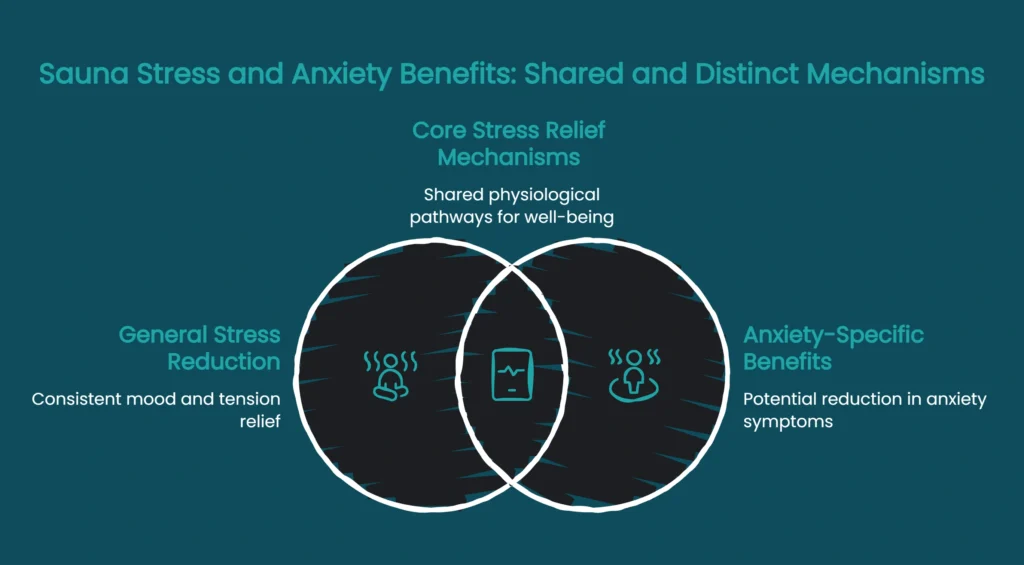
General stress — everyday tension from work, relationships, or life demands — is where sauna use has the most practical application. The cortisol reduction and parasympathetic activation mechanisms are directly relevant to the physiological expression of everyday stress.
Clinical anxiety disorders — including generalized anxiety disorder (GAD), panic disorder, social anxiety disorder, and OCD — are medical conditions that require evidence-based treatment including cognitive behavioral therapy, medication, or both. Sauna use is not a substitute for these treatments and should not be positioned as one. If you experience persistent anxiety that interferes with daily function, consult a mental health professional before relying on any complementary approach including sauna use.
The line between the two is: sauna use is appropriate as a complementary stress management tool. It is not appropriate as a primary treatment for a diagnosed anxiety disorder.
Practical Protocol for Stress and Anxiety Reduction
Session Parameters
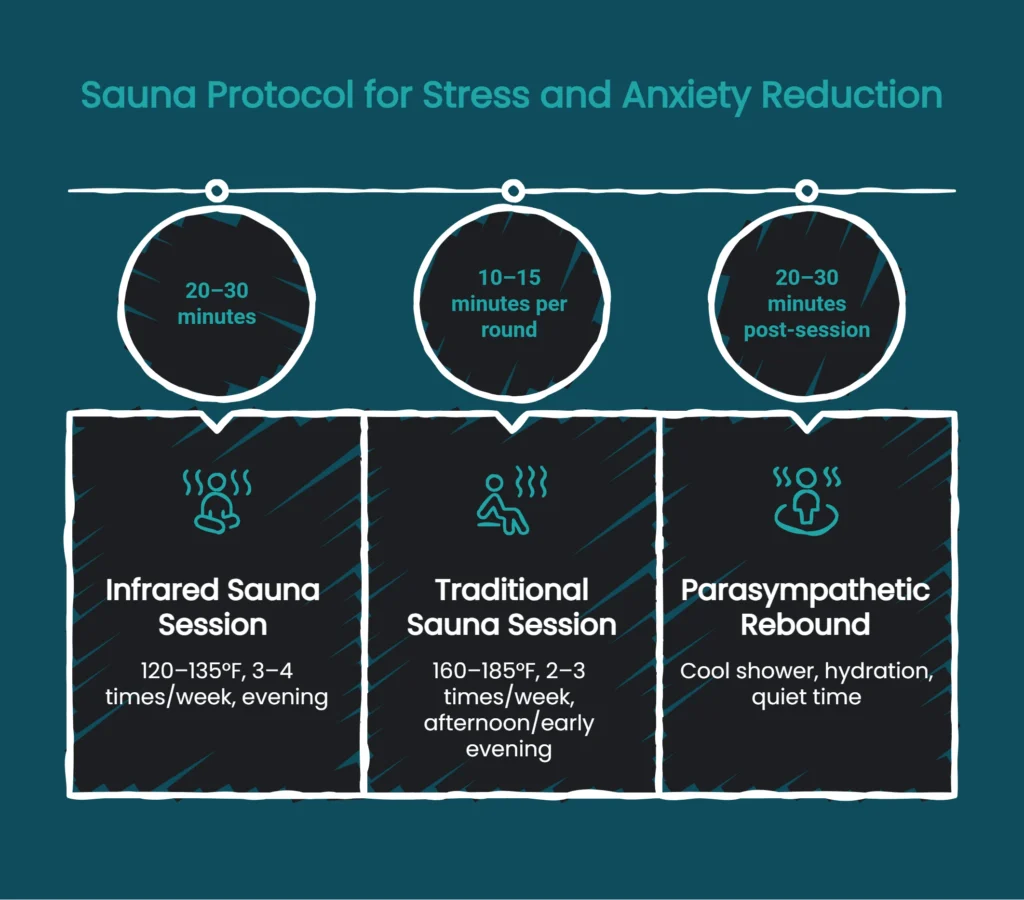
Infrared (recommended for anxiety-prone users): Temperature: 120–135°F. Duration: 20–30 minutes. Frequency: 3–4 times per week. Timing: evening sessions preferred — the core temperature drop following a session supports sleep onset, and the parasympathetic shift pairs well with winding down for the night.
Traditional: Temperature: 160–185°F. Duration: 10–15 minutes per round. Frequency: 2–3 times per week. Timing: afternoon or early evening — avoid sessions within 90 minutes of bedtime for traditional saunas as the intense heat may take longer to fully dissipate.
Creating the Optimal Environment for Stress Relief
The environment during a sauna session meaningfully affects the stress response. Phones and screens removed — notifications are a direct cortisol trigger and undermine the parasympathetic shift. Low lighting where possible — bright light activates alertness circuits that work against relaxation. Silence or calm audio — nature sounds or instrumental music support parasympathetic activation; podcasts and news do not. Breathing focus — slow diaphragmatic breathing during sessions actively amplifies the parasympathetic response.
Post-Session Protocol
The 20–30 minutes following a sauna session are when the parasympathetic rebound is strongest. Protecting this window amplifies stress relief outcomes. Cool shower or gentle cool-down, continued hydration, and quiet time rather than immediately returning to screens or work extends the relaxation benefit.
How Sauna Compares to Other Stress Management Approaches
| Approach | Mechanism | Evidence Quality | Practical Considerations |
|---|---|---|---|
| Exercise | Cortisol reduction, endorphins, neuroplasticity | Strong | Requires physical effort; dual recovery/stress benefit |
| Meditation | Parasympathetic activation, HRV improvement | Strong | Requires practice and consistency |
| Sauna use | Cortisol reduction, endorphins, parasympathetic shift | Moderate-preliminary | Passive; accessible; complements exercise |
| Cold exposure | Norepinephrine release, stress inoculation | Preliminary | Intense; not suitable for all |
| Sleep optimization | HPA axis regulation, cortisol normalization | Strong | Foundation — sauna can support this |
| Therapy (CBT) | Cognitive restructuring, nervous system regulation | Strong | Required for clinical anxiety disorders |
Sauna use sits most naturally alongside exercise and sleep optimization — it is a passive complement to active stress management practices, not a replacement for them.
Frequently Asked Questions
Can sauna use reduce anxiety?
For everyday stress and mild anxiety, sauna use shows preliminary evidence for reducing self-reported anxiety scores and cortisol levels with regular sessions. For clinical anxiety disorders — GAD, panic disorder, OCD — sauna use is not an established treatment and should not replace evidence-based care. Consult a mental health professional for persistent or disabling anxiety.
Is infrared or traditional sauna better for stress relief?
Both produce the core stress-reduction mechanisms. Infrared saunas may be more accessible for anxiety-prone users due to lower ambient temperatures and a gentler initial experience. Traditional saunas produce a stronger hormetic stress response that some users find more effective for mood once acclimatized. Personal preference and heat tolerance are the most practical deciding factors.
How quickly does sauna use reduce stress?
Most users report subjective stress reduction within a single session through the parasympathetic shift and endorphin release. Cortisol-level reductions and mood improvements measured across studies typically develop over 2–4 weeks of regular use (3–4 sessions per week), suggesting cumulative benefit beyond single-session effects.
Can sauna use help with panic attacks?
There is no specific evidence for sauna use reducing panic attack frequency. Some individuals find that regular parasympathetic activation through sauna use reduces general baseline anxiety, which may indirectly reduce vulnerability to panic. However, panic disorder requires professional evaluation and evidence-based treatment. Do not use sauna use as a substitute for appropriate care.
Is evening sauna use better for stress than morning use?
For stress specifically, evening use has a practical advantage — the core temperature drop and parasympathetic rebound that follow a session align well with winding down for sleep, potentially providing both stress relief and improved sleep onset. Morning sauna use is not counterproductive for stress, but the timing benefit is less direct.
Medical Disclaimer: This article provides educational information about sauna use and stress reduction and does not constitute medical advice. Clinical anxiety disorders require evaluation and treatment by a qualified mental health professional. Do not substitute sauna use for prescribed anxiety treatment without consulting your healthcare provider.
For comprehensive guides on sauna safety, mechanisms, and evidence-based health applications, visit Sauna Health Nut.
References
[1] Hannuksela ML, Ellahham S. “Benefits and risks of sauna bathing.” The American Journal of Medicine. 2001. View on PubMed
[2] Beever R. “Far-infrared saunas for treatment of cardiovascular risk factors: summary of published evidence.” Canadian Family Physician. 2009. View on PMC
[3] Hanusch KU, et al. “Whole-body hyperthermia for the treatment of major depression.” JAMA Psychiatry. 2026. View on PubMed
[4] Laukkanen T, et al. “Sauna bathing is associated with reduced cardiovascular mortality and improves risk prediction in men and women.” BMC Medicine. 2026. View on PubMed
You might also find these useful:
- Infrared Sauna Temperature, Time, and Frequency Guidelines
- Are Infrared Saunas Safe? Risks, Contraindications, and Medical Guidelines
- Sauna for Muscle Recovery: Infrared and Traditional Methods Compared