
Sauna for Skin Health: Acne, Eczema, Psoriasis, and Anti-Aging Evidence

Short answer: Sauna use produces several physiological effects relevant to skin health — improved circulation delivering nutrients to skin tissue, heat-induced sweating that clears pore debris, and potential collagen stimulation through near-infrared wavelengths. Evidence for specific skin conditions is mixed: some users report improvements in acne and psoriasis with regular use, while eczema can worsen with heat exposure in some individuals. The evidence base is predominantly small studies and case reports rather than large clinical trials, and individual responses vary considerably.
Last updated: 2026
At a glance
- Improved circulation from sauna heat delivers oxygen and nutrients to skin cells and may support skin repair processes
- Sweating during sessions may temporarily clear pore debris, but this effect is minor and requires post-session cleansing to be effective
- Near-infrared wavelengths have been studied in relation to collagen synthesis — relevant for anti-aging applications
- Eczema responds unpredictably to heat — some users report improvement, others experience flares
- Psoriasis has shown preliminary positive responses to controlled heat therapy in small studies
- Post-session skincare (gentle cleanse, moisturizer) is essential — sweating without cleansing can worsen some conditions
Who this guide is for
This article is for adults with skin concerns evaluating whether sauna use may benefit their specific condition. It covers the physiological mechanisms relevant to skin health, condition-specific evidence, and important cautions. It is not a substitute for dermatological care — anyone with a diagnosed skin condition should consult their dermatologist before beginning sauna use.
How Sauna Heat Affects Skin Physiology
Several mechanisms connect sauna use to skin health outcomes. Understanding these helps set realistic expectations for specific conditions.
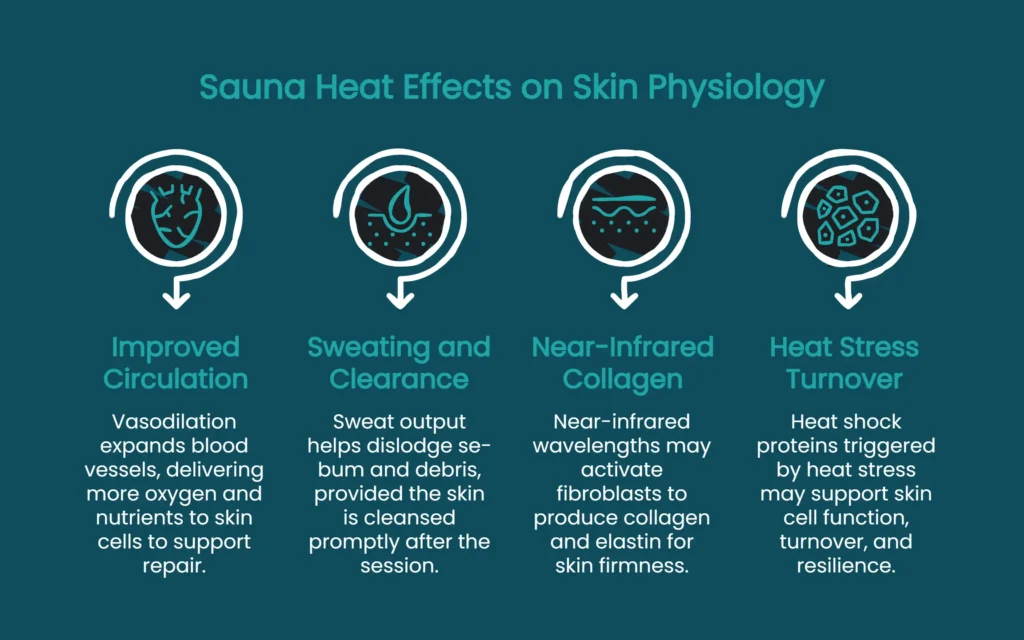
Improved Circulation
Heat from both infrared and traditional saunas causes vasodilation — expansion of blood vessels including the capillary networks that supply skin tissue. Improved microcirculation delivers more oxygen and nutrients to skin cells and may support the skin’s natural repair and renewal processes. This mechanism is consistently cited in dermatological heat therapy research and is the most well-supported skin-related sauna effect. [1]
Sweating and Pore Clearance
During a sauna session, eccrine sweat glands produce significant sweat output. The mechanical action of sweat moving through pores may help dislodge sebum, dead skin cells, and environmental debris. However, this benefit depends entirely on proper post-session cleansing — if sweat is allowed to dry on the skin, the dissolved debris can be redeposited into pores and potentially worsen conditions like acne. The sweating benefit is real but contingent on washing the skin promptly after a session.
Near-Infrared and Collagen
Near-infrared wavelengths (800–1,400 nm) have been studied in relation to fibroblast activation and collagen synthesis. Fibroblasts are the cells responsible for producing collagen and elastin — the structural proteins that give skin its firmness and elasticity. Controlled NIR studies have shown increases in collagen density and improvements in skin texture metrics in small trials. [2] This mechanism is most relevant to full-spectrum infrared saunas that emit NIR alongside FIR — traditional saunas do not deliver meaningful NIR.
The important caveat: most photobiomodulation research uses targeted NIR devices at calibrated irradiance levels, not sauna emitters. Whether sauna-delivered NIR achieves equivalent doses for collagen effects is not well-established.
Heat Stress and Skin Cell Turnover
Heat shock protein (HSP) production triggered by sauna sessions may influence skin cell function. HSPs have roles in protein quality control and cellular stress response that are relevant to skin aging processes. Some researchers have proposed that regular heat stress through sauna use may support skin cell turnover and resilience, though direct clinical evidence for this mechanism in skin aging remains limited.
Condition-Specific Evidence
Acne
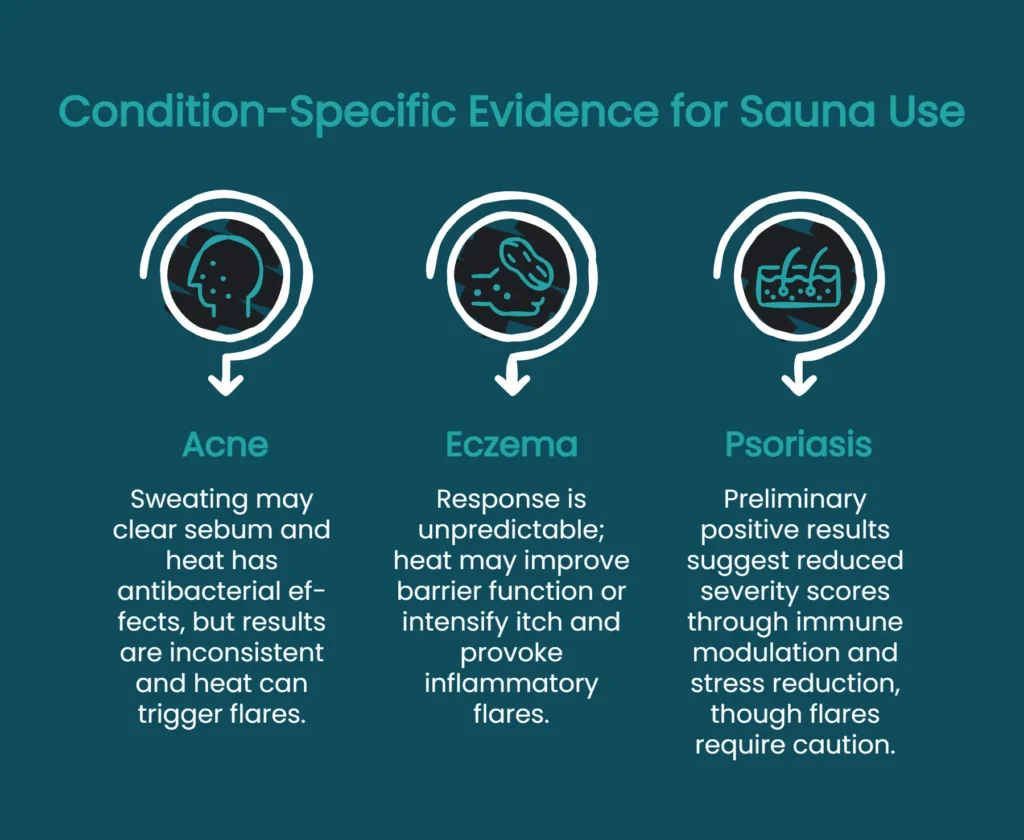
Acne vulgaris involves the interplay of sebum production, bacterial colonization (primarily Cutibacterium acnes), and inflammation in hair follicles. Sauna use theoretically addresses two of these factors — sweating may help clear sebum buildup, and heat has mild antibacterial effects on skin surface bacteria.
Small studies and dermatological case reports suggest some acne patients experience improvement with regular sauna use, particularly for non-inflammatory comedonal acne. [1] However, the evidence is not consistent — some individuals find that heat and sweat trigger acne flares, particularly in heat-sensitive or hormonal acne presentations.
Critical post-session requirement for acne: Wash the face and body promptly after every sauna session with a gentle, non-comedogenic cleanser. Sweat containing dissolved sebum and bacteria sitting on skin for extended periods can worsen acne rather than help it.
Evidence rating: Preliminary, inconsistent. Individual response varies significantly. Not a substitute for established acne treatments (topical retinoids, benzoyl peroxide, antibiotics, or prescription medications).
Eczema (Atopic Dermatitis)
Eczema is an inflammatory skin condition characterized by impaired skin barrier function, immune dysregulation, and chronic itch. The response to sauna use in eczema is particularly unpredictable.
Some eczema patients report improvement with regular sauna use — particularly traditional Finnish saunas, which have cultural integration with Finnish eczema management practices. Proposed mechanisms include improved skin barrier function through heat conditioning and reduced stress-related flare triggers. [3]
However, heat is also a well-documented eczema trigger for many patients. Elevated body temperature and sweating can intensify itch and provoke inflammatory flares in heat-sensitive eczema. The type of eczema, trigger profile, and individual heat sensitivity all affect whether sauna use is beneficial or harmful.
Evidence rating: Inconsistent — directionally positive in some Finnish studies, but heat-triggered eczema worsening is a documented risk. Dermatologist consultation is essential before attempting sauna use for eczema.
If you have eczema and want to try sauna:
- Start with short sessions (5–10 minutes) at low temperatures
- Use infrared rather than traditional for more controlled, lower ambient heat
- Apply emollient moisturizer immediately after showering post-session
- Stop immediately if itch or inflammation increases
Psoriasis
Psoriasis is an autoimmune condition characterized by accelerated skin cell turnover producing plaques of thick, scaly skin. Heat therapy has a longer history in psoriasis management than in other skin conditions, partly through the documented effects of climatotherapy (Dead Sea treatment) which combines sun exposure, salt water, and warmth.
Small studies examining sauna use in psoriasis have shown preliminary positive results. A Finnish study found that regular sauna bathing was associated with reduced psoriasis severity scores in a subset of patients. [3] Proposed mechanisms include heat-induced modulation of the immune response in skin, improved circulation to affected areas, and stress reduction (chronic stress is a well-documented psoriasis trigger).
Traditional sauna use has the longer evidence record for psoriasis given its integration in Finnish wellness culture. Infrared sauna use for psoriasis specifically has limited dedicated research.
Evidence rating: Preliminary positive — more consistent than acne evidence but still small studies. Should complement, not replace, prescribed psoriasis treatments (topical corticosteroids, biologics, phototherapy).
Critical note: Never use a sauna during a psoriasis flare with open or cracked skin — heat can worsen inflammation and increase infection risk.
Anti-Aging and Skin Texture
The anti-aging application of infrared sauna use is the area receiving the most current research attention, primarily through the near-infrared photobiomodulation pathway.
Controlled trials using NIR devices have documented improvements in skin texture, reduction in fine lines, increased collagen density measured by ultrasound, and improved skin elasticity. [2] These studies use targeted NIR panels, not saunas — but full-spectrum infrared saunas with meaningful NIR output may produce some comparable effects at lower intensity.
Traditional saunas do not deliver NIR and therefore lack this specific mechanism. Their anti-aging relevance is primarily through improved circulation and stress reduction rather than direct photobiomodulation.
Evidence rating for NIR anti-aging: Moderate for targeted NIR devices; preliminary for sauna-delivered NIR. The mechanism is well-characterized; the dose from a sauna setting versus a clinical NIR device remains the open question.
Practical Skin Protocol for Sauna Use
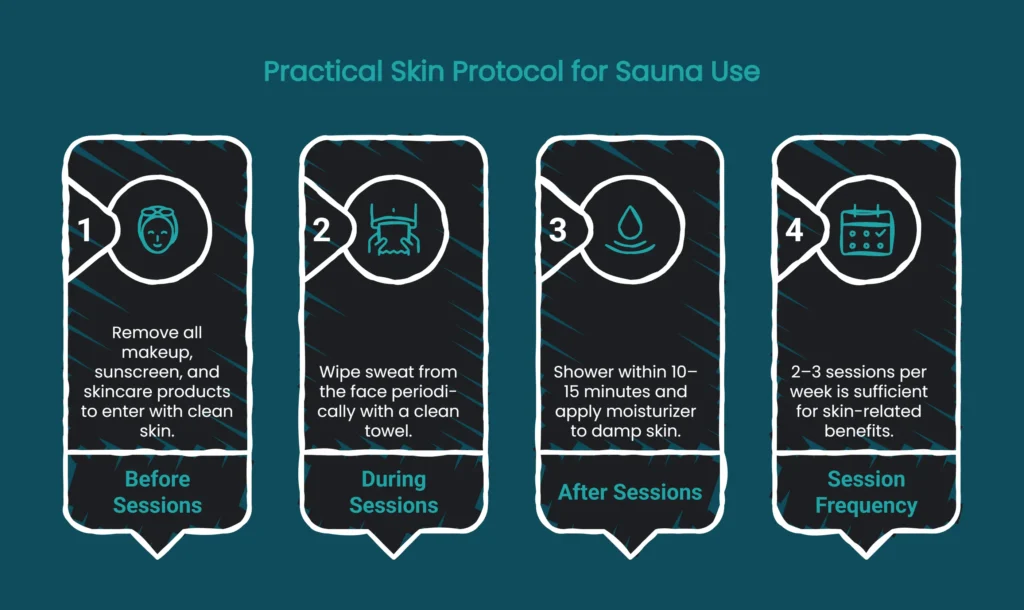
Before Sessions
Remove all makeup, sunscreen, and skincare products before entering — these can interact with heat and sweat in ways that may worsen skin conditions or cause irritation. Enter with clean skin.
During Sessions
Wipe sweat from the face periodically with a clean towel — allowing sweat to pool and evaporate on the skin repeatedly concentrates dissolved compounds against the skin surface.
After Sessions — Non-Negotiable
Shower within 10–15 minutes of exiting the sauna using a gentle, pH-appropriate cleanser. Do not allow dried sweat to remain on skin — this is especially critical for acne and eczema. Follow with appropriate moisturizer while skin is still slightly damp to lock in hydration — sauna sessions increase transepidermal water loss and the skin needs replenishment.
Frequency for Skin Goals
2–3 sessions per week appears sufficient for skin-related benefits in available studies. Daily sessions without adequate skin barrier recovery time may be counterproductive, particularly for sensitive or compromised skin conditions.
Infrared vs Traditional Sauna for Skin
| Factor | Traditional Sauna | Infrared Sauna |
|---|---|---|
| NIR collagen mechanism | Not delivered | Full spectrum models only |
| Circulation improvement | Strong | Strong |
| Sweating and pore clearance | Heavy sweating | Meaningful sweating |
| Heat intensity (skin stress) | High — may trigger sensitive conditions | Lower — more controllable |
| Eczema suitability | Higher flare risk (higher heat) | Lower flare risk (lower ambient temp) |
| Psoriasis evidence | More established | Limited specific research |
| Anti-aging (NIR) | Not applicable | Applicable with full-spectrum unit |
Frequently Asked Questions
Can sauna use clear acne?
Not reliably or consistently. Some users report improvement, others experience worsening. The most important factor is post-session cleansing — sweating without washing afterward can worsen acne by redepositing sebum and bacteria. Sauna use is not a substitute for established acne treatments.
Is sauna good or bad for eczema?
It depends on the individual. Some eczema patients benefit from regular sauna use; others experience heat-triggered flares. Start with very short, low-temperature infrared sessions and monitor closely. Consult your dermatologist before beginning.
Can infrared sauna help psoriasis?
Preliminary evidence suggests possible benefit during stable periods — particularly traditional sauna use, which has the longer research record for psoriasis. Never use during active flares with open or cracked skin. Should complement prescribed treatments, not replace them.
Does infrared sauna tighten skin?
Near-infrared wavelengths have been studied in relation to collagen synthesis and skin elasticity improvement in targeted NIR device trials. Whether full-spectrum infrared saunas deliver equivalent NIR doses for meaningful skin tightening effects is not established. Some improvement in skin texture and tone is reported by regular users, consistent with improved circulation and collagen support mechanisms.
What should I put on my skin after a sauna?
Shower promptly with a gentle cleanser, then apply a moisturizer appropriate for your skin type while skin is still slightly damp. For acne-prone skin: non-comedogenic, lightweight moisturizer. For eczema: thick emollient (ceramide-based cream or ointment). For psoriasis: prescribed emollient or any product recommended by your dermatologist.
Medical Disclaimer: This article provides educational information about sauna use and skin health and does not constitute dermatological advice. Individuals with diagnosed skin conditions including eczema, psoriasis, rosacea, or acne should consult their dermatologist before beginning sauna use. Individual skin responses to heat vary significantly.
For comprehensive guides on sauna safety, mechanisms, and evidence-based applications, visit Sauna Health Nut.
References
[1] Hannuksela ML, Ellahham S. “Benefits and risks of sauna bathing.” The American Journal of Medicine. 2001. View on PubMed
[2] Wunsch A, Matuschka K. “A controlled trial to determine the efficacy of red and near-infrared light treatment in patient satisfaction, reduction of fine lines, wrinkles, skin roughness, and intradermal collagen density increase.” Photomedicine and Laser Surgery. 2026. View on PubMed
[3] Laukkanen JA, et al. “Cardiovascular and Other Health Benefits of Sauna Bathing: A Review of the Evidence.” Mayo Clinic Proceedings. 2026. View on PubMed
You might also find these useful: