Infrared Saunas with Built-In Red Light Therapy: What to Know Before Buying
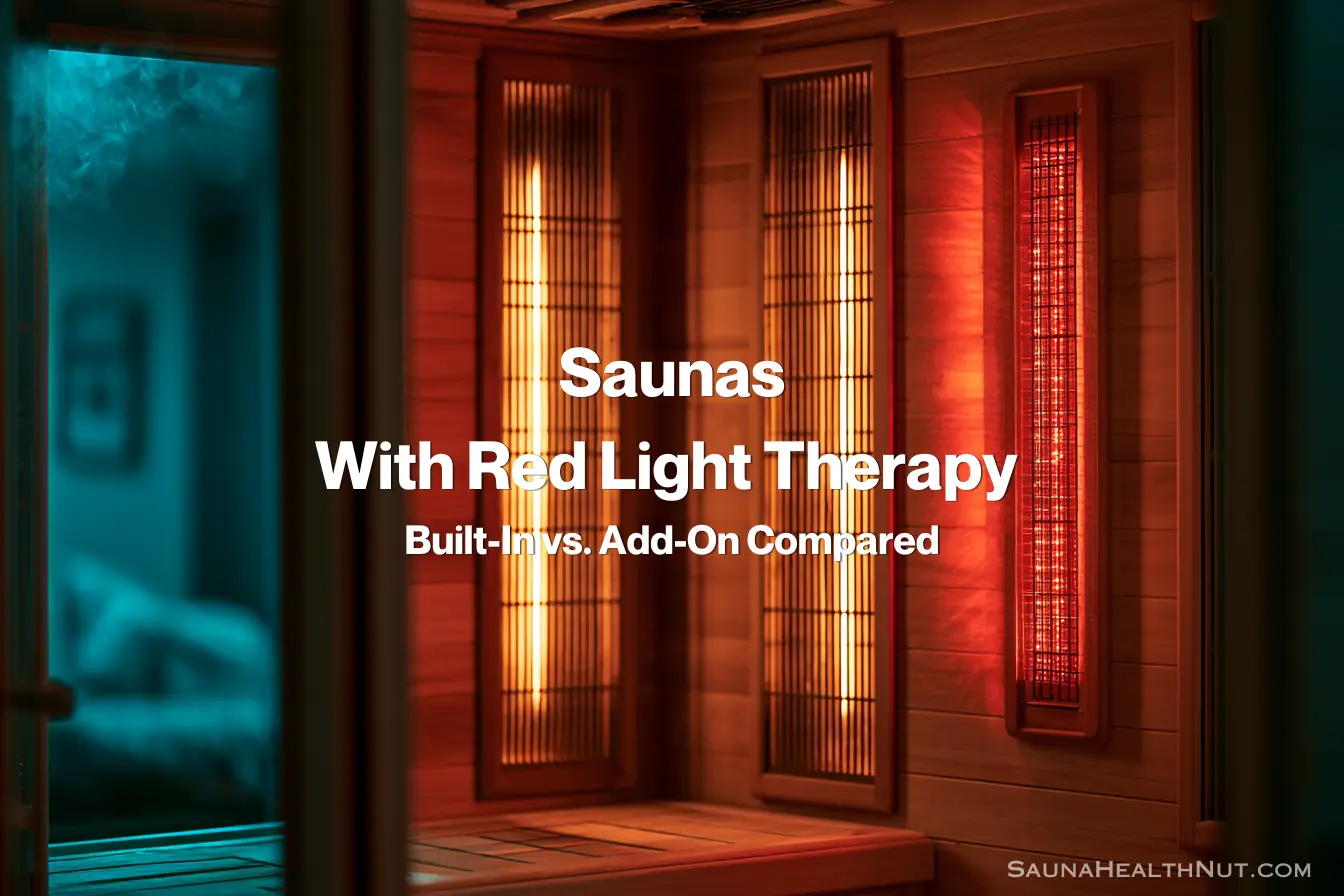
Short answer: A handful of sauna brands now build red light therapy directly into the cabin rather than selling it as a separate add-on, most notably Jacuzzi’s JS-series (a standard overhead red light bar) and JNH Lifestyles’ new Arki line (integrated full-spectrum plus red light in one cabin). Most premium brands, Clearlight and Health Mate included, still sell red light therapy as a separate purchase, a dedicated tower or panel added to the base sauna rather than built in from the factory. Built-in isn’t automatically better than an add-on, it depends on whether the built-in panel’s specific wavelength and irradiance data is actually published, since “includes red light” on a spec sheet doesn’t guarantee therapeutic-grade output.
Last updated: 2026
At a glance:
- Jacuzzi’s JS-series includes a standard overhead red light therapy bar on every current model, no add-on required
- JNH Lifestyles’ 2026 Arki line integrates full-spectrum infrared with red light therapy in a single cabin, a new offering for the brand
- Clearlight and Health Mate both treat red light therapy as a separate add-on product (Clearlight’s Red Light Therapy Tower, Health Mate’s LumaNIR panel), not a built-in feature
- A sauna’s ambient chromotherapy lighting (colored mood lighting) is a different feature entirely from red light therapy and isn’t a substitute for it
- Published wavelength and irradiance data, not just the presence of red LEDs, is what actually indicates a real photobiomodulation feature versus a decorative one
- Built-in red light adds real cost to a cabin’s base price; confirm whether you’d actually use it regularly before paying the premium over a version without it
Who this guide is for: Buyers who specifically want red light therapy alongside their sauna sessions and are deciding whether to look for a brand with it built in, or buy a base sauna and add a dedicated panel separately.
What’s the Actual Difference Between Chromotherapy and Red Light Therapy?
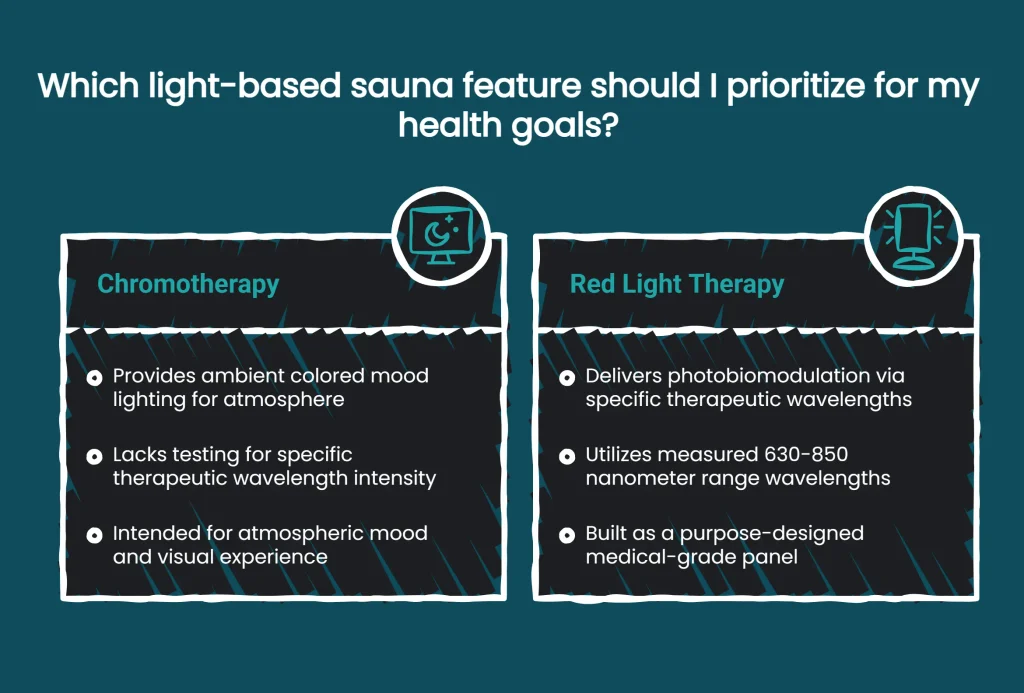
This distinction gets blurred constantly in sauna marketing, and it’s worth being precise about before comparing any specific brand’s claims. Chromotherapy is ambient colored mood lighting, typically a range of LED colors you can cycle through for atmosphere, and it isn’t designed or tested to deliver a specific therapeutic wavelength at a meaningful intensity. Red light therapy, or photobiomodulation, uses specific wavelengths (commonly in the 630-850 nanometer range, where mitochondrial cytochrome c oxidase absorbs light most effectively)[1] delivered at a measured, therapeutic irradiance from a purpose-built panel. A sauna with “6-color chromotherapy” is not the same feature as a sauna with a dedicated red light therapy panel, even though both involve colored light, and several brands’ marketing doesn’t make this distinction as clearly as it should.
Which Brands Actually Build Red Light Therapy Into the Cabin?
| Brand | Approach | What’s included |
|---|---|---|
| Jacuzzi JS-series | Built-in, standard | Overhead red light therapy bar on every current model, plus Vibrational Resonance Therapy |
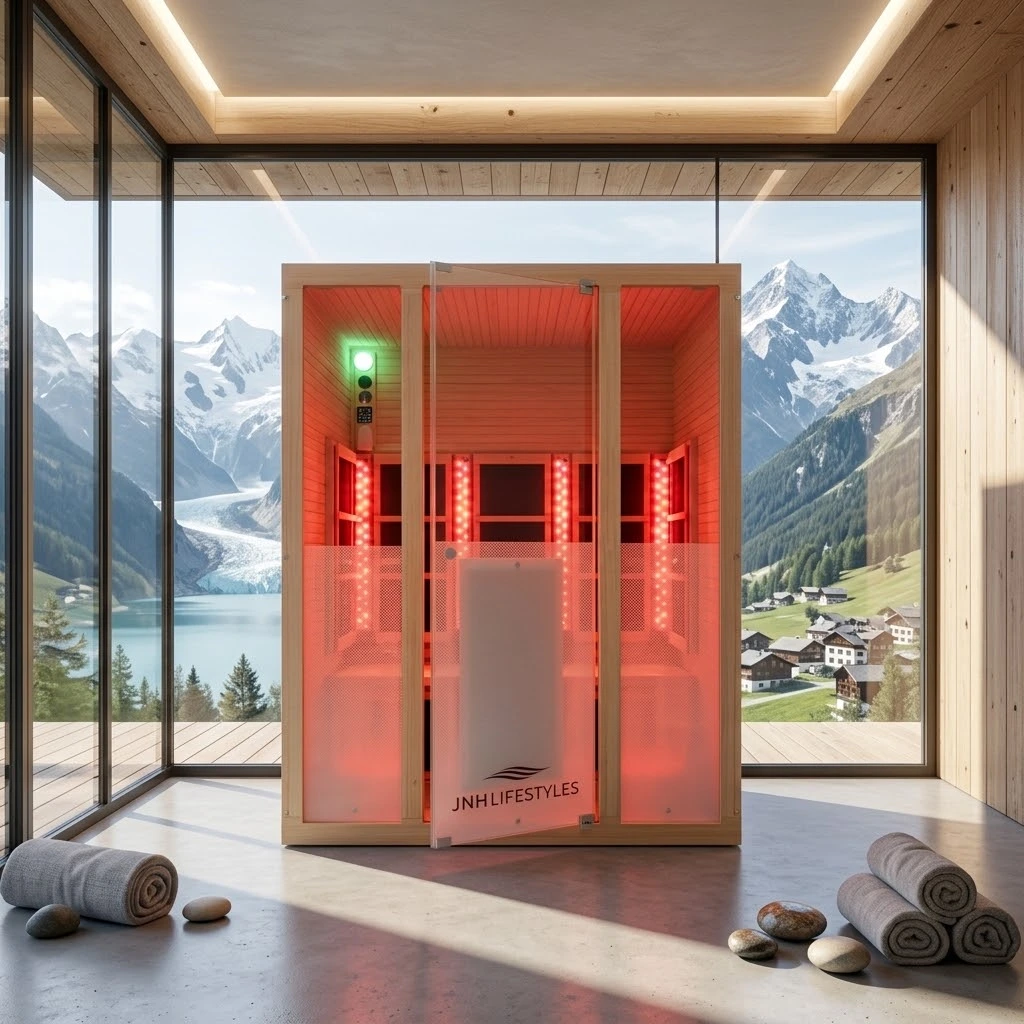
| JNH Lifestyles (Arki, 2026) | Built-in, standard | Full-spectrum infrared with integrated red light therapy in one cabin |
| Clearlight | Add-on | Red Light Therapy Tower sold separately from the base Sanctuary or Premier cabin |
| Health Mate | Add-on | LumaNIR Red Light Therapy panel sold separately, roughly $1,999 |
| Sunlighten, Sun Home | Varies by model | Check specific model specs, since red light integration differs across each brand’s lineup |
The practical takeaway: if built-in red light therapy specifically (not chromotherapy) is a requirement for you, Jacuzzi’s JS-series and JNH’s new Arki line are currently the more straightforward built-in options, while Clearlight and Health Mate require adding a separate product on top of the base sauna price.
Is a Built-In Panel Actually Better Than an Add-On?
Not automatically. The question that actually matters is whether the manufacturer publishes real wavelength and irradiance specifications for the built-in light, the same standard you’d want to hold a standalone red light panel to. A built-in overhead bar with published, therapeutic-grade specs is a genuine convenience and likely a better value than buying a sauna and a separate panel. A built-in light with no published wavelength or irradiance data, just “includes red light therapy” on a spec sheet, may be closer to enhanced chromotherapy than a real photobiomodulation feature. Before assuming built-in means better, ask the same question you’d ask about a standalone panel: what wavelength range, and what irradiance at what distance?
How Much Light Would You Actually Need for a Real Dose?
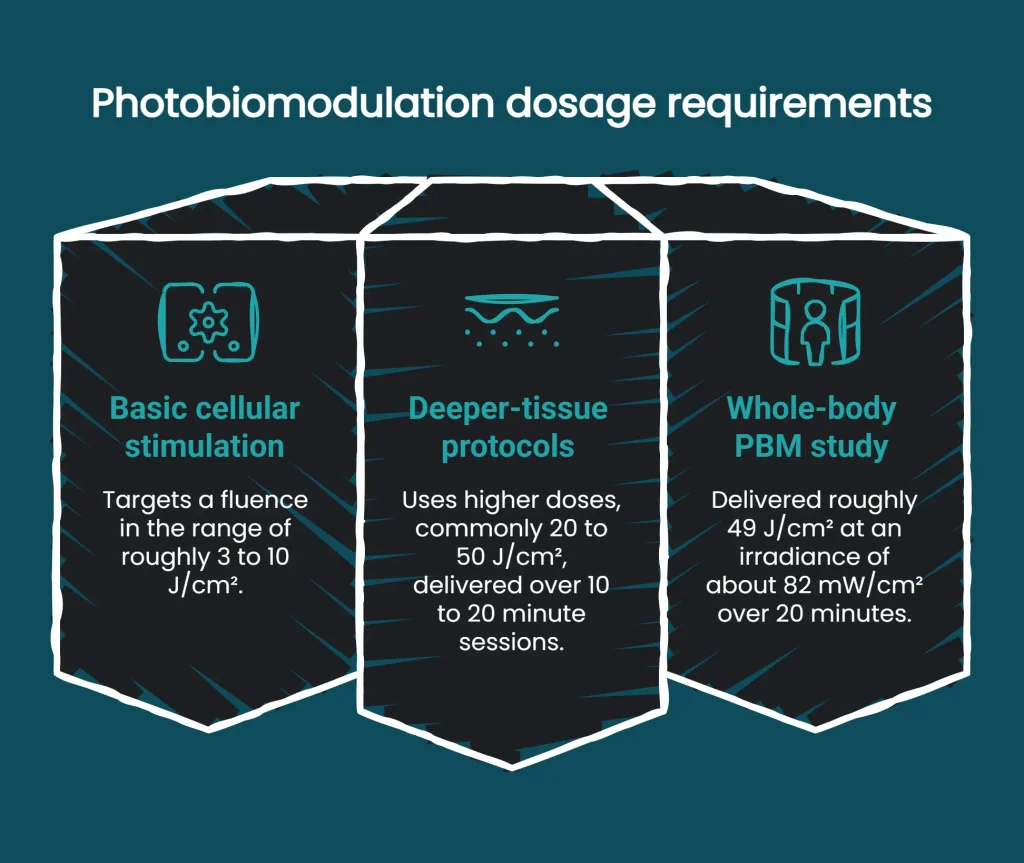
This is the question most sauna buying guides skip entirely, and it’s the one that actually determines whether a built-in panel does anything meaningful. Photobiomodulation research typically targets a fluence (total light energy delivered per square centimeter of skin) in the range of roughly 3 to 10 J/cm² for basic cellular stimulation, with some whole-body or deeper-tissue protocols using higher doses, commonly 20 to 50 J/cm², delivered over 10 to 20 minute sessions.[2][3] One published whole-body PBM study, for example, positioned the light source about 8 inches (20 cm) from the skin and ran it for 20 minutes to deliver roughly 49 J/cm² at an irradiance of about 82 mW/cm².[4]
That distance matters enormously because light intensity follows the inverse-square law: doubling the distance from a light source cuts the intensity to a quarter, and tripling the distance cuts it to a ninth. Dedicated red light therapy panels are typically used 6 to 24 inches from skin for exactly this reason. A sauna’s built-in panel, by contrast, is often mounted on a cabin wall, which can put it several feet from where you’re actually sitting depending on the cabin’s size and the panel’s placement. If a panel delivers a given irradiance at 8 inches, moving the same panel to 3 feet away (a roughly 4.5x increase in distance) would cut the delivered intensity by a factor of about 20, all else being equal. In practice, that means a built-in panel positioned across the cabin rather than close to your body may need a session many times longer than a typical sauna visit to approach the doses used in the research behind red light therapy’s claimed benefits, if it can get there at all.
None of this means a built-in panel is useless. It means panel placement and stated irradiance at your actual sitting distance matter far more than whether the feature exists on the spec sheet at all, which is exactly why the wavelength-and-irradiance checklist below matters more than a brand simply advertising “red light therapy included.”
Does a Sauna’s Red Light Feature Need FDA Clearance?
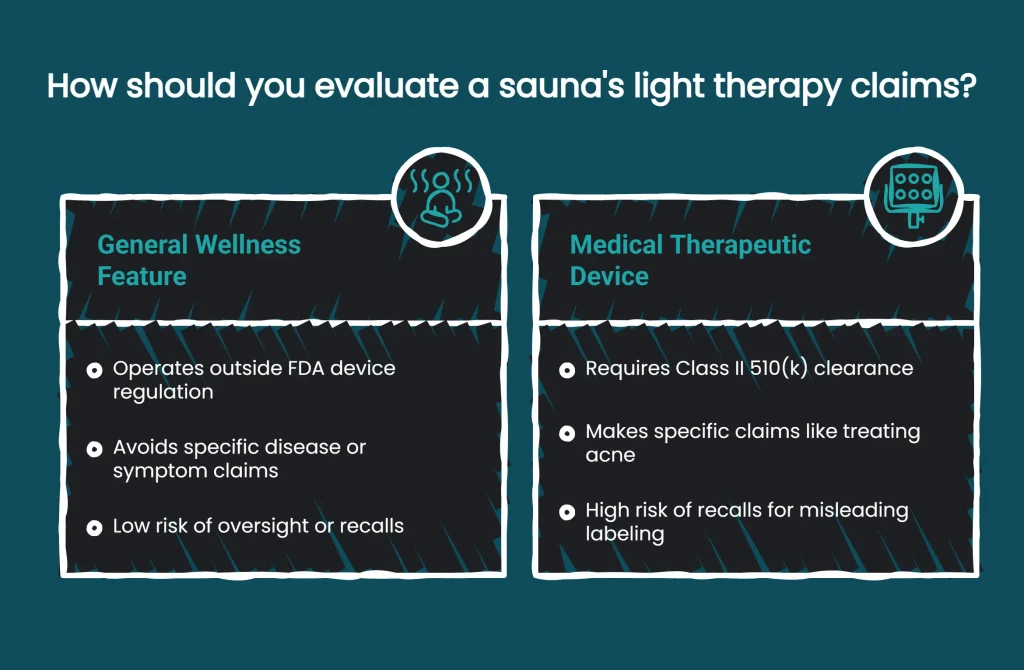
Usually not, and understanding why clarifies what “FDA cleared” or its absence actually tells you. The FDA classifies light therapy devices by intended use rather than by wavelength alone. Devices marketed for general wellness, with no specific claim to treat, cure, or mitigate a named condition, generally fall outside FDA device regulation entirely. Devices that make a specific therapeutic claim, such as treating acne, reducing wrinkles, or relieving pain, are typically classified as Class II devices requiring 510(k) clearance, a process that demonstrates the device is substantially equivalent to an already-cleared product.[5]
A sauna brand’s built-in red light feature is almost always marketed under the general wellness framing (relaxation, ambiance, a wellness add-on to your sauna session) rather than a specific disease or symptom claim, which is precisely why it doesn’t need 510(k) clearance and legitimately isn’t a red flag on its own. The absence of FDA clearance on a sauna’s red light feature doesn’t mean the brand is cutting corners, it likely means they’ve deliberately avoided making the specific medical claims that would trigger the clearance requirement in the first place. What it does mean is that you have no independent regulatory review confirming the feature delivers any particular therapeutic dose, which is a different question the wavelength-and-irradiance checklist below is built to help you answer instead.
Worth knowing as a real-world example of what happens when a sauna brand oversteps this line: infrared sauna maker Therasage was the subject of a 2014-2026 FDA Class 2 recall specifically over labeling, not a safety defect in the heater itself. The company had distributed a portable far infrared sauna with marketing claims including “naturally detoxify,” “expels toxins,” specific calorie-burn figures, and negative ion therapy claims that the FDA determined were false and misleading, and had to instruct retailers to discard that labeling.[6] It’s a useful reminder that the line between a legitimate wellness feature and an overstated medical claim is a real regulatory boundary, not just a marketing style choice.
This depends heavily on how much you actually want to use red light therapy regularly versus how much you want it as an occasional feature. If daily or near-daily photobiomodulation is genuinely part of your routine, a dedicated standalone panel (used inside or outside the sauna) generally gives you more control over positioning, distance from your body, and session timing than a fixed overhead bar built into a sauna cabin. If you mainly want the option available during sauna sessions without a large upfront commitment to a separate device, a built-in feature on a brand like Jacuzzi’s JS-series removes a purchase decision and a piece of separate equipment to manage.
One sequencing question worth considering regardless of which setup you choose: whether it’s better to use red light before, during, or entirely separate from your sauna session. Our dedicated guide on that question covers the mechanism and timing considerations in more depth.
What Should You Actually Check Before Buying for This Feature?
- Published wavelength range, ideally in the commonly studied 630-850 nanometer band, not just “red LED lights.”
- Published irradiance data at a stated distance, since intensity, not just wavelength, determines whether a light delivers a therapeutic dose.
- Whether it’s a fixed panel or adjustable, since a fixed overhead bar limits your positioning relative to a standalone panel you can move closer to specific body areas.
- Total cost comparison, since a base sauna plus a separate high-quality panel may cost about the same as, or even less than, a “built-in” version from a brand charging a premium for the integration.
Frequently Asked Questions
Do all infrared saunas include red light therapy? No. Most premium brands (Clearlight, Health Mate) sell it as a separate add-on. Jacuzzi’s JS-series and JNH’s new Arki line are current examples of brands building it in as a standard feature.
Is a sauna’s chromotherapy lighting the same as red light therapy? No. Chromotherapy is ambient colored mood lighting not designed to deliver a specific therapeutic wavelength or intensity. Red light therapy uses specific wavelengths at a measured, therapeutic irradiance from a purpose-built panel.
Is built-in red light therapy worth paying more for? Only if the manufacturer publishes real wavelength and irradiance specifications for the built-in light. Without that data, you can’t confirm it performs like a genuine photobiomodulation device rather than enhanced ambient lighting.
Should I buy a sauna with red light built in, or buy a base sauna and add a separate panel? If you want maximum control over panel positioning and distance, a separate standalone panel is generally the better setup. If convenience and avoiding a second purchase matter more to you, a brand with genuine, published-spec built-in red light removes that extra step.
Which brands currently include red light therapy standard, not as an add-on? Jacuzzi’s JS-series (overhead red light bar) and JNH Lifestyles’ 2026 Arki line (integrated full-spectrum plus red light) are the clearest current examples among the brands covered on this site.
Does a built-in sauna red light feature need FDA clearance? Usually not. FDA device classification depends on the specific claim being made, not the wavelength itself. A feature marketed for general wellness rather than a specific medical claim typically falls outside FDA device regulation entirely, which is legal and common, but it also means no independent review confirms the feature delivers a specific therapeutic dose.
How far away do I need to sit from a red light panel for it to actually do anything? Dedicated panels are typically used 6 to 24 inches from skin. Because light intensity falls off sharply with distance, a panel mounted several feet away on a sauna wall delivers meaningfully less intensity at your skin than the same panel would at typical therapy distance, potentially requiring a much longer session to approach doses used in research.
Medical Disclaimer: This guide covers product features and buying considerations, not medical advice. Red light therapy and infrared sauna use are not appropriate for everyone. Consult your physician before beginning regular use if you are pregnant, have a photosensitivity condition, or take medications that increase light sensitivity.
References:
- “Brain Photobiomodulation Therapy: A Narrative Review.” PMC. View on PubMed/PMC
- “Review of Light Parameters and Photobiomodulation Efficacy: Dive into Complexity.” PMC. View on PubMed/PMC
- “Photobiomodulation: Cellular, Molecular, and Clinical Aspects.” ScienceDirect. View source
- “Effect of Whole-Body Photobiomodulation on Muscular Performance Enhancement.” Clinical trial protocol. View source
- “Understanding FDA Clearance for Light Therapy Devices.” View source
- U.S. Food and Drug Administration. “Class 2 Device Recall: Portable FAR Infrared Sauna.” View on FDA.gov
You might also find these useful:
- Clearlight Sauna Review: Sanctuary vs. Premier
- Health Mate Sauna Review: Models, Pricing, and Who It’s For
- Best Infrared Saunas of 2026: Tested and Compared