Oura Ring 5 Review: I Wore It Through Every Sauna Session
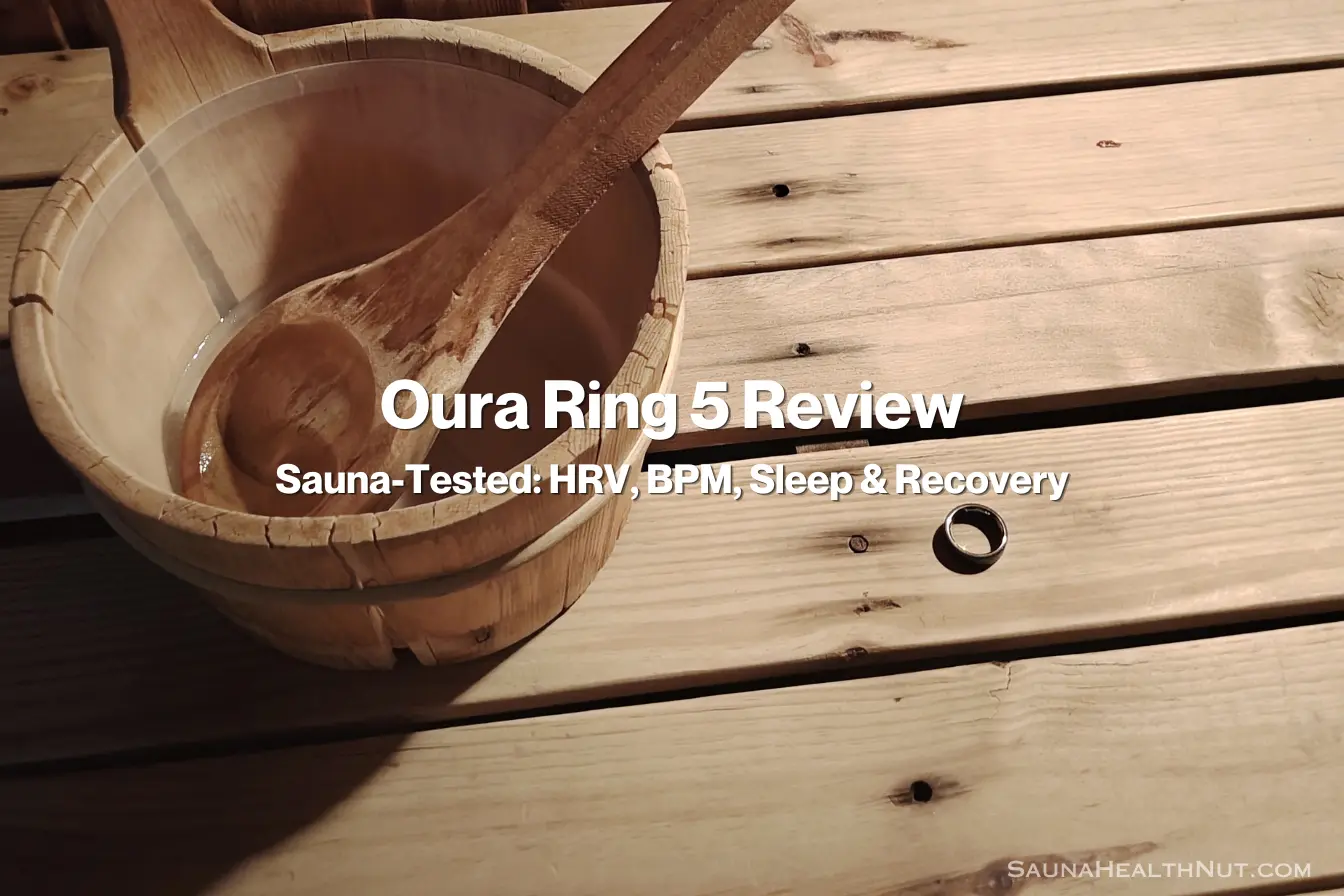
If you like to sauna and want real numbers on what the heat is doing to your heart rate, sleep, and recovery, you’ve probably looked at the Oura Ring 5. I wear mine during every infrared and traditional sauna session, so this review focuses on that one job: does it track heat exposure well, and is the $399-plus membership worth it for that purpose?
Verdict: Yes, with a few caveats. The ring handles sauna heat and moisture without issue, gives real-time heart rate and HRV during sessions, and its sleep data can help you find the pre-bed window that produces your best recovery scores. It won’t measure your blood pressure or diagnose anything, and you’ll need the paid membership to see most of this data.
Last updated: 2026
Quick Verdict: Is the Oura Ring 5 Worth It for Sauna Use?
- Best for: sauna owners who want continuous heart rate, HRV, and sleep data around their heat sessions without a bulky watch.
- Skip it if: you want actual blood pressure numbers or don’t want an ongoing subscription fee.
- Price: $399 for Black and Silver, $499 for other finishes, plus Oura Membership at $5.99 a month or $69.99 a year.
- Water resistance: rated for sauna, hot tub, and shower use, not built for scuba diving.
- Biggest limitation: no blood pressure readings, and full features sit behind the membership.
Who this review is for: Sauna owners deciding between a continuous-wear wearable and a dedicated device like CONNEQT Pulse or Hilo Core, who want an honest read on what the Oura Ring 5 actually adds to a sauna routine, from someone who’s worn one through real sessions rather than a spec-sheet summary.
Reader Disclosure: This post contains affiliate links. If you purchase through them, we may earn a small commission at no extra cost to you. We only link to products
we've evaluated against our editorial standards.
What’s New in the Oura Ring 5
The Oura Ring 5 launched May 28, 2026, and started shipping June 4, 2026. Oura calls it the world’s smallest smart ring, and it’s about 40% smaller than the Ring 4, measuring 6.09mm wide compared to the older ring’s 7.90mm.
It comes in sizes 6 through 13 and six finishes: Black, Silver, Brushed Silver, Stealth, Gold, and Deep Rose. Black and Silver start at $399, while the other finishes run $499, a step up from the Ring 4’s $349 starting price.
Alongside the ring, Oura rolled out two new software features in June 2026: Blood Pressure Signals and 30-day nighttime breathing trends. Both track patterns over time rather than giving a diagnostic reading, and they’re currently available only to users in the US, India, and the United Arab Emirates.
Water Resistance and Heat Durability for Sauna Use
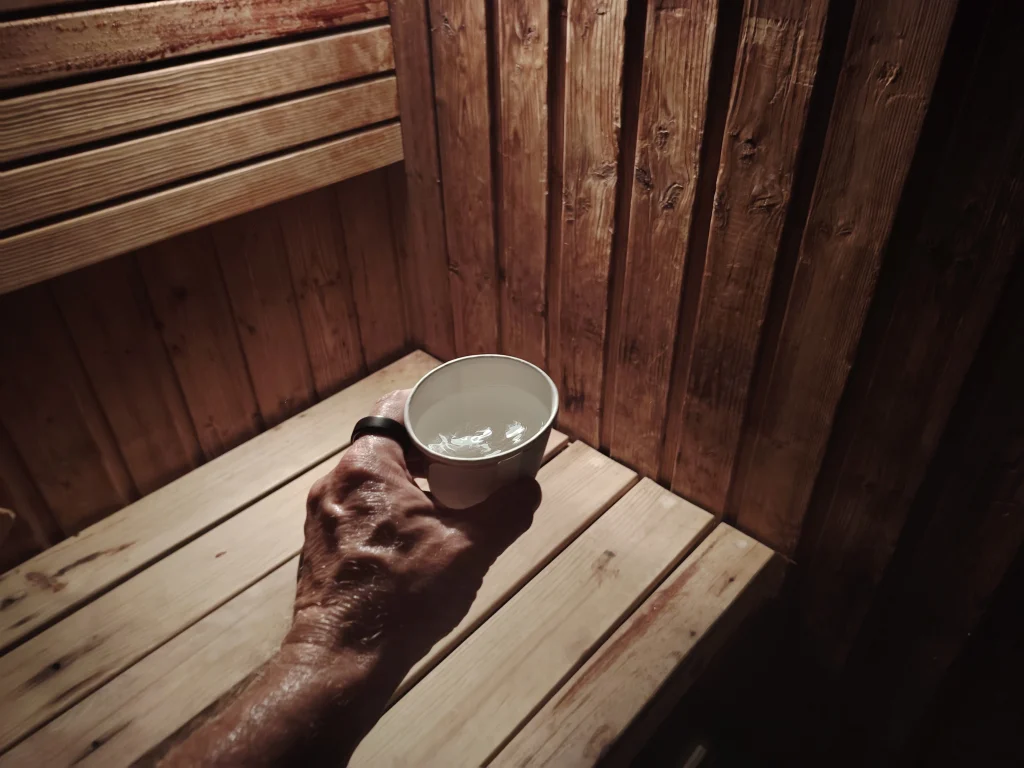
The Oura Ring 5 carries an IP68 rating and is water resistant to 100 meters, the same spec as the Ring 4. That covers showers, dishwashing, swimming, and sauna sweat without a problem.
I’ve worn mine through infrared and traditional sauna sessions with no water damage, fogging, or connection issues. It comes off the same way it went in.
Temperature is the bigger question for sauna owners. Oura’s documented operating range is roughly -10°C to 54°C (14°F to 129°F), and some sauna-specific guidance recommends staying under about 52°C (125°F) to protect the battery during prolonged heat exposure. Most home saunas run well within that window, but a very hot traditional session pushed to the extreme end is worth watching.
Durability under physical stress is a separate issue. The Ring 5 keeps a titanium body with a new PVD coating meant to resist scratches, but at least one long-term reviewer reported visible scratches after 18 days of frequent weight training. That’s a strength-training pattern, not a sauna one, but it’s worth knowing if you also lift before or after your sessions.
If you’re weighing which finish and size fit your routine best, browsing the current lineup and pricing is worth doing before you decide.
Real-Time Heart Rate and HRV Tracking in the Sauna
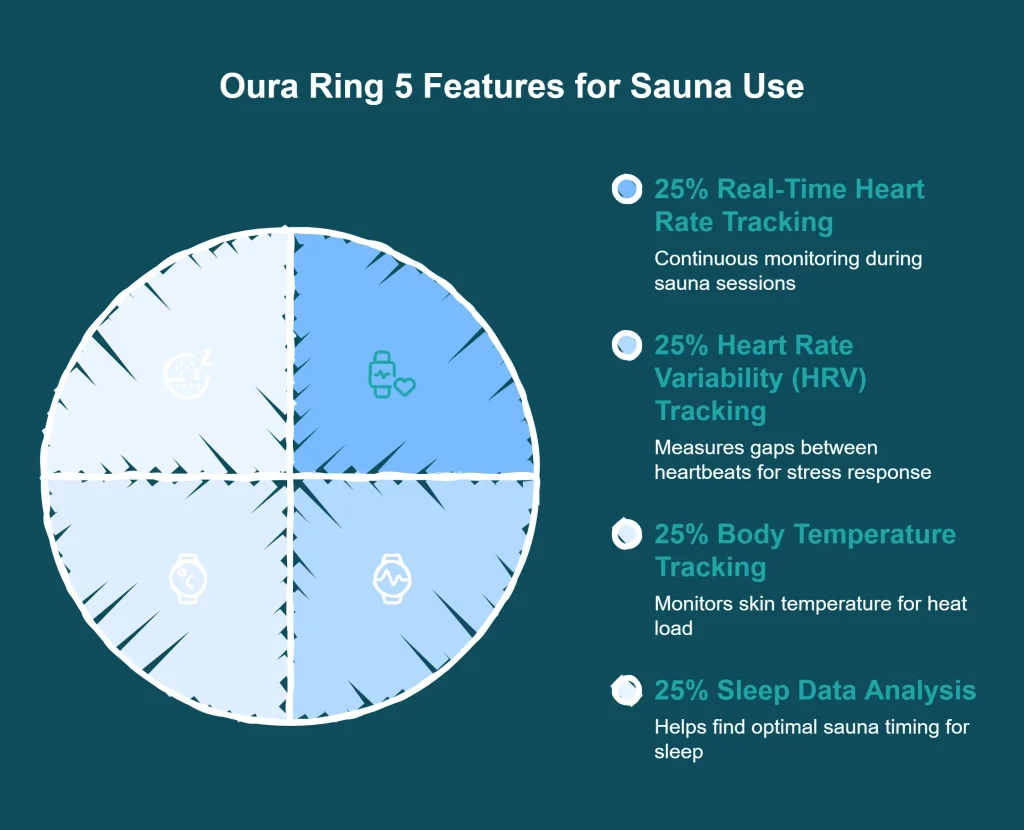
This is where the ring earns its keep for sauna use. It tracks heart rate continuously, so you can watch the number climb in real time on the app during a session instead of guessing.
In my own sessions, heart rate typically lands in the 90 to 110 BPM range during infrared sauna, and climbs higher, around 100 to 130 BPM, during traditional sauna with its higher heat and humidity. Seeing that gap in real numbers makes it easier to judge how hard a given session is actually working your body.
Heart rate variability, or HRV, measures the tiny gaps between heartbeats, and it’s one signal of how your autonomic nervous system responds to stress, including heat stress. Sauna use is associated with HRV changes in preliminary research, and the ring lets you watch that response for yourself night to night instead of relying on general studies alone.
It’s worth being clear about what this is and isn’t. HRV numbers from a consumer ring are a wellness signal, not a clinical cardiovascular measurement, and they don’t diagnose anything. Treat them as a trend to watch over weeks, not a single number to obsess over after one session.
Body Temperature Tracking and Thermal Load
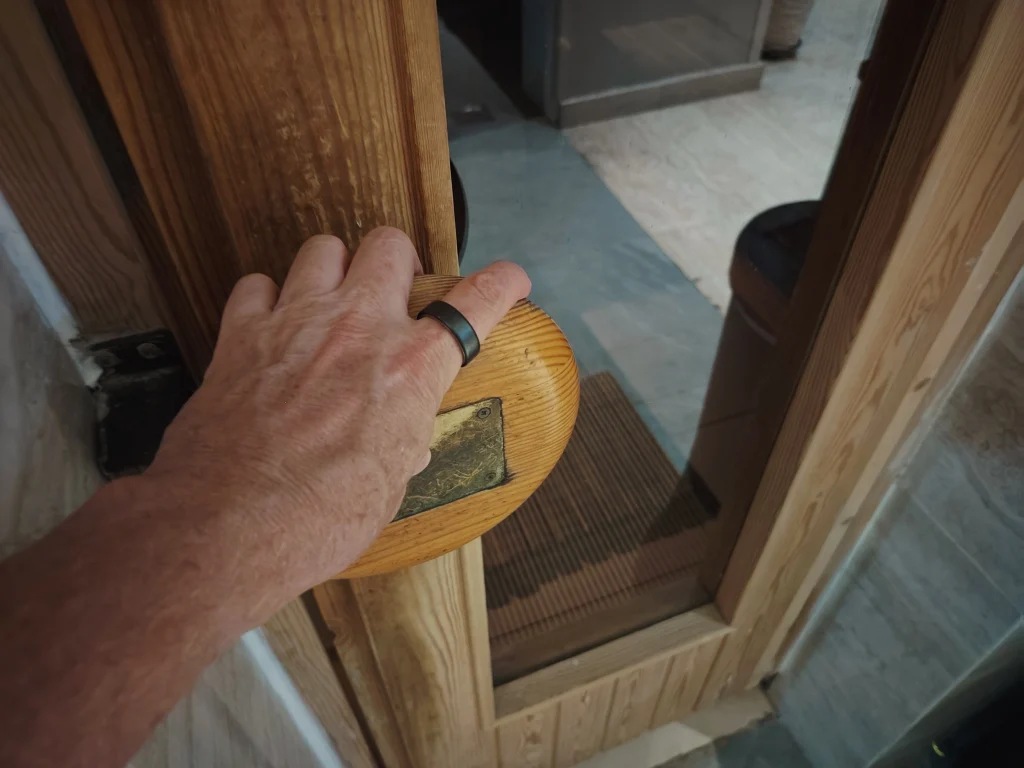
The Oura Ring 5 also tracks skin temperature continuously, shown as a temperature trend graph and nightly deviation reading in the app. During and after a sauna session, that reading reflects the added heat load your body just took on.
This doesn’t replace a thermometer or tell you your core temperature. It’s a relative trend, useful for noticing that last night’s session ran hotter than usual or that your body is still running warm the next morning. Over time, it can help you spot whether sessions are consistently longer or hotter than your recovery can keep up with.
Using Sleep Data to Find Your Best Sauna Timing
One of the most useful things the ring does for sauna owners has nothing to do with the session itself. It’s the sleep tracking that comes after.
Sauna heat raises your core body temperature, and the drop afterward is part of what can help signal sleep onset. I’ve used Oura’s sleep data to test different timing windows against each other, comparing sleep scores and next-morning readiness.
For me, sessions timed about 60 to 90 minutes before bed consistently produced the best sleep scores and recovery readings the next morning, compared to sessions right before lying down or much earlier in the evening. That window isn’t a universal rule, since everyone responds a little differently, but the ring gives you the data to find your own version of it.
Cardiovascular Age and Readiness: What They Do and Don’t Tell You
Oura’s cardiovascular age feature estimates pulse wave velocity, essentially how quickly a pressure wave moves through your blood vessels, and uses that to generate an age estimate for your cardiovascular system. It’s a wellness estimate built into Oura’s existing heart health tools, not a diagnostic test, and it shouldn’t replace an actual cardiovascular workup from a doctor.
The readiness score pulls together HRV, sleep, temperature, and activity into one daily number meant to reflect how recovered you are. In my own tracking, both scores shift on days that follow a sauna session after a workout compared to plain rest days, which lines up with the idea that heat exposure adds a measurable load on top of exercise.
None of this means sauna use treats or prevents any disease. It means you get more visibility into how your specific sauna habit interacts with your training and recovery, which is useful even without a medical claim attached to it.
The Membership Requirement: Cost and What’s Gated
The Oura Ring 5 needs an active Oura Membership to unlock most of its data, including detailed HRV breakdowns, sleep stages, readiness insights, and the newer Blood Pressure Signals and nighttime breathing trends. Without it, the ring still tracks basic metrics, but you lose the depth that makes it useful for a sauna protocol.
Membership costs $5.99 a month or $69.99 a year, and new ring purchases include the first month free. For a sauna owner using this data regularly to time sessions and track recovery, the subscription is a real ongoing cost to factor in alongside the ring’s purchase price.
That recurring cost is easy to overlook until after you’ve already bought the ring, so it’s worth checking Oura’s current membership tiers and what each one unlocks first.
What the Oura Ring 5 Does Not Do
No, the Oura Ring 5 does not measure blood pressure. Its Blood Pressure Signals feature uses light-based sensors to watch for pulse waveform changes that may correlate with blood pressure shifts over time, showing trends and flags rather than a systolic or diastolic number.
As of mid-2026, no smart ring on the market, including the Oura Ring 5, has FDA clearance to measure blood pressure. This lines up with the FDA’s own guidance on cuffless blood pressure device clearance, and with the American Heart Association’s 2026 scientific statement on cuffless wearable BP devices, which specifically cautions against relying on unvalidated cuffless wearables for hypertension diagnosis or treatment decisions. Oura is reportedly working toward FDA clearance for a separate hypertension-risk detection feature, similar to how the Apple Watch flags irregular heart rhythm, but that’s expected sometime in late 2026 or 2027 and isn’t part of the ring today.
The ring also isn’t a substitute for a clinical cardiovascular assessment. If you have a heart condition or blood pressure concerns, treat this data as a personal wellness trend to discuss with a doctor, not a replacement for their tools.
Oura Ring 5 vs. CONNEQT Pulse vs. Hilo Core
These three products get compared for heart health tracking, but they solve different problems. The Oura Ring 5 is a continuous-wear ring built around sleep, HRV, and recovery, not a dedicated blood pressure device.
CONNEQT Pulse is an FDA-cleared cuff device that uses SphygmoCor technology to measure actual central blood pressure and arterial stiffness, something the Oura Ring 5 does not do. It’s a spot-check tool, though, so you can’t wear it into the sauna the way you can an Oura ring.
Hilo Core takes a middle path: a wristband that gives cuffless blood pressure trend estimates with periodic cuff calibration, plus its own mandatory annual subscription. It’s more focused than Oura but doesn’t cover sleep and recovery the way a ring does.
| Product | Form Factor | Main Focus | Price | Sauna Wearable? |
|---|---|---|---|---|
| Oura Ring 5 | Ring, continuous wear | HRV, sleep, recovery, readiness | $399-$499 + membership | Yes |
| CONNEQT Pulse | Cuff, spot-check | Central blood pressure, arterial stiffness | About $289 | No |
| Hilo Core | Wristband + cuff | Cuffless blood pressure trends | $89.99 + $149.99/year | No |
If the ring still comes out ahead for what you actually want to track after that comparison, the full Ring 5 lineup by finish and size is the natural next stop.
Pricing, Warranty, and Return Policy
The Oura Ring 5 costs $399 for Black and Silver finishes, and $499 for Brushed Silver, Stealth, Gold, and Deep Rose. Add the required membership at $5.99 a month or $69.99 a year on top of that.
Oura backs the ring with a one-year warranty against defects in materials and workmanship. If you buy directly from Oura’s store, you can return or exchange an undamaged ring within 30 days for any reason.
Oura also sells an optional Extend Protection Plan covering accidental damage, priced at $45 for two years or $60 for three years. For a device seeing regular sauna heat and moisture, that plan is worth a look for extra peace of mind beyond the standard warranty.
FAQs
Can you wear the Oura Ring 5 in a sauna?
Yes. It’s water resistant to 100 meters and rated to handle sauna heat, hot tubs, and showers, as long as temperatures stay within its documented operating range, generally under about 125-129°F.
Does the Oura Ring 5 measure blood pressure?
No. Its Blood Pressure Signals feature tracks pulse waveform trends that may relate to blood pressure changes over time, but it does not display an actual systolic or diastolic reading, and it isn’t FDA cleared as a blood pressure device.
Is the Oura membership required to use the ring?
Yes, for full functionality. The ring works without it, but detailed HRV, sleep, readiness, and the newer blood pressure signal and breathing features all need an active membership at $5.99 a month or $69.99 a year.
How hot can the Oura Ring 5 safely get before it’s damaged?
Oura’s documented operating range runs roughly from -10°C to 54°C (14°F to 129°F), though sauna-specific guidance suggests staying under about 52°C (125°F) for prolonged heat exposure to protect the battery.
Does sauna use actually improve HRV or cardiovascular age scores?
Sauna use is linked to short-term HRV changes in preliminary research, and personal tracking can show shifts in readiness and cardiovascular age estimates after sessions. These are wellness trends, not proof that sauna use treats or prevents any medical condition.
How much does the Oura Ring 5 cost with membership included?
Expect $399 to $499 upfront for the ring, plus $5.99 a month or $69.99 a year for membership after the first free month. Over a year, total cost lands somewhere between roughly $469 and $569, depending on finish and billing plan.
Final Verdict
The Oura Ring 5 is a solid pick for sauna owners who want continuous heart rate, HRV, and sleep data without wearing a bulky watch into a hot room. Its biggest strength for this use case is the sleep-timing data, which can help you find your own best pre-bed sauna window instead of guessing.
Its biggest limitation is the price: $399 to $499 for the ring, plus an ongoing membership just to see most of the useful data. It also won’t give you real blood pressure numbers, so a dedicated device like CONNEQT Pulse fits better if that’s your main goal.
For a sauna user focused on HRV, sleep, and recovery trends around their sessions, the evidence here supports it as a genuinely useful tool, as long as you go in knowing what it can’t do.
If you’ve decided it’s the right fit for your sauna routine, Oura’s official site has current models and pricing.
Medical Disclaimer: This review discusses general product features based on published specifications and personal use, and is not a substitute for professional medical advice. The Oura Ring 5’s HRV, cardiovascular age, and Blood Pressure Signals features are wellness estimates, not diagnostic tools, and none of them should replace clinical cardiovascular assessment or blood pressure monitoring from your doctor. If you have a heart condition or blood pressure concerns, talk to a healthcare provider before relying on any wearable device data.
You might also find these useful: