
Best EMF Meters for Testing an Infrared Sauna in 2026
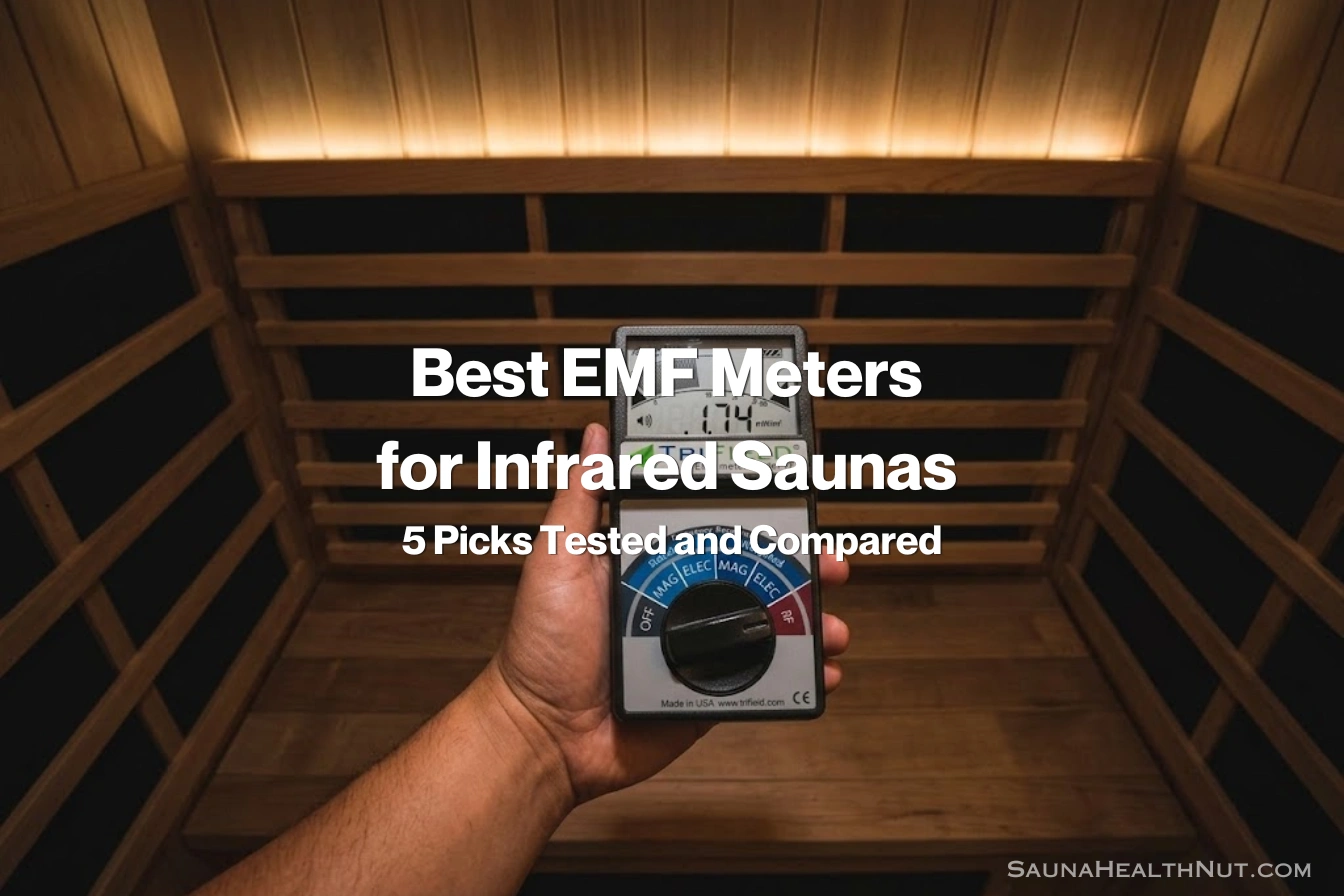
If you’ve read a “low EMF” claim on your infrared sauna’s product page, you’re not alone in wondering whether it’s true. Manufacturer testing methods vary a lot. The only way to know what your unit actually puts out is to measure it yourself.
Doing that right takes more than one meter reading. A sauna heater, its wiring, and any Bluetooth speaker or WiFi panel each create a different type of field. You need a meter that can separate magnetic, electric, and radio frequency (RF) readings, rather than blending them into one number.
This guide compares five meter options, from a budget spot-check tool to a professional RF meter, and covers the testing steps that most general EMF guides skip entirely.
Updated for 2026.
At a glance:
- A tri-axis meter that separates magnetic, electric, and RF readings is the minimum for testing a sauna properly, since a heater, wiring, and any Bluetooth/WiFi panel each contribute a different field type
- Trifield TF2 (~$160-200) is the simplest, fastest spot-check option with no learning curve
- GQ EMF-390 (~$100-120) adds data logging, useful for tracking how readings change across a full session
- Safe and Sound Pro II (~$400+) is the professional RF-only tier, third-party certified, but you’ll need a separate meter for magnetic and electric fields
- The Building Biology Institute’s four-tier reference bands (No/Slight/Severe/Extreme Concern) give you a precautionary comparison point, not a legal safety limit
- None of these meters detect “dirty electricity,” a different phenomenon requiring its own plug-in filter meter
Who this guide is for: Sauna owners and buyers who want to check a manufacturer’s EMF claim against a real reading, rather than taking a product page’s word for it.
Quick Answer: Which EMF Meter Should You Buy?
- Best for a one-time spot check: Trifield TF2, tri-axis, simple readout, no learning curve
- Best for tracking readings through a full session: GQ EMF-390, logs data to internal memory and USB
- Best for professional RF-only accuracy: Safe and Sound Pro II, third-party certified, higher price
- Best on a tight budget: A 3-in-1 meter in the $30 to $60 range, useful for rough checks only
Why a Tri-Axis Meter Matters for Sauna Testing
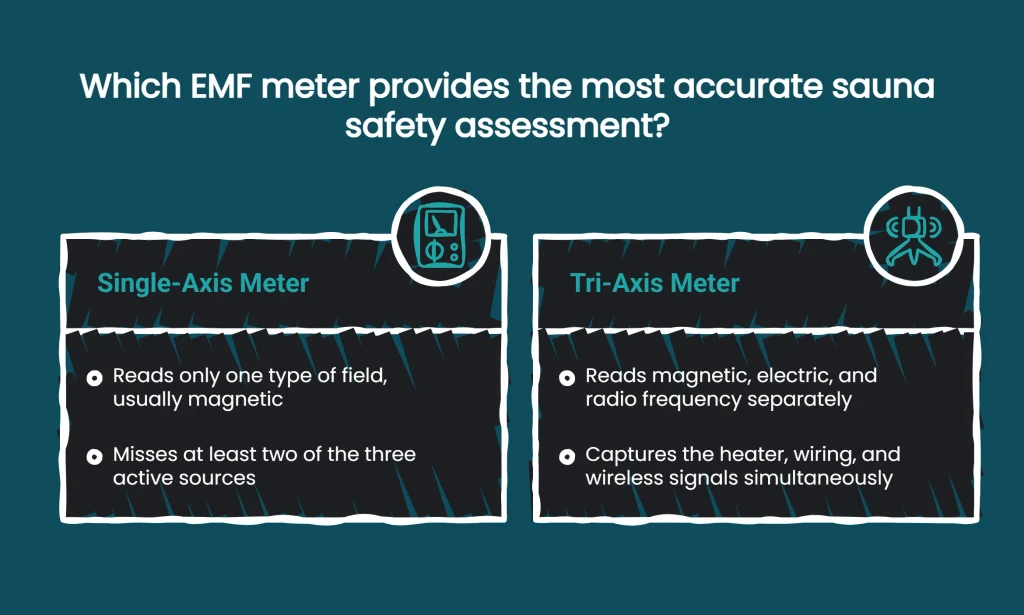
Most cheap “ghost hunting” style meters only read one type of field, usually magnetic. That’s a problem inside a sauna, because three separate sources are active at once.
The heater element creates a magnetic field, and depending on its design, an electric field too. The internal wiring that carries power to the heater adds its own electric field. That field’s strength changes based on how the wiring is routed.
Any Bluetooth speaker or WiFi-connected control panel adds a third type of field: radio frequency (RF). RF travels through the air rather than along wiring.
A single-axis, single-field meter misses at least two of these three sources. A tri-axis meter reads magnetic (ELF), electric (ELF), and RF separately. That gives you a real picture of what your sauna puts out, not just a partial one.
The Picks: EMF Meters Compared
| Meter | Approx. Price | Fields Measured | Data Logging | Best For |
|---|---|---|---|---|
| Trifield TF2 | $160 to $200 | Magnetic, electric, RF to ~6 GHz | No | One-time spot check |
| GQ EMF-390 | $100 to $120 | Magnetic, electric, RF to 8 to 10 GHz | Yes, internal + USB | Tracking a full session |
| Safe and Sound Pro II | $400+ | RF only, 200 MHz to 8 GHz | No | Professional RF accuracy |
| Cornet ED88T | $180 to $250 | Magnetic, electric, RF, plus frequency counter | Yes, on newer versions | Pinpointing the exact source |
| Budget 3-in-1 meters | $30 to $60 | Single-axis, varies by model | Rarely | Rough, low-cost check |
Trifield TF2: Easiest for a Quick Check
The TF2 is made by AlphaLab. It measures magnetic, electric, and RF fields up to roughly 6 GHz, covering WiFi routers, Bluetooth, and most cell signals. It has no data logging and no screen full of numbers to interpret, just a simple analog-style needle readout.
That simplicity is the whole appeal. Walk into your sauna, take a reading at a few spots, and get an answer without learning any software. The trade-off: you can’t record readings over time or export them for comparison later.
If the TF2’s simplicity sounds like the right fit, current TF2 pricing is worth checking before you decide.
GQ EMF-390: Best for Tracking a Full Session
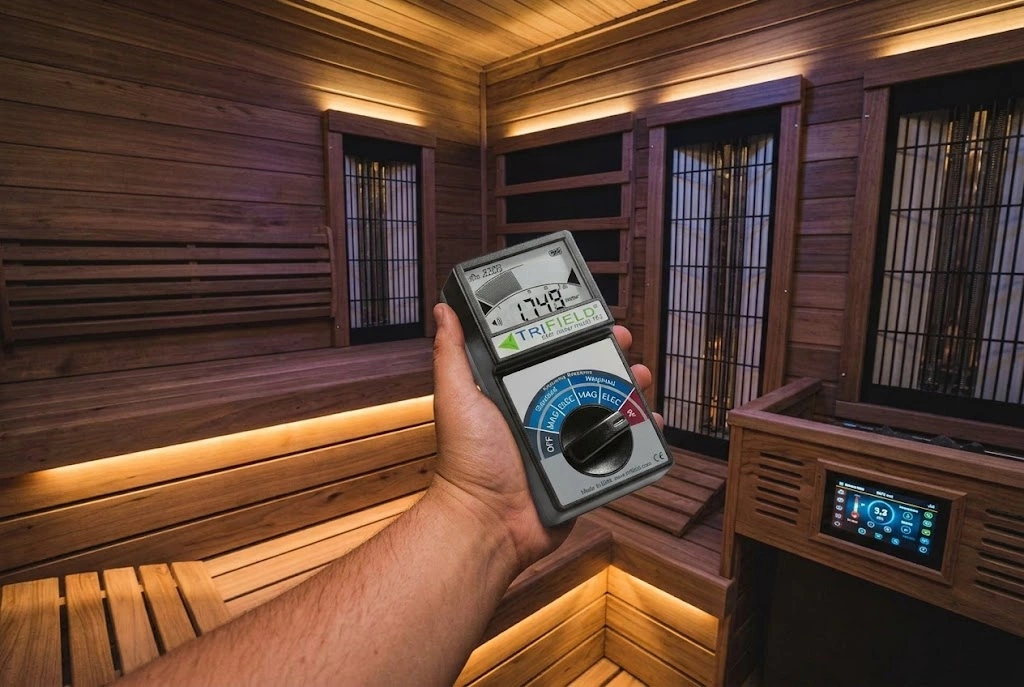
The GQ EMF-390 is a tri-axis meter with an RF detection range up to 8 to 10 GHz. It also has a built-in RF spectrum analyzer for identifying specific frequency sources. Unlike the TF2, it logs readings to internal memory. You can download them to a computer over USB using free software.
That logging feature matters if you want to see how readings change as your sauna heats up. You can also compare a 10-minute mark against a 40-minute mark without writing numbers down by hand. It costs less than the TF2, but has a steeper learning curve because of the extra data and menus.
If tracking a full session matters more to you than simplicity, GQ EMF-390 details and current pricing are worth a look.
Safe and Sound Pro II: Professional RF Tier
The Safe and Sound Pro II is an RF-only meter built by Safe Living Technologies, a Canadian instrumentation company. Its accuracy has been tested and verified by an independent third party, with a calibration certificate included with each unit. It measures RF from 200 MHz to 8 GHz. That makes it a solid choice if you want lab-grade confidence in RF numbers specifically.
It does not measure magnetic or electric fields, so most owners pair it with a separate magnetic-field meter. It’s also priced well above the rest of this list, typically $400 or more. That puts it firmly in professional territory, not a casual buyer’s price range. One isolated user report questioned its readings against another device, but this hasn’t been confirmed as a broader accuracy issue across reviews.
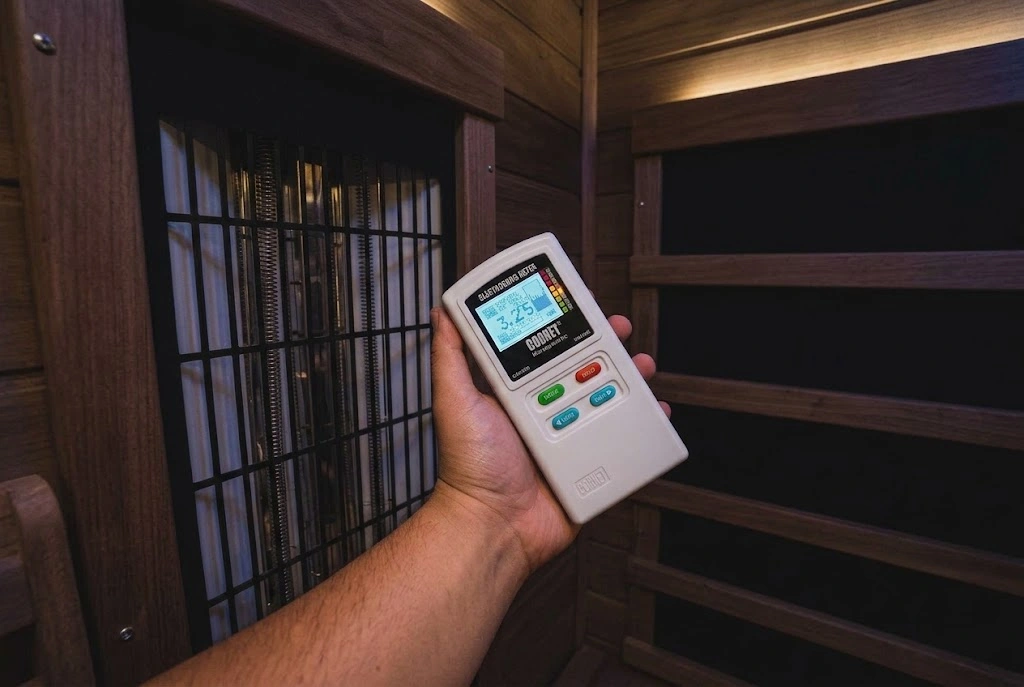
Cornet ED88T: Best for Pinpointing the Source
The Cornet ED88T is another tri-axis meter, priced around $180 to $250 depending on the specific version. It has a frequency counter feature that displays the actual frequency of an RF signal, which helps identify exactly which source, a WiFi router, a Bluetooth speaker, a nearby cell signal, is producing a given reading. It’s a solid alternative to the TF2 for buyers who want to pinpoint sources rather than just get a total number. It does have a steeper learning curve than the TF2’s simple readout.
Browsing current EMF meter options side by side is the easiest way to compare these five picks against your specific budget.
Budget 3-in-1 Meters: Fine for a Rough Check
Meters in the $30 to $60 range give you a general sense of magnetic field strength but are usually single-axis, meaning they can’t separate electric and RF readings the way the pricier options can. They also tend to be less consistent when comparing low-level readings side by side.
These are worth considering only if you want a rough yes-or-no answer and don’t plan to compare specific numbers against a manufacturer’s claim or another sauna brand.
How to Actually Test Your Sauna
A single reading taken once, at one spot, tells you very little. Here’s the testing routine that gives you a real picture:
- Test cold, then fully heated. Some readings only show up once the heater is drawing full power, so a cold reading alone can be misleading.
- Measure at head, torso, and foot height. Heater panels sit at different heights in different sauna designs, so field strength isn’t uniform from top to bottom.
- Test with connected features on, then off. A Bluetooth speaker or WiFi control panel adds its own RF contribution, so compare readings both ways.
- Record magnetic, electric, and RF as separate numbers. Don’t combine them into one score. They’re different types of fields and mean different things.
- Retest after any repair or part replacement. A new heater panel, control board, or wiring repair can change your readings, so a one-time test doesn’t cover the life of the sauna.
For a deeper walkthrough of sauna EMF testing, our guide to measuring EMF in an infrared sauna covers additional detail on setup and placement.
What the Numbers Actually Mean
Magnetic field readings are reported in milligauss (mG). There is no single U.S. government safety limit for magnetic field exposure from consumer appliances. Any meter reading you take is a data point, not a pass-or-fail grade against a legal standard.
That said, the Building Biology Institute publishes precautionary sleeping-area guidance that many sauna owners use as a reference point.[1] Readings under 0.2 mG count as no concern. From 0.2 to 1 mG is slight concern, 1 to 5 mG is severe concern, and above 5 mG is extreme concern.
These bands are recommendations for minimizing sustained exposure, not legally binding limits. Many everyday household appliances test well above them at close range.
An EMF meter tells you what your specific sauna reads under the conditions you tested. It doesn’t confirm the unit is “safe” or “unsafe” in any medical or regulatory sense. It also doesn’t validate or invalidate an entire product line based on one reading, since installation and individual units can vary.
To understand what a “low EMF” marketing claim actually means, our explainer on what counts as a low-EMF infrared sauna breaks down the terminology further.
What These Meters Can’t Do
None of the meters in this guide measure dirty electricity, which is high-frequency electrical noise riding on your home’s standard wiring. That’s a separate phenomenon from the magnetic, electric, and RF fields these meters detect. It requires a different type of instrument, typically a plug-in filter meter designed specifically for that purpose.
If dirty electricity is a specific concern for your setup, you’ll need to research that instrument category separately rather than expecting an EMF meter to catch it.
FAQ
Do I need a data-logging meter, or is a spot check enough?
A spot check with the TF2 is enough if you just want a one-time answer. If you want to see how readings change across a full session, the GQ EMF-390’s logging feature is worth the extra step.
What’s a normal magnetic field reading in an infrared sauna, in mG?
There’s no single “normal” number since readings vary by brand, unit, and heater design. The Building Biology precautionary bands range from under 0.2 mG (lowest concern) to above 5 mG (highest). They give you a reference point to compare your own reading against.
Is there an official government safety limit for sauna EMF exposure?
No. There is no U.S. government mG limit specifically for consumer appliances like saunas. The Building Biology figures are precautionary industry guidelines, not regulation.
Can an EMF meter tell me if my sauna is safe?
An EMF meter tells you the actual reading compared to whatever the manufacturer marketed, nothing more. It can’t confirm overall safety, since that isn’t what the device is designed to measure.
Do these meters also measure dirty electricity?
No. Dirty electricity is a different type of electrical noise that requires a separate plug-in filter meter, not a standard EMF meter.
Should I test with the Bluetooth speaker or WiFi panel turned on?
Test both ways. Connected features add their own RF contribution, so comparing readings with them on and off shows you the full picture.
How often should I retest my sauna?
Retest anytime you replace a heater panel, control board, or repair the wiring, since these changes can shift your readings from the original baseline.
Bottom Line
If you want one meter that handles a quick, reliable check without a learning curve, the Trifield TF2 is the simplest choice. If you’d rather track readings across a full session and export the data, the GQ EMF-390 gives you more for less money. It does come with a bit more complexity.
The Safe and Sound Pro II is worth its higher price only if RF accuracy alone is your priority. You’ll also need to pair it with a separate magnetic-field meter. The Cornet ED88T is worth a look if pinpointing the exact source of a reading matters to you. Budget 3-in-1 meters are fine for a rough, casual check. They won’t hold up if you’re comparing specific numbers against a manufacturer’s claim.
Whichever meter you choose, remember it only confirms what your specific unit reads under the conditions you test. Follow the cold-and-heated, multi-height, connected-features testing routine above to get a result you can actually trust.
Comparing current prices on these EMF meters is the next step once you’ve decided which tier fits your needs.
Medical Disclaimer: This guide covers equipment selection and testing methodology, not medical advice. If you have specific health concerns about EMF exposure, discuss them with a qualified healthcare provider.
References:
- “Building Biology FAQ: EMF, Air Quality & Healthy Home Questions.” Healthy Building Education and Certification Institute. View source