
What is an infrared sauna? (mechanisms, wavelengths, and physiological effects)

Short answer: An infrared sauna uses radiant heat from infrared light emitters to warm the body directly, rather than heating ambient air like traditional saunas. Operating at 120-150°F (compared to 175-195°F in traditional saunas), infrared models emit wavelengths that penetrate tissue up to 1.5 inches, triggering physiological responses through photobiomodulation and thermoregulation. The primary types are near-infrared (NIR), mid-infrared (MIR), and far-infrared (FIR), each with distinct wavelength ranges and tissue penetration depths.
Last updated: January 2026
Note: This guide focuses on how infrared saunas work at a physiological and electromagnetic level, not on product recommendations or brand comparisons.
Key Takeaways
- Heat delivery differs fundamentally: Infrared saunas use radiant heat (direct tissue warming) while traditional saunas use convective heating (hot air)
- Three wavelength types have distinct effects: NIR (0.8-1.4 microns) for cellular energy, MIR (1.4-3 microns) for circulation, FIR (3-14 microns) for deep tissue heating
- Primary mechanisms are photobiomodulation and thermoregulation—not simple sweating or “detoxification”
- Operating temperatures are 30-50°F lower than traditional saunas, allowing longer, more comfortable sessions
Evidence descriptions throughout this guide reflect the current strength of human clinical research and mechanistic studies.
How Infrared Saunas Work: Mechanism First
When most people think of a sauna, they picture the intense, enveloping heat of a traditional Finnish sauna. They imagine pouring water over hot rocks, the air growing thick and heavy, and deep, profuse sweat. This experience is based on convection: the air is heated to 175-195°F, and that hot air then heats your body.
An infrared sauna operates on a fundamentally different principle. Instead of heating the air around you, infrared saunas use specialized emitters to generate radiant heat that penetrates your skin and tissues directly. The result is a much lower ambient temperature, typically 120-150°F, making sessions more comfortable and tolerable for longer periods.
The distinction isn’t just about comfort—it’s about the biological mechanisms at play. Infrared saunas combine two primary pathways: photobiomodulation (light-based cellular effects) and thermoregulation (heat-based physiological responses). Understanding these mechanisms helps separate well-supported effects from marketing claims.
The Photobiomodulation Mechanism
The term photobiomodulation describes how light energy is absorbed by cells and converted into biochemical energy. Every cell contains mitochondria—tiny power plants responsible for producing adenosine triphosphate (ATP), the energy currency that fuels bodily functions from muscle contraction to nerve impulses.
The key lies in a specific enzyme within mitochondria called cytochrome C oxidase. This enzyme acts as a primary photoreceptor, meaning it’s designed to absorb light. The mechanism for photobiomodulation is hypothesized to involve the absorption of red and infrared wavelengths by cytochrome C oxidase, a key enzyme in cellular metabolism, which triggers a cascade of effects within the cell. [1]
When near-infrared wavelengths penetrate tissue and reach mitochondria, this enzyme absorbs the light energy. This absorption excites the enzyme, triggering the release of nitric oxide (which can inhibit respiration when bound to the enzyme). By releasing nitric oxide, the pathway is cleared for more efficient oxygen utilization, potentially boosting ATP production efficiency. More ATP means more energy for cellular repair, regeneration, and optimal function.
This mechanism has roots in space research. NASA scientists working with red and blue LEDs for plant growth experiments found that abrasions on their hands appeared to heal faster than normal, prompting further research into medical light therapy. [1] This foundational research lent scientific credibility to therapies involving near-infrared exposure.
Understanding the Infrared Spectrum: Wavelengths and Tissue Penetration
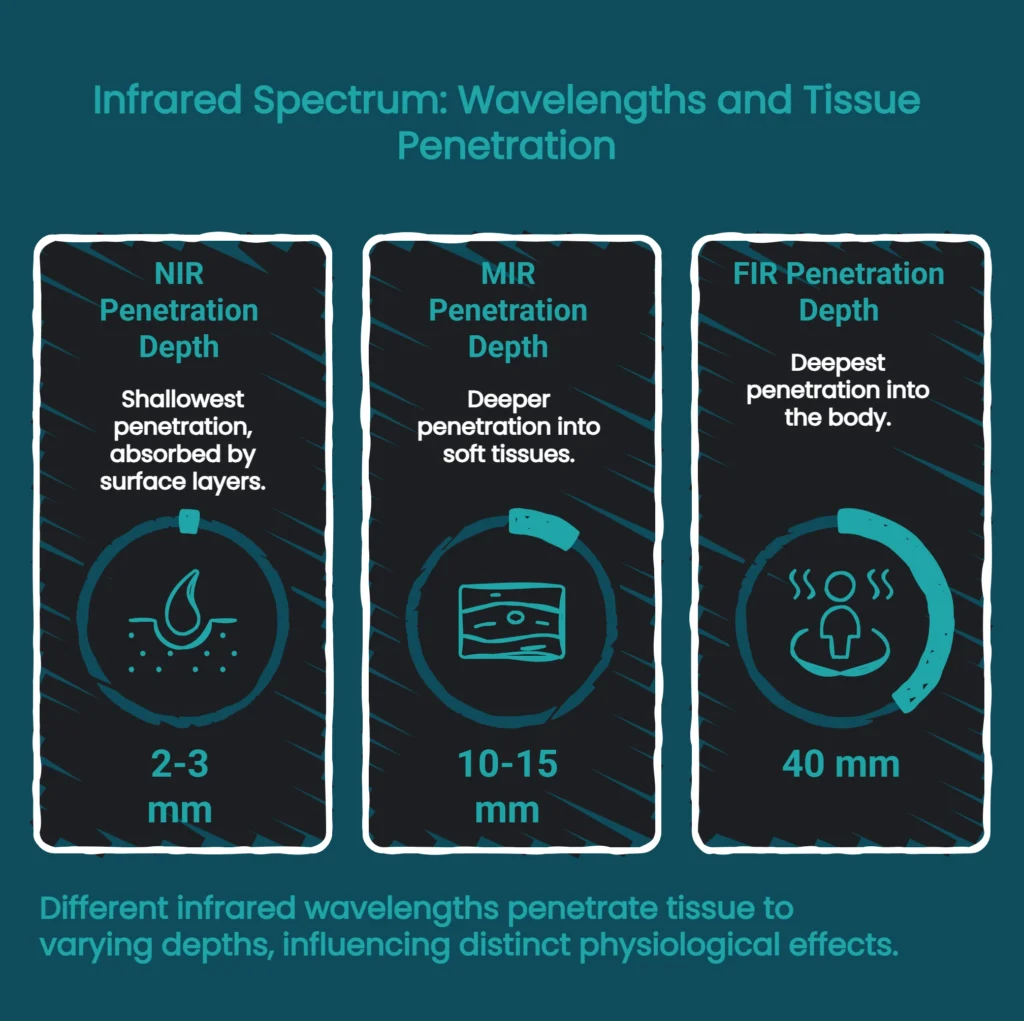
Not all infrared light is created equal. The infrared portion of the electromagnetic spectrum is vast, and different wavelengths have different properties and produce distinct physiological effects. The spectrum is generally divided into three main categories.
Near-Infrared (NIR): 0.8-1.4 Microns
With the shortest wavelengths in the infrared spectrum (approximately 800 to 1,400 nanometers), near-infrared has the shallowest penetration depth—typically 2-3 millimeters into tissue. Because it is absorbed by surface layers, NIR is studied primarily for skin health effects, collagen production support, and potential cellular energy enhancement. Its direct interaction with mitochondria makes it relevant for surface-level cellular processes.
Mid-Infrared (MIR): 1.4-3 Microns
Mid-infrared wavelengths (approximately 1,400 to 3,000 nanometers) penetrate deeper into soft tissues—up to 10-15 millimeters. The primary effect is vasodilation (blood vessel expansion), which improves circulation. This enhanced blood flow helps carry oxygen-rich blood and nutrients to areas of injury or soreness, which has been studied in relation to inflammation reduction and muscle recovery support.
Far-Infrared (FIR): 3-14 Microns
Far-infrared has the longest wavelengths (approximately 3,000 nm to 1 mm, or 3-1000 microns) and penetrates most deeply into the body—up to 1.5 inches (approximately 40 millimeters). This is the wavelength most associated with the heating and sweating effects of infrared saunas. FIR raises core body temperature, triggering profuse sweating and the production of heat shock proteins, which have been studied for their role in cellular stress response and repair mechanisms.
Evidence-Tiered Physiological Effects
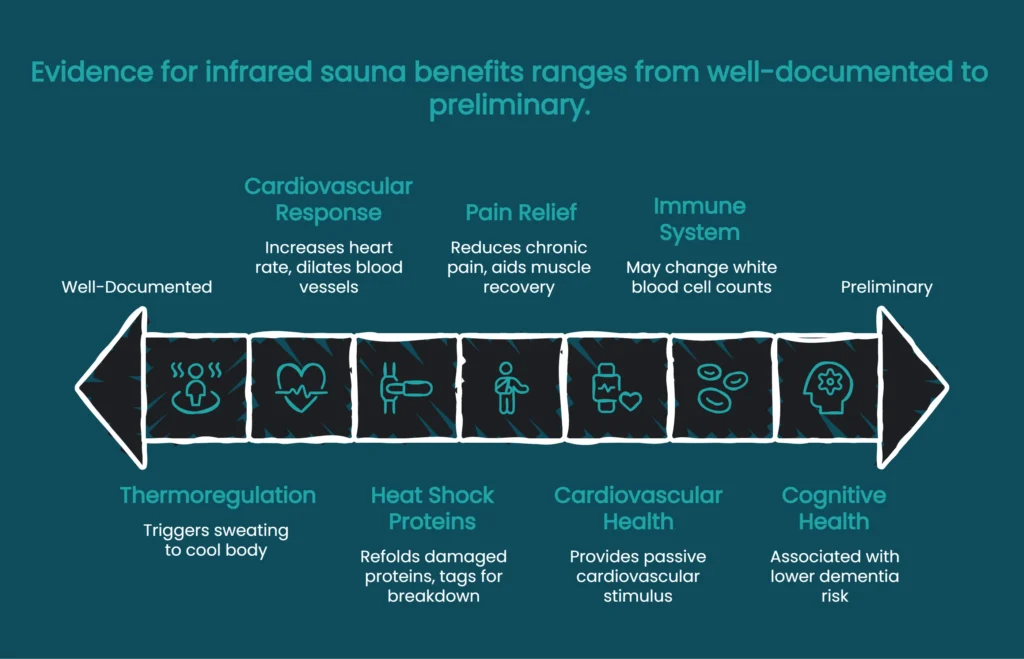
The science provides a framework for understanding potential benefits, but it’s critical to separate well-documented mechanisms from preliminary findings.
Well-Documented Mechanisms
Thermoregulatory Response: Core body temperature rises 1-3°F during a session, triggering sweating as the body works to cool itself. This is a well-established physiological response to sustained heat exposure.
Cardiovascular Response: Heart rate increases (typically 30-50% above baseline) and blood vessels dilate to support thermoregulation. These cardiovascular changes have been measured consistently across studies.
Heat Shock Protein Production: Elevated core temperature triggers production of heat shock proteins (HSPs), which act as cellular chaperones that help refold damaged proteins or tag them for breakdown. This is a documented cellular stress response mechanism.
Moderate Evidence: Studied Associations
Pain Relief and Inflammation: Infrared (IR) radiation, with wavelengths from 780 nm to 1000 µm, has been studied in relation to conditions including chronic pain, with some research suggesting benefits for muscle recovery post-exercise. [2]
In a global survey of 482 sauna users, ‘pain relief’ was a key reason for sauna-bathing, with respondents suffering from back/musculoskeletal pain reporting improvements in their conditions. [3] However, these are observational findings, not controlled trials demonstrating causation.
Cardiovascular Health: The deep heating effect causes heart rate elevation and vasodilation, creating what some describe as “passive cardiovascular stimulus.” However, the mechanisms and long-term training adaptations differ from aerobic exercise. The cardiovascular load comes from thermoregulation, not metabolic work.
Preliminary/Correlational Evidence
Immune System Markers: Some small studies suggest regular sauna use may be associated with changes in white blood cell counts, but evidence that this prevents illness remains limited.
Cognitive Health: Observational studies from Finland have found associations between frequent sauna use and lower dementia risk, but these are correlational findings that haven’t established causation. The mechanism could involve improved cerebral blood flow, reduced inflammation, or simply that sauna users maintain healthier overall lifestyles.
Infrared vs Traditional Sauna: Mechanism Comparison
Understanding the differences helps clarify what each type offers.
| Factor | Infrared Sauna | Traditional Sauna |
| Heat delivery | Radiant (direct tissue warming) | Convective (hot air) |
| Operating temperature | 120-150°F (49-66°C) | 175-195°F (79-91°C) |
| Warm-up time | 10-15 minutes | 30-45 minutes |
| Session duration | 20-45 minutes typical | 10-20 minutes typical |
| Primary mechanisms | Photobiomodulation + thermoregulation | Thermoregulation |
| Humidity | Low (<20%) | Variable (dry to steam) |
| Tissue penetration | Up to 1.5 inches (wavelength-dependent) | Surface heating via air |
Both types trigger thermoregulatory responses, but infrared saunas add the photobiomodulation mechanism through wavelength-specific light delivery.
Common Misconceptions About Infrared Saunas
Myth: Infrared saunas “detoxify” the body
The liver and kidneys are the body’s primary detoxification organs, filtering blood and processing waste products for elimination through urine and feces. Sweat is approximately 99% water, with the remaining 1% containing electrolytes (sodium, potassium) and trace metabolic byproducts like urea.
While minuscule amounts of certain substances appear in sweat, this represents a minor elimination pathway compared to hepatic and renal function. The profuse sweating induced by infrared saunas is primarily a cooling mechanism, not a “detox” system.
Myth: Infrared saunas burn meaningful body fat
Weight loss after a sauna session is primarily water loss from sweating, not fat loss. This weight returns upon rehydration (which is essential for safety). While heart rate elevation requires some energy expenditure, the caloric burn is minimal and does not create meaningful fat reduction. Infrared saunas do not replace the metabolic effects of exercise or caloric deficit needed for fat loss.
Myth: Infrared saunas replace exercise
While infrared sauna use elevates heart rate and increases blood flow—responses shared with exercise—the mechanisms and adaptations differ substantially. Exercise creates metabolic demand through muscular work and provides progressive overload for cardiovascular and muscular conditioning. Infrared saunas provide thermoregulatory stress without mechanical load. They complement but do not replace physical activity.
Safety Considerations and Contraindications
Hydration Requirements
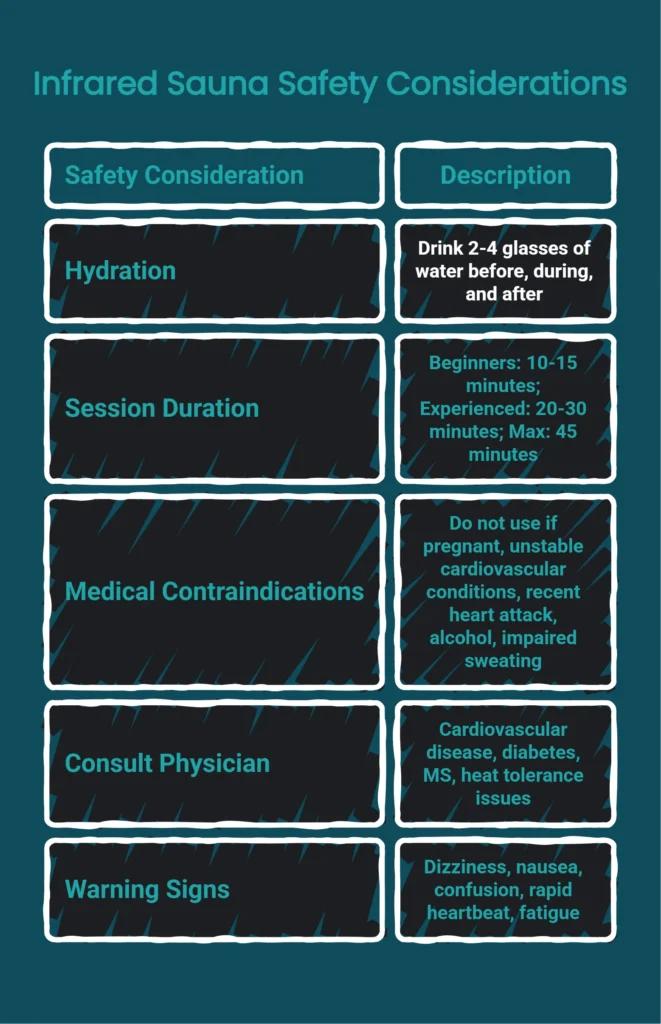
You can lose over a pint of water per session through sweating. Drink 2-4 glasses of water before your session, have water available during breaks, and replenish fluids afterward. Dehydration symptoms include dizziness, lightheadedness, and nausea.
Session Duration Guidelines
Beginners: Start with 10-15 minutes to assess tolerance Experienced users: 20-30 minutes is typical Maximum: Generally not recommended to exceed 45 minutes per session
Medical Contraindications
Do not use infrared saunas if you:
- Are pregnant (elevated core temperature poses risks)
- Have unstable cardiovascular conditions or uncontrolled hypertension
- Have recently had a heart attack or cardiac event
- Have consumed alcohol (severely impairs temperature regulation)
- Are taking medications that impair sweating or thermoregulation
Consult a physician before use if you have:
- Cardiovascular disease
- Diabetes
- Multiple sclerosis or other neurological conditions
- Any condition affecting heat tolerance
Warning Signs to Exit Immediately
- Dizziness or lightheadedness
- Nausea or headache
- Confusion or disorientation
- Rapid or irregular heartbeat
- Excessive fatigue
Choosing an Infrared Sauna: Key Considerations
Emitter Types and Quality
Carbon heaters have large surface areas providing even heat distribution and typically produce high-quality far-infrared wavelengths. Ceramic heaters can reach higher temperatures and are effective for mid and far-infrared. Many high-end models use combination technologies to deliver full-spectrum infrared.
EMF Levels
Always verify electromagnetic field (EMF) levels through third-party testing. Look for readings below 3 milligauss (mG) for magnetic fields and under 5 volts per meter (V/m) for electric fields. Low EMF design ensures the electromagnetic environment doesn’t interfere with the therapeutic effects.
For detailed information on EMF standards and verification methods, see our comprehensive guide to low-EMF infrared saunas.
Full Spectrum vs Single Wavelength
Full-spectrum saunas deliver NIR, MIR, and FIR wavelengths, providing the broadest range of mechanisms. Single-wavelength saunas (typically FIR only) focus on deep heating and sweating effects. Your choice depends on which mechanisms align with your goals.
Frequently Asked Questions
How hot does an infrared sauna get?
Infrared saunas operate between 120-150°F (49-66°C). This is significantly cooler than traditional saunas (175-195°F) because infrared heat penetrates tissue directly rather than relying on hot air to warm the body.
How long should you stay in an infrared sauna?
Most sessions last 20-30 minutes. Beginners should start with 10-15 minutes and gradually increase as tolerance builds. Experienced users may extend to 30-45 minutes. Always listen to your body and exit if you experience dizziness, nausea, or discomfort.
Can you use an infrared sauna every day?
Daily use is generally safe for healthy individuals with proper hydration. However, 2-4 sessions per week are sufficient for most documented benefits. Always prioritize hydration and take rest days if you feel fatigued.
Do infrared saunas help with chronic pain?
Some research suggests infrared therapy may support pain relief through improved circulation and reduced inflammation. The combination of mid-infrared (vasodilation) and far-infrared (deep tissue heating) has been studied in relation to musculoskeletal pain, but individual responses vary. It should complement, not replace, medical treatment.
Are infrared saunas safe?
Yes, infrared saunas are generally safe for healthy individuals when used properly. However, they are not recommended for pregnant women, people with unstable cardiovascular conditions, or those who have consumed alcohol. Always consult a healthcare provider if you have underlying health conditions.
What’s the difference between infrared and red light therapy?
Red light therapy typically uses visible red light (630-660 nm) and near-infrared (810-850 nm) at lower power levels for targeted cellular effects without significant heating. Infrared saunas use higher-powered NIR, MIR, and FIR emitters that create both photobiomodulation effects and substantial heat for thermoregulation.
How does infrared sauna compare to traditional sauna for cardiovascular benefits?
Both types create cardiovascular responses through heat-induced vasodilation and elevated heart rate. The most robust long-term evidence for cardiovascular health associations comes from Finnish studies on traditional saunas. Infrared saunas provide similar thermoregulatory stress at lower temperatures, but long-term comparative studies are limited.
Can infrared saunas improve skin health?
Near-infrared wavelengths have been studied in relation to collagen production and wound healing at the cellular level. Increased circulation from heat exposure delivers more oxygen and nutrients to skin cells. However, individuals with conditions like rosacea or eczema may find intense heat triggers symptoms, so proceed with caution.
Matching Infrared Wavelengths to Your Health Priorities
There is no single “best” infrared sauna type. The optimal choice depends on which wavelength mechanisms align with your specific health goals.
For Performance Optimization and Recovery
If your focus is cellular function, mitochondrial health, and accelerated recovery, prioritize a full-spectrum infrared sauna with strong near-infrared (NIR) output. The photobiomodulation effect on ATP production and cellular energy is the primary target. Far-infrared-induced heat shock proteins provide additional recovery support.
For Chronic Pain Management
If you’re seeking non-pharmaceutical pain relief for conditions like arthritis, fibromyalgia, or musculoskeletal pain, a sauna with strong mid-infrared (MIR) and far-infrared (FIR) is likely optimal. MIR penetrates deep into soft tissues to improve circulation and support inflammation reduction, while FIR provides soothing heat that may help reduce stiffness.
For General Wellness and Stress Reduction
If your goals include stress management, improved sleep, and general health maintenance, a far-infrared sauna provides robust thermoregulatory benefits and profound relaxation. A full-spectrum model adds NIR for cellular benefits and MIR for enhanced circulation, providing a more comprehensive wellness experience.
Related topics: Low-EMF infrared sauna design, full-spectrum wavelength comparisons, traditional vs infrared safety guidelines, and infrared heater technology differences.
Understanding What Infrared Saunas Are—and Aren’t
Infrared saunas represent a distinct category of heat therapy that combines light-based photobiomodulation with traditional thermoregulatory responses. They are not magic wellness devices that “cure” conditions, “flush toxins,” or “replace exercise.” Rather, they’re tools that trigger specific physiological mechanisms—some well-documented, others preliminary—that may support health goals when used appropriately.
The most valuable approach is understanding which mechanisms are supported by strong evidence (thermoregulation, cardiovascular response, heat shock proteins), which show moderate associations (pain relief, inflammation markers), and which remain preliminary (cognitive health, immune markers). This evidence-based perspective allows you to set realistic expectations and use infrared saunas as one component of a comprehensive wellness strategy.
For detailed guides on infrared sauna protocols, wavelength characteristics, safety guidelines, and evidence-based research, visit Sauna Health Nut.
Medical Disclaimer: This article provides educational information about infrared sauna safety and is not intended as medical advice. The content should not be used to diagnose, treat, cure, or prevent any medical condition. Individual responses to heat therapy vary based on health status, medications, and underlying conditions. Always consult with a qualified healthcare provider before beginning infrared sauna use, especially if you have cardiovascular disease, are pregnant, take prescription medications, or have any chronic health conditions. The information presented here is for educational purposes only and does not replace professional medical guidance.
References
[1] NASA Spinoff. “NASA Research Illuminates Medical Uses of Light.” NASA Technology Transfer Program. https://spinoff.nasa.gov/NASA-Research-Illuminates-Medical-Uses-of-Light
[2] Academia.edu. “Use of infrared as a complementary treatment approach in medicine and aesthetic medicine.” 2023. https://www.academia.edu/88272281/Use_of_infrared_as_a_complementary_treatment_approach_in_medicine_and_aesthetic_medicine
[3] Academia.edu. “The Complete Professional Guide to Infrared Sauna Therapy.” https://www.academia.edu/145519032/The_Complete_Professional_Guide_to_Infrared_Sauna_Therapy