
What happens to your body in a sauna? (physiology explained)

When you sit in a sauna, heat exposure raises core temperature, increases heart rate, widens blood vessels, and activates sweating as the body works to regulate temperature. This places a temporary cardiovascular and thermoregulatory load on the body, triggering adaptive stress responses without the muscular work of exercise.
These responses involve thermoregulation, circulation, cellular stress signaling, and nervous system activity. Some resemble exercise responses (elevated heart rate, increased blood flow) but occur through different mechanisms and produce distinct adaptations.
Understanding Heat as Controlled Physiological Stress
For centuries, cultures worldwide have embraced heat therapy, from traditional Finnish saunas to Roman baths. Today, the science behind these practices is becoming clearer. Rather than passively warming the body, sustained heat exposure challenges the body’s ability to regulate temperature and maintain homeostasis, activating protective and adaptive processes.
This response is often understood through the concept of hormesis—a biological principle where low-dose stressors trigger adaptive responses that improve resilience over time. Exercise is a familiar example of hormesis, but heat exposure represents a distinct stressor with its own pathways and limitations. Sauna use does not replace exercise, but it does engage overlapping systems in ways that help explain the physiological effects people experience.
This framework helps separate well-supported mechanisms from popular wellness claims. Rather than focusing on promises like detoxification or fat loss, a physiological explanation examines how heat affects circulation, temperature regulation, nervous system activity, and cellular signaling.
What Changes First (0-5 Minutes): Initial Heat Response
When you enter a room heated to 170-200°F (traditional sauna) or 120-150°F (infrared sauna), your body immediately perceives a challenge to its stable internal environment.
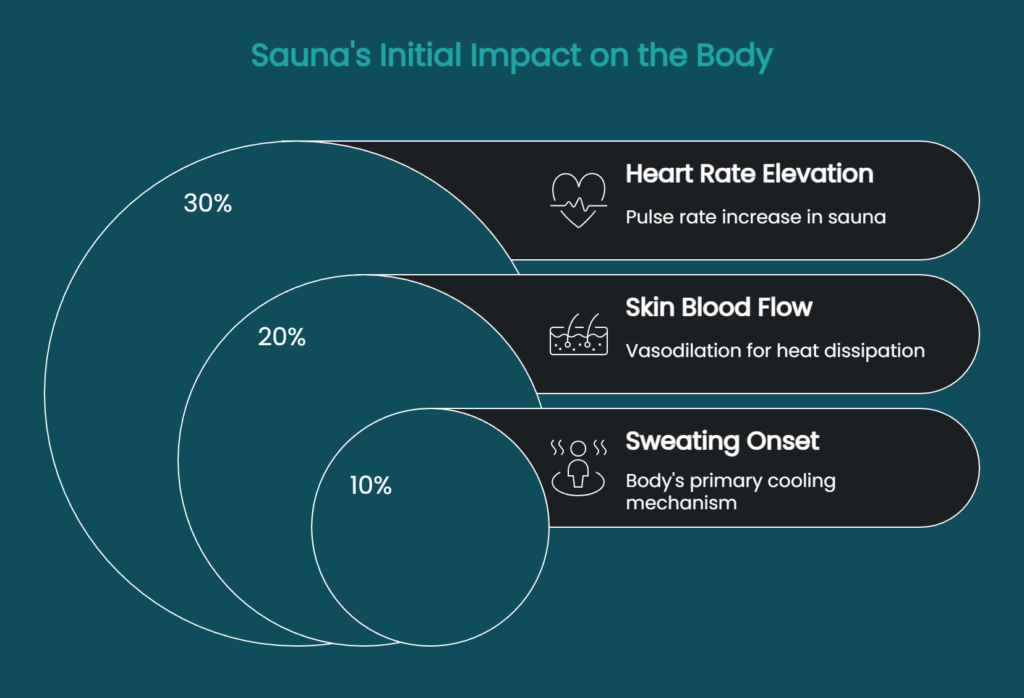
Skin Blood Flow & Vasodilation Your brain signals blood vessels near the skin’s surface to widen significantly—a process called vasodilation. This allows more blood to flow to the skin to dissipate heat through radiation and convection.
Heart Rate Elevation To support this increased blood flow to the skin, your heart rate rises. In a sauna, the pulse rate can increase by 30% or more, allowing the heart to nearly double the amount of blood it pumps each minute according to researchers at Harvard Medical School. This cardiac output increase is comparable to what occurs during brisk walking, though the mechanisms and long-term training effects differ from aerobic exercise.
Sweating Onset As skin temperature rises rapidly, sweat glands activate. This is your body’s primary cooling mechanism—evaporation of sweat from the skin surface removes heat from the body.
Core Temperature & Thermoregulation
Your body works to maintain a core temperature around 98.6°F (37°C). In a sauna, despite these cooling efforts, core temperature gradually rises, typically by 1-3°F over a 15-30 minute session.
Why Temperature Regulation Matters This rise in core temperature is what triggers many of the adaptive responses. The body interprets this as thermal stress and activates protective mechanisms. In environments with higher humidity, sweat evaporation becomes less efficient, which is why humid heat can feel more intense than dry heat at the same temperature.
The “200 Rule” Many sauna users follow an informal guideline: the sum of temperature (Fahrenheit) and humidity percentage should not exceed 200. For example, at 180°F, humidity should stay around 20% or less for optimal comfort and safety.
Cardiovascular Load: What Your Heart Experiences
The cardiovascular changes during sauna use are substantial but must be understood in context.
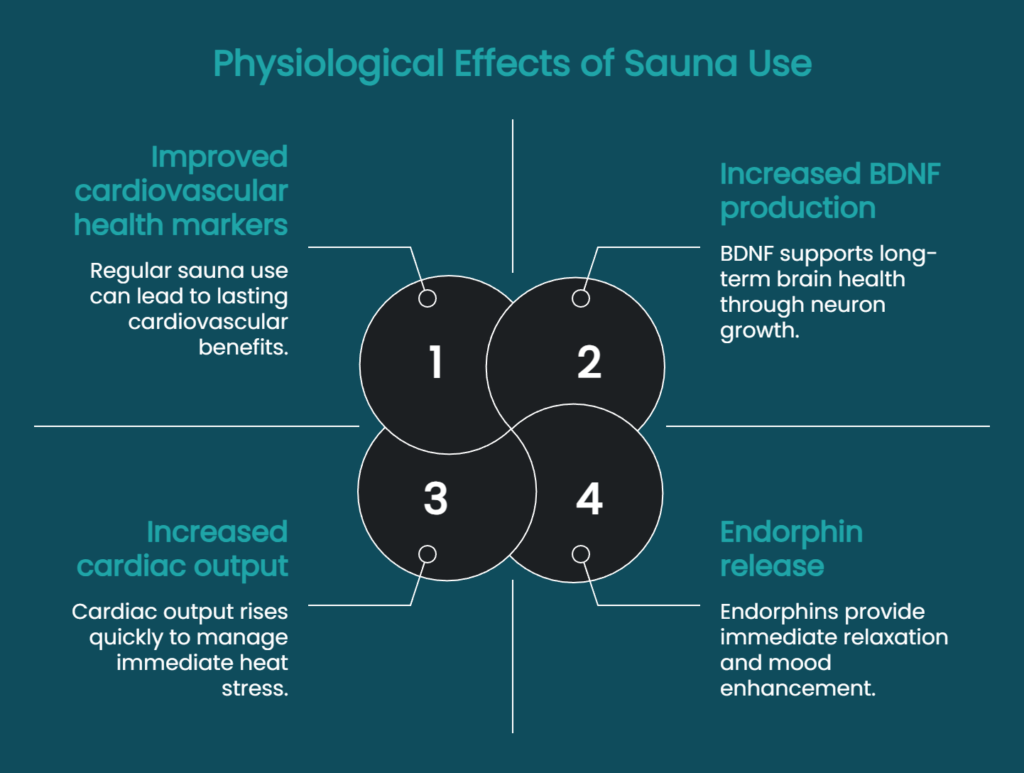
Increased Cardiac Output Your heart pumps harder and faster to circulate blood, creating a measurable cardiovascular load primarily driven by thermoregulation—moving heated blood to the skin surface for cooling.
Vasodilation and Blood Pressure The widening of blood vessels reduces vascular resistance. While the heart works harder, this vasodilation can help stabilize or slightly lower blood pressure during the session in many individuals. Long-term, regular sauna use has been studied in relation to cardiovascular health markers.
Who Should Be Cautious Individuals with unstable heart conditions, uncontrolled high blood pressure, or recent cardiac events should consult a physician before sauna use. The cardiovascular stress, while generally safe for healthy individuals, may pose risks for those with compromised cardiac function.
Cellular Stress Response: Heat Shock Proteins
At a microscopic level, thermal stress triggers production of Heat Shock Proteins (HSPs). These molecules act as cellular “chaperones,” identifying misfolded or damaged proteins and either refolding them correctly or tagging them for breakdown and recycling.
This cellular maintenance process has been studied in relation to age-related cellular health and recovery. The production of heat shock proteins may be one mechanism through which sauna use has been observed to support muscle recovery after exercise. The enhanced circulation combined with HSP activity may help address microscopic muscle damage and metabolic byproducts more efficiently, boosting cardiovascular health and improving muscle recovery as noted by experts.
Nervous System & Mood: The Endorphin Effect
Many people report feeling profoundly relaxed and mentally clear after a sauna session. This experience has been associated with measurable changes in brain chemistry.
Endorphin Release The heat acts as a physical stressor. In response, your brain’s pituitary gland releases beta-endorphins—the body’s natural painkillers. These produce feelings of mild euphoria and well-being, similar to the “runner’s high” from prolonged exercise.
Stress Response Regulation Sauna sessions cause a short-term spike in cortisol (the primary stress hormone) as the body responds to heat. However, regular sauna use may help train the stress-response system. Some research suggests that habitual sauna users may experience lower resting cortisol levels over time, though more research is needed to establish this relationship conclusively.
BDNF and Brain Health Heat stress has been associated with increased production of Brain-Derived Neurotrophic Factor (BDNF), a protein that supports neuron survival and encourages growth of new neurons and synapses. This increase may be linked to improvements in learning, memory, and mood, though the direct mechanisms are still being investigated.
Sleep Quality Improvement
One of the most commonly reported benefits is improved sleep. The mechanism appears to be twofold:
First, the endorphin release and muscle relaxation help calm both mind and body. Second, after leaving the sauna, core body temperature drops. This post-sauna cooling period signals the brain that it’s time for sleep, as a decrease in body temperature is a natural part of the circadian rhythm that initiates sleep. Many users find that a sauna session 1-2 hours before bed leads to deeper, more restorative sleep.
Infrared vs Traditional Saunas: Different Heat Delivery
Traditional Finnish Sauna Uses a stove (wood-burning or electric) to heat rocks, which heat the air to 175-195°F. Water can be poured on rocks to create steam and increase humidity. Heat transfers to your body primarily through convection (heated air) and radiation (from hot surfaces).
Infrared Sauna Uses infrared emitters to generate radiant heat that penetrates the body directly rather than primarily heating the air. Operates at lower ambient temperatures (120-150°F), which some find more comfortable for longer sessions.
Health Effects: What the Evidence Shows Both types will increase heart rate, induce sweating, and trigger heat shock protein production. The primary difference is heat delivery method. Much of the most robust long-term evidence for cardiovascular benefits and longevity comes from Finnish studies on traditional sauna users. This doesn’t mean infrared saunas lack benefits—only that the deep body of research is centered on the traditional model.
Myths & Misunderstandings
Myth #1: “Sweating Out Toxins”
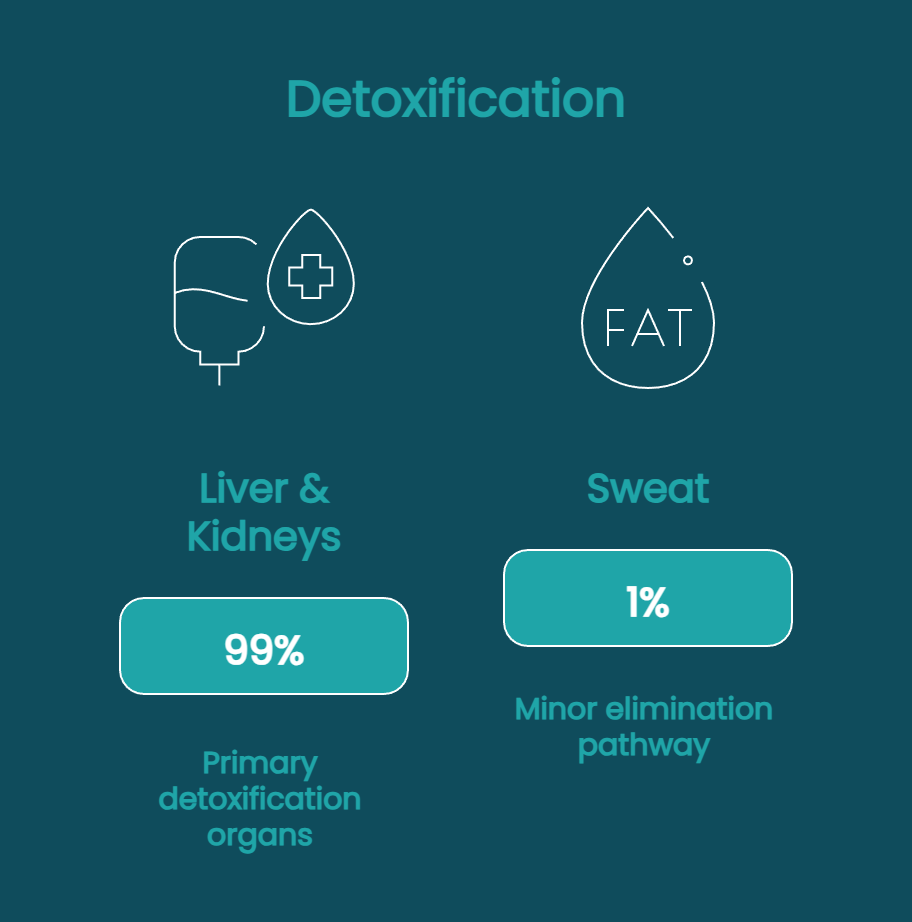
The concept of sauna “detoxification” is widely misunderstood. Your body has a sophisticated detoxification system: your liver and kidneys. These organs filter blood, neutralize harmful substances, and excrete them through urine and feces.
Sweat is approximately 99% water. The remaining 1% contains electrolytes (sodium, potassium) and trace metabolic byproducts like urea. While minuscule quantities of certain substances can be found in sweat, the amount is negligible compared to what liver and kidneys process. The liver and kidneys remain the body’s primary detoxification organs; sweat represents a minor elimination pathway.
Infrared saunas are sometimes marketed as inducing “deeper detox” through direct tissue heating. While infrared heat does penetrate tissues more directly, sweat composition remains fundamentally the same regardless of heat source.
Myth #2: “Burning Fat”
A common question: does sitting in a sauna burn body fat? The answer is no—at least not meaningfully.
After a 20-30 minute session, you may see 1-2 pounds lost on the scale. This is almost entirely water loss from sweating, not fat loss. Once you rehydrate (which is essential for safety), that weight returns.
Does a sauna burn any calories? Yes, a modest amount. Your elevated heart rate and thermoregulation require energy. However, this is significantly less than actual exercise and does not create meaningful fat loss. Saunas don’t replace the metabolic effects of physical activity or caloric deficit needed for fat reduction.
Evidence-Backed Health Associations
Cardiovascular Health (Strong Evidence)
Large-scale observational studies from Finland have shown associations between regular sauna use (4-7 times per week) and lower risks of sudden cardiac death, fatal coronary heart disease, and all-cause mortality. The mechanisms are believed to involve improved vasodilation, reduced inflammation, and improved blood vessel function, a theory supported by medical school research.
Muscle Recovery & Pain Management (Moderate Evidence)
The combination of increased blood flow and heat shock protein production has been studied in athletic recovery contexts. For chronic pain conditions like fibromyalgia or arthritis, heat therapy may help reduce muscle spasms and joint stiffness. Saunas can help dilate blood vessels and improve blood flow, which may benefit cardiovascular health and by extension, tissues throughout the body.
Inflammation Reduction (Promising Evidence)
Regular sauna use has been associated with reductions in C-reactive protein (CRP), a marker of systemic inflammation. The heat causes physiological changes that have been studied in relation to anti-inflammatory responses according to health experts.
Cognitive Health & Longevity (Correlational Evidence)
Some Finnish studies found associations between frequent sauna use and lower risk of dementia and Alzheimer’s disease. However, this represents correlation, not proven causation. The mechanism could involve improved cerebral blood flow, reduced inflammation, BDNF stimulation, or simply that sauna users maintain healthier overall lifestyles.

Safety Guidelines & Best Practices
Duration
Beginners: Start with 5-10 minutes to assess tolerance. Experienced users: 15-20 minutes is typical. Maximum: Generally not recommended to exceed 20-30 minutes per session.
Staying too long risks severe dehydration, heat exhaustion, or heat stroke (symptoms: nausea, dizziness, confusion).
Frequency
Daily use is common in Finland and generally safe for healthy individuals with proper hydration. However, 2-4 sessions per week are sufficient for most documented health benefits.
Hydration (Non-Negotiable)
You can lose over a pint of water per session. Drink 2-4 glasses before, sip water during breaks, and replenish afterward. Water is excellent; drinks with electrolytes can help restore mineral balance. Dizziness after sauna is a primary sign of dehydration and should be taken seriously.
Warning Signs
Exit immediately if you experience:
- Dizziness or lightheadedness
- Nausea
- Headache
- Confusion
- Rapid or irregular heartbeat
Who Should Avoid Saunas
- People with unstable heart conditions or uncontrolled hypertension
- Pregnant women
- Anyone who has consumed alcohol (severely impairs temperature regulation)
- Those with acute illness or fever
Sauna use should always be considered a general wellness practice, not a medical treatment, and individuals with health conditions should consult a qualified healthcare professional.
Frequently Asked Questions
Why does my heart rate increase so much in a sauna? Your heart rate rises to support increased blood flow to the skin for cooling. This cardiovascular response is your body’s attempt to dissipate heat and maintain core temperature.
Is the sweating in a sauna the same as sweating during exercise? The sweating mechanism is the same, but the cause differs. Exercise generates heat through muscle activity and metabolic demand. Saunas impose external heat, triggering sweating as a cooling response. Both result in fluid and electrolyte loss.
Can I use a sauna to replace my cardio workout? No. While sauna use elevates heart rate and creates some cardiovascular responses, it doesn’t provide the same training adaptations as aerobic exercise. Sauna lacks the muscular work, progressive overload, and metabolic conditioning that exercise provides. It can complement but not replace physical activity.
How soon after a workout should I use a sauna? Many athletes use saunas 15-30 minutes post-workout to support recovery. The increased circulation may help clear metabolic waste and deliver nutrients to fatigued muscles. Listen to your body and ensure adequate hydration.
What’s the ideal temperature for health benefits? Traditional saunas: 175-195°F with low humidity. Infrared saunas: 120-150°F. Optimal temperature varies by individual tolerance and experience level.
Can sauna use help with a cold or boost immunity? Some small studies suggest regular sauna bathing may increase white blood cell counts. However, evidence that it prevents illness is limited. It may support immune function but shouldn’t be considered a preventative shield against infection. Never use a sauna if you have a fever.
Why do I feel so good after a sauna? The release of beta-endorphins (natural painkillers) produces feelings of euphoria and well-being. Combined with muscle relaxation and the meditative aspect of heat exposure, this creates a profound sense of calm.
Should I shower before or after a sauna? Shower before to remove oils and sweat from skin (allows better sweating). After your final sauna session, a cool shower helps close pores and rinse away sweat and loosened debris.

The Science-Based Approach to Sauna Use
Understanding sauna use through a physiological lens—as controlled thermal stress that triggers adaptive responses—allows you to approach sauna use as a deliberate wellness practice rather than a purely recreational activity.
For those focused on recovery and performance, post-workout sauna sessions may support muscle repair and cardiovascular adaptation. For chronic pain sufferers, gentle consistent heat exposure may provide non-pharmaceutical relief from stiffness and inflammation. For stress management, the neurological effects—endorphin release, cortisol regulation, and improved sleep—offer tangible mental health support.
The key is recognizing both what saunas can do (trigger thermoregulatory responses, support circulation, provide heat acclimation) and what they cannot do (replace exercise, burn meaningful fat, “detoxify” beyond normal kidney/liver function).
For more evidence-based information on sauna protocols, heat therapy research, and wellness applications, visit https://www.saunahealthnut.com/ for comprehensive resources.
Medical Disclaimer: This article provides educational information about infrared sauna safety and is not intended as medical advice. The content should not be used to diagnose, treat, cure, or prevent any medical condition. Individual responses to heat therapy vary based on health status, medications, and underlying conditions. Always consult with a qualified healthcare provider before beginning infrared sauna use, especially if you have cardiovascular disease, are pregnant, take prescription medications, or have any chronic health conditions. The information presented here is for educational purposes only and does not replace professional medical guidance.