
Why sweating happens in a sauna: cardiovascular effects and what it means for your health

Intentional sweating in a sauna creates measurable cardiovascular responses in the body. The heat exposure elevates your heart rate and promotes blood vessel dilation through a process called thermoregulation. While these physiological changes share some similarities with moderate exercise—particularly in heart rate elevation—the underlying mechanisms and adaptations differ in important ways. Sauna use offers a low-impact approach to supporting cardiovascular function without placing mechanical stress on your joints.
Your Heart Rate Doesn’t Know You’re Sitting Still
When you first step into the comforting warmth of a sauna, your body immediately begins a cascade of physiological responses. The most noticeable of these is the sweat beading on your skin, but a more profound change is happening within your chest. The primary goal of your body in the heat is to maintain its core temperature, a process called thermoregulation. To do this, it needs to move blood to the surface of your skin to dissipate heat. During sauna use, as the skin temperature rises, the heart rate also rises as the body attempts to keep itself cool.
For most healthy adults, this results in the heart rate increasing to between 100-150 beats per minute (bpm). This range is significant because it overlaps with heart rate zones commonly seen during activities like brisk walking, though the physiological demands and adaptations are different. Your heart is working harder, pumping more blood to support thermoregulation, all while you are sitting comfortably. This cardiovascular stimulus occurs without requiring physical movement. This phenomenon helps explain the cardiovascular effects often associated with regular sauna use—the heart experiences an elevated workload that may support cardiovascular conditioning over time.
Vasodilation: How Heat Affects Your Blood Vessels
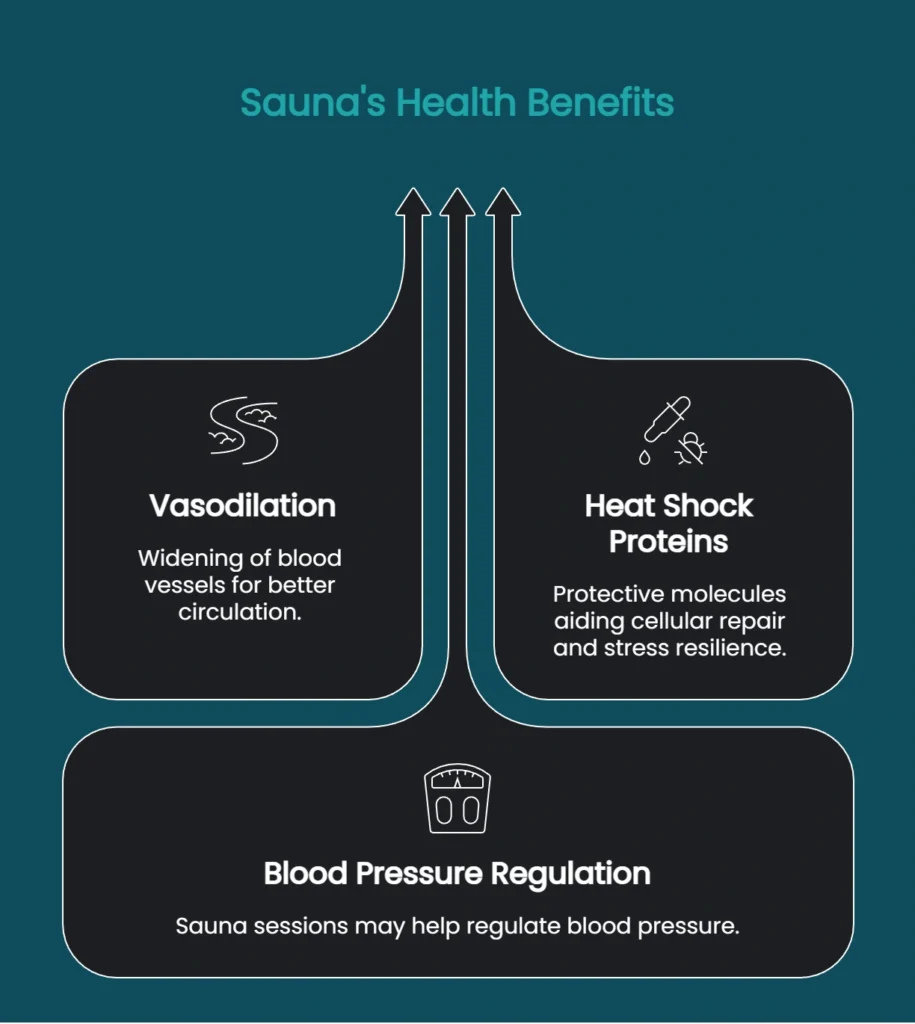
Simultaneously with the heart rate increase, the heat triggers a powerful process known as vasodilation. This is the widening of your blood vessels, from major arteries to the tiniest capillaries. This expansion allows for greater blood flow throughout your body, which is crucial for cooling but also carries profound health benefits. This improved circulation delivers more oxygen and nutrients to your muscles and organs, aiding in recovery and overall function.
The repeated expansion and contraction of your blood vessels with regular sauna sessions may help maintain their elasticity and flexibility. This improved endothelial function is associated with cardiovascular health and has been studied in relation to blood pressure regulation over the long term. Some research suggests that a sauna session may provide cardiovascular health benefits, though the mechanisms differ from those of physical exercise. This makes it a potentially valuable complementary practice, especially for those interested in exploring sauna use for blood pressure support under medical supervision.
Heat Stress and Cellular Response
The benefits of this heat therapy extend deep into your body’s cellular machinery. The physiological stress induced by a sauna session is a type of “eustress,” or beneficial stress, much like the stress from physical exertion. This heat stress triggers the production of powerful protective molecules known as heat shock proteins. These proteins are instrumental in cellular repair, helping to refold damaged proteins and protect cells from oxidative stress.
This response is one of the reasons sauna use is often explored as a recovery modality after workouts. The same heat shock proteins that protect your cells from heat also help repair the microscopic muscle damage that occurs during training, accelerating post-workout recovery. Regular exposure can enhance your body’s resilience, improving its ability to handle stress on a cellular level. This process is fundamental to how this heat therapy for chronic pain can be so effective for conditions like arthritis, as it helps mitigate inflammation and supports the body’s natural repair mechanisms.
The Finnish Longevity Secret: Proof in Population Studies
While the physiological mechanisms are compelling, the long-term evidence is what truly solidifies the sauna’s place as a pillar of health. Nowhere is this more evident than in Finland, where the sauna is a cultural institution. Extensive, long-term studies conducted in the region provide powerful proof of the sauna and longevity connection. One landmark study followed a large group of men over several decades and found that those who used a sauna 4-7 times per week had a dramatically lower risk of fatal cardiovascular events and all-cause mortality compared to those who used it only once a week. This pattern is unlikely to be coincidental and is thought to reflect the cumulative physiological effects of regular heat exposure on the heart and vascular system.
The breadth of research now supports these findings on a global scale. In fact, a systematic review of 40 clinical studies involving a total of 3,855 participants concluded that most studies reported beneficial health effects from regular dry sauna bathing. This consistent evidence, spanning different populations and methodologies, reinforces that this practice is more than just a tradition. The use of heat as medicine is not new; even in traditional Persian medicine, sauna and thermotherapy are used as treatment strategies for various conditions, including cardiovascular diseases.
Sauna vs. Exercise vs. Relaxation: A Comparison
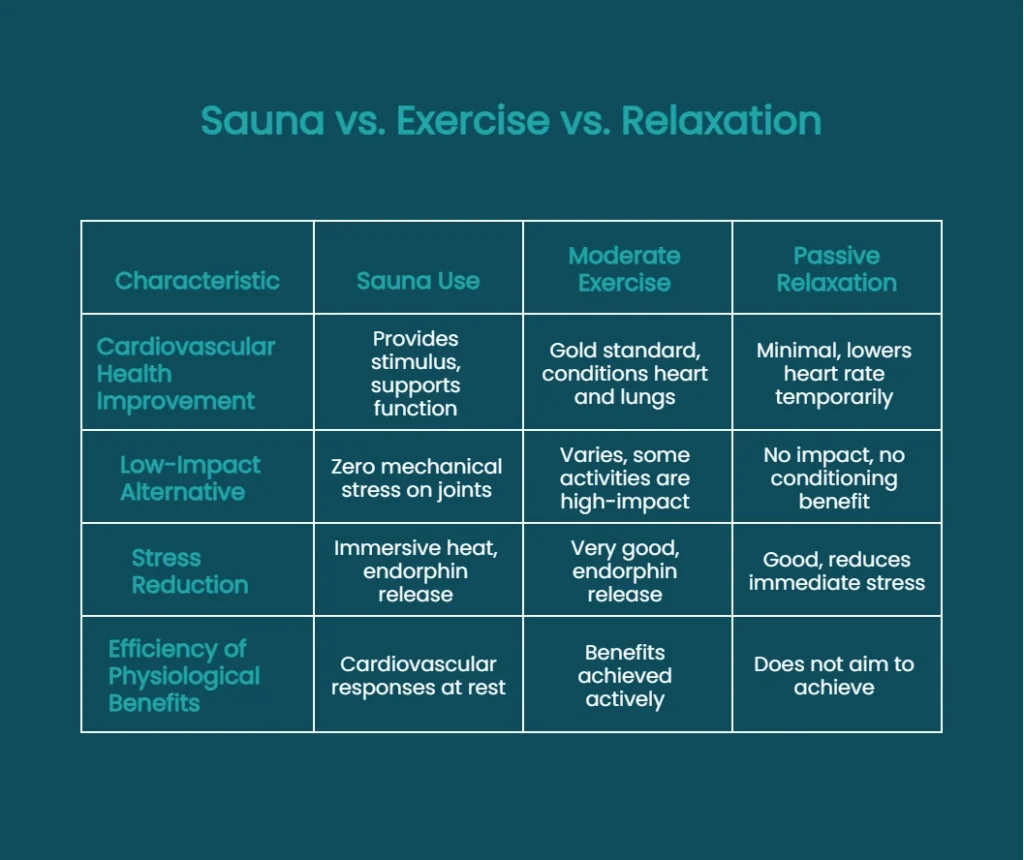
To understand where sauna use fits into a wellness routine, it’s helpful to compare it to moderate exercise and simple passive relaxation.
Cardiovascular Health Improvement
- Sauna Use: Provides cardiovascular stimulus through heart rate elevation and vasodilation. May support cardiovascular function as a low-impact complementary practice.
- Moderate Exercise: Well-established. The gold standard for conditioning the heart, lungs, and muscles through active work.
- Passive Relaxation (e.g., resting on a couch): Minimal. Lowers heart rate and blood pressure temporarily through stress reduction but does not actively condition the cardiovascular system.
Low-Impact Alternative to Traditional Exercise
- Sauna Use: Provides cardiovascular stimulus with zero mechanical stress on joints, making it suitable for recovery days or individuals with mobility limitations.
- Moderate Exercise: Varies. Activities like running or jumping can be high-impact. Swimming or cycling are lower-impact but still require physical exertion.
- Passive Relaxation: Well-established. No impact, but also no conditioning benefit.
Stress Reduction and Relaxation Benefits
- Sauna Use: The immersive heat and quiet environment may provide stress relief through endorphin release and nervous system regulation. Regular use has been associated with improved sleep quality.
- Moderate Exercise: Very Good. Often described as a great form of stress relief through endorphin release, but the exertion itself can be a form of physical stress.
- Passive Relaxation: Good. Effectively reduces immediate stress but may lack the deep, physiological release and endorphin rush associated with sauna or exercise.
Efficiency of Achieving Physiological Benefits Passively
- Sauna Use: The primary advantage is producing cardiovascular responses—such as elevated heart rate and improved circulation—while the body is at rest.
- Moderate Exercise: Not applicable. The benefits are achieved actively through physical work.
- Passive Relaxation: Not applicable. Does not aim to achieve these types of physiological benefits.
Answering Your Sauna Questions
Let’s address some common questions to ensure your experience is safe and effective.
Why is sweating in the sauna good for you?
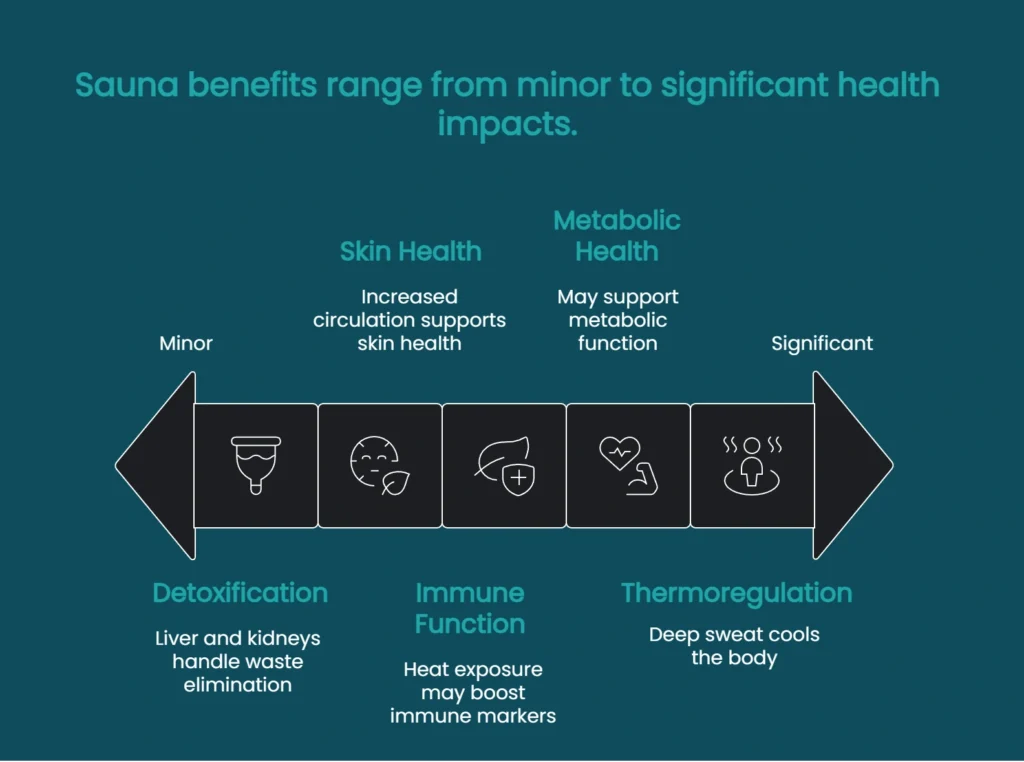
Beyond the cardiovascular benefits we’ve discussed, the deep sweat produced in a sauna is part of the body’s thermoregulation process. It’s important to note that the liver and kidneys are the body’s primary detoxification organs and handle the vast majority of waste elimination. While trace amounts of some substances can be found in sweat, this represents a minor pathway compared to renal and hepatic function. The heat exposure may support skin health through increased circulation to the skin, and some research has examined the relationship between heat exposure and immune function markers.
What is the rule of 200 in a sauna?
This is a common safety guideline for a traditional Finnish sauna. It states that the sum of the temperature in Fahrenheit and the humidity percentage should not exceed 200. For example, if the sauna is 180°F, the humidity should not be above 20%. This rule helps prevent scalding from excessively hot steam and ensures a safer, more comfortable session.
Should I wipe sweat off in the sauna?
Yes, it’s a good practice. Wiping away the layer of sweat from your skin allows for fresh sweat to emerge and evaporate, which is your body’s primary cooling mechanism. This encourages your body to sweat more freely, enhancing the physiological response and the feeling of a deep cleanse. Just be sure to follow proper sauna etiquette for beginners by sitting on a towel.
Do you burn fat if you sweat in a sauna?
While you may lose weight immediately after a session, this is primarily water weight that will be regained upon rehydration. A sauna is not a direct fat-burning tool. However, it may support overall metabolic health. The increase in metabolic rate during heat exposure and some hormonal responses that have been observed in research may play a role in metabolic function, though more research is needed to understand the long-term effects on body composition. Just don’t confuse sweating with belly fat loss.
Where Sauna Fits in a Heart-Healthy Routine
The best approach depends on your personal goals and physical condition. A sauna is not a replacement for exercise, but it is an incredibly powerful supplement to a healthy lifestyle.
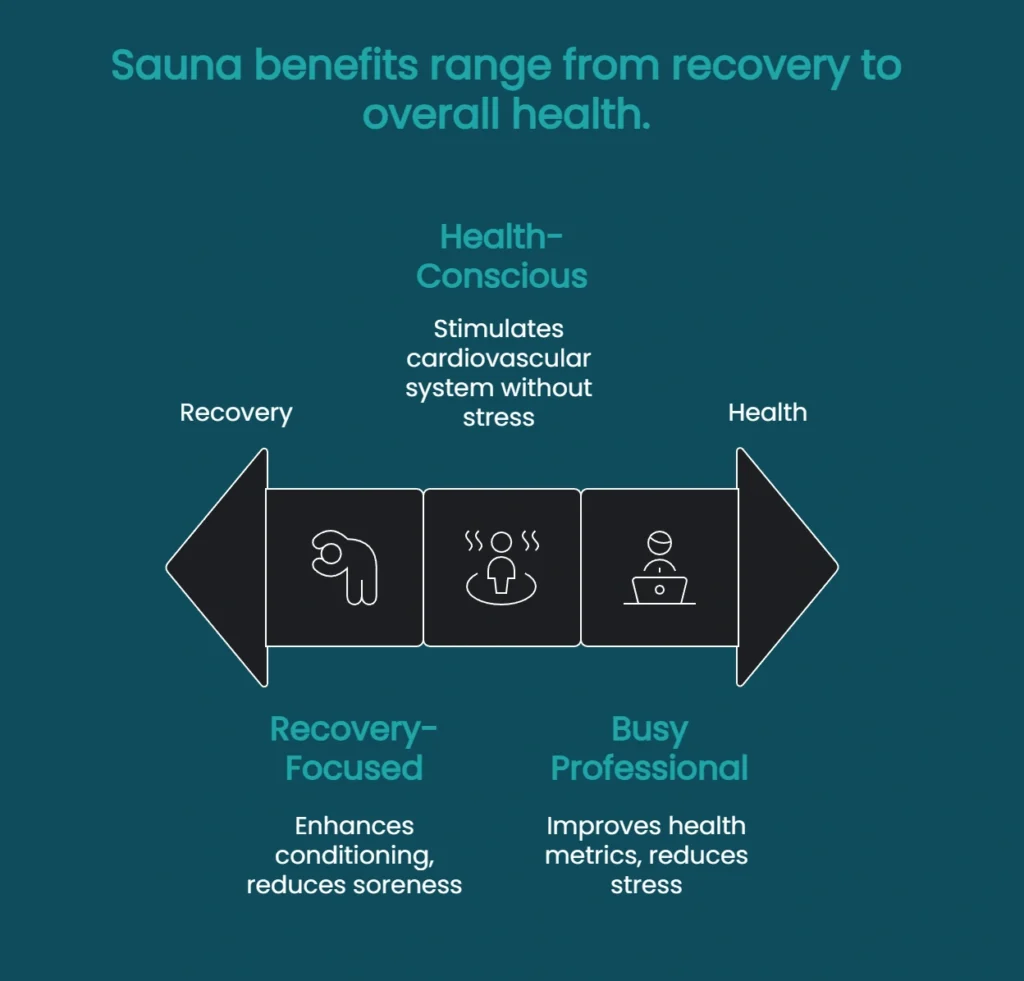
For the Recovery-Focused Athlete
Your need is to enhance cardiovascular conditioning and recovery without adding more high-impact stress. For you, the sauna is an invaluable tool. Using a sauna for muscle recovery after a workout can help reduce soreness, improve blood flow to damaged tissues, and provide a low-stress cardiovascular session on rest days. The combination of heat acclimation and cellular repair from heat shock proteins can give you a significant performance edge.
For the Health-Conscious but Mobility-Limited Individual
You want the heart and blood vessel benefits of moderate exercise but are constrained by joint pain or physical limitations. The sauna offers significant advantages. It offers a safe, accessible way to stimulate your cardiovascular system without impacting stress. Whether you are using a sauna for arthritis pain or recovering from an injury, it allows you to support your heart health without the pain or risk associated with traditional workouts.
For the Busy Professional / Bio-Hacker
You are looking for efficient, science-backed methods to improve health metrics and longevity. A home sauna, whether an infrared sauna or a traditional one, offers a profound return on your time investment. In just 20-30 minutes, you can trigger physiological responses—from cardiovascular stimulation to stress reduction—that support overall health and recovery.
Ultimately, the decision to integrate regular sauna sessions into your life is a proactive step toward long-term health and vitality. For more evidence-based information on sauna use, heat therapy protocols, and wellness strategies, explore additional resources at Sauna Health Nut.
Medical Disclaimer: This article provides educational information about infrared sauna safety and is not intended as medical advice. The content should not be used to diagnose, treat, cure, or prevent any medical condition. Individual responses to heat therapy vary based on health status, medications, and underlying conditions. Always consult with a qualified healthcare provider before beginning infrared sauna use, especially if you have cardiovascular disease, are pregnant, take prescription medications, or have any chronic health conditions. The information presented here is for educational purposes only and does not replace professional medical guidance.