
How many calories do you burn in a sauna? a complete guide for your body type

Some estimates suggest a 30-minute sauna session may register several hundred calories of energy expenditure—but these numbers are often misunderstood. The real question isn’t how many calories you burn, but what your body is actually doing under heat stress, and whether that response meaningfully supports fat loss or metabolic health.
The Overlooked Factor: Why Your Body Composition Dictates the Burn
The allure of sitting in a warm room to burn calories is powerful, but the science behind sauna and calorie burning is more complex than simple heat exposure. The real work is being done by your body’s intricate cooling system, a process called thermoregulation. When you enter a traditional Finnish sauna, which is typically heated to temperatures between 150°F and 195°F (65.6°C and 90.6°C) as standard practice, your body immediately goes on high alert. The physiological effects of a sauna are significant; the heat can increase a person’s skin temperature to 104°F (40°C) and their core body temperature to 102.2°F (39°C) according to medical reviews. To combat this, your heart pumps faster, your blood vessels dilate, and you begin to sweat profusely. This entire process requires energy, and that energy expenditure is how you burn calories.
However, not all bodies work equally hard under this thermal load. The most crucial variable is your body composition. A higher body mass and, more specifically, a higher body fat percentage, acts as an insulating layer. This makes it much harder for your body to shed heat. As a result, your cardiovascular system must work exponentially harder to pump blood to the skin’s surface and initiate sweating to cool down. This increased effort translates directly to a higher calorie burn. In fact, a 2019 study on sedentary, overweight men found that individuals with higher body mass, body area, body fat, and muscle mass burned relatively more calories during a sauna session as reported by researchers. This directly answers the question, do you burn more calories in a sauna if you are overweight? Yes, the impact of body weight on calories burned in sauna use is substantial because the body is under greater thermal stress.

The Stress Spectrum: A Healthy Boost or a Dangerous Load?
The same 20-minute sauna session can have drastically different effects on two different people. This is the concept of the stress spectrum, where the heat acts as a stressor that can either be beneficial (hormetic stress) or detrimental.
For the Fit Individual: A Beneficial Metabolic Boost
For a person with a healthy body composition and a good level of cardiovascular fitness, the heat stress from a sauna is often a positive, or ‘hormetic’, stress. Their efficient cardiovascular system may easily handle the increased demand. For them, using a sauna after a workout to burn more calories is less about the burn itself and more about the recovery benefits. The increased blood flow aids in muscle recovery and calorie burn in sauna sessions can be a pleasant side effect. The focus shifts to the benefits of sauna for metabolism regulation and improved circulation. This is a scenario where the sauna vs exercise for calorie burn comparison is clear: exercise is for the primary burn, and the sauna is for supplementary benefits and recovery.
For the Sedentary or Overweight Individual: A Potentially Higher Cardiovascular Load
For individuals who are sedentary or have higher levels of body fat, the physiological response to sauna heat can feel more intense. Because the cardiovascular system may be less conditioned, the heat-driven rise in heart rate can represent a higher relative cardiovascular load compared to fitter individuals. While heart rate and estimated calorie expenditure may appear elevated, this response reflects the body working harder to regulate temperature rather than a training effect similar to exercise.
This distinction is important. Sauna use should not be viewed as a replacement for physical activity, particularly for individuals who are unaccustomed to cardiovascular strain. In some cases, a hot sauna session may feel more demanding than light movement, such as walking, highlighting the need for gradual exposure, hydration, and realistic expectations.
Why Generic ‘Sauna Calorie Calculators’ Are Misleading
You may have seen an online calculator or features on a smart watch for tracking calories burned in a sauna. While intriguing, the accuracy of these tools is questionable. Most generic sauna calorie calculators rely on a few simple inputs: your weight, the sauna temperature (e.g., calories burned in a 190F sauna vs a 170 degree sauna), and the duration in minutes. They might estimate the calories burned in a 45 minute sauna session, for example, but they completely ignore the most critical variables.
These calculators cannot account for:
- Body Fat Percentage: As discussed, this is the primary determinant of how hard your body works.
- Cardiovascular Fitness (VO2 Max): A well-trained heart handles the stress more efficiently, often resulting in a lower relative calorie burn for the same session compared to an unfit person.
- Hydration Level: A dehydrated body will struggle more, altering the physiological response.
- Acclimatization: A regular sauna user’s body becomes more efficient at cooling itself, changing the calorie expenditure over time.
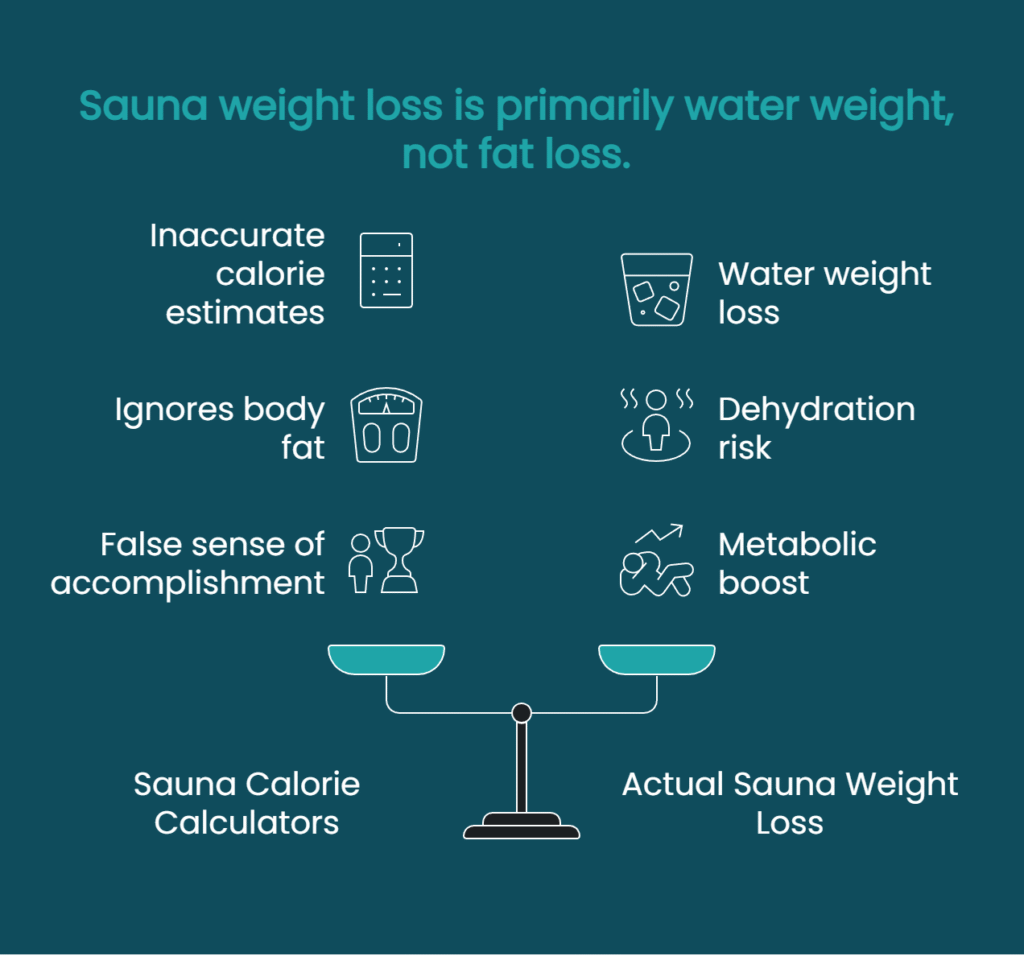
Therefore, how accurate are sauna calorie calculators? Not very. They provide a flawed, often inflated, picture of the true physiological cost and can lead to a false sense of accomplishment regarding real weight loss from sauna use.
The Truth About Weight Loss: Water Weight vs. Real Fat Loss
Many people are drawn to saunas after seeing impressive infrared sauna weight loss before and after photos or hearing about how many pounds can you lose in a sauna. It’s true you may see the number on the scale drop after just one session. But is sauna weight loss just water weight? Overwhelmingly, yes.
The immediate weight loss you experience is almost entirely due to fluid loss through intense sweating. Research backs this up. In one study, the greatest body mass loss (BML) from sauna use was reported in overweight and obese subjects, while the smallest BML was noted in underweight subjects according to a 2014 study. Another study involving four 10-minute sauna sessions found that young, sedentary, overweight male participants lost around 0.65 kilograms (about 1.4 pounds) in body fluids as published in a 2018 scientific journal. This weight will be regained as soon as you rehydrate, which is a crucial step for your health.
This is also where a significant risk lies. People with a high BMI are at a higher risk of dehydration from sauna use and should pay particular attention to replenishing fluids as noted in the same study. The goal should never be rapid dehydration. The sauna fat loss myth is that you can sit and melt belly fat away. The reality is that any actual fat loss is a secondary effect of the metabolic boost and must be supported by diet and exercise.
A Smarter Sauna Protocol: Shifting from Calorie Count to Optimal Response
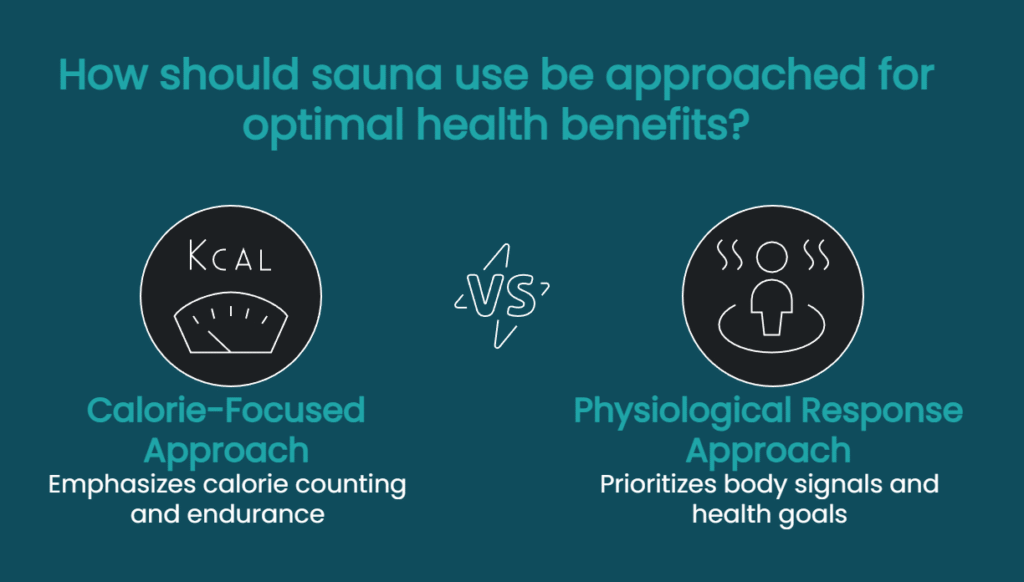
Instead of chasing a high number on a calorie calculator, the focus should be on achieving an optimal physiological response. This means tailoring your sauna use to your personal health data and goals. Here’s how to create a smarter protocol.
- Start Slow: If you are new to using saunas, begin with shorter sessions of 5-10 minutes at a lower temperature and see how your body responds. You can gradually increase the time and heat as you become more accustomed.
- Listen to Your Body: The goal is not endurance. If you feel dizzy, nauseous, or lightheaded, leave the sauna immediately. Don’t push through discomfort.
- Hydrate Intelligently: Drink plenty of water before, during, and after your session. Consider an electrolyte beverage for what to drink after sauna for weight loss support, as you lose important minerals through sweat, not just water.
- Time It Right: Consider using a sauna after a workout to burn more calories through an elevated metabolic state and to aid muscle recovery. The sauna before or after workout for weight loss debate generally favors “after” for these synergistic benefits.
- Consider Contrast Therapy: For an additional metabolic kick, some people explore combining sauna with cold plunge for weight loss. The rapid change in temperature forces your body to work even harder to maintain homeostasis. The benefits of a cold shower after sauna for metabolism can be a more accessible way to achieve a similar effect.
Putting Sauna Calorie Burn Into Proper Context
Ultimately, the role a sauna plays in your health and wellness journey is deeply personal. The question isn’t whether a sauna is “good” or “bad,” but whether it’s right for you and your current state of health.
The Overweight, Sedentary Individual
Needs: To lose weight and improve health from a low fitness baseline, while understanding the risks of cardiovascular strain and dehydration.
Advice: Approach the sauna with caution. Use it as a tool for relaxation and to gently introduce your body to thermal stress. Start with short 5-10 minute sessions at a moderate temperature (around 150-160°F) no more than 1-2 times per week. Your primary focus must be on hydration. The sauna is not a replacement for fundamental diet changes and starting a consistent, gentle exercise routine. Think of it as a supplementary health benefit, not a primary weight loss engine.
The Conditioned Athlete
Needs: To use the sauna for recovery, performance benefits, and as a complementary part of a rigorous training schedule.
Advice: You can safely handle longer and hotter sessions, perhaps 15-20 minutes at 170-190°F, 3-4 times per week. The best time for you is likely after a workout to maximize blood flow for muscle repair. The calorie burn is a secondary benefit. Focus on how the sessions reduce muscle soreness and improve your readiness for the next training session. Combining sauna with cold plunge therapy may also enhance your recovery process.
The Health-Conscious Novice
Needs: Has an average fitness level and BMI and wants to know if a sauna is a safe and effective addition to their wellness routine beyond the myths.
Advice: A home sauna can be an excellent addition to your routine. Start with 10-15 minute sessions 2-3 times per week to see how your body adapts. You are in a great position to reap the general health benefits: improved circulation, stress reduction, and a modest metabolic boost. Pay attention to how you feel. The average calories burned in 15 min sauna for you might be around 150-250, but focus more on the feeling of well-being and relaxation it provides. It’s a tool for consistency in your overall healthy lifestyle.
The conversation about sauna use and calorie expenditure is far more nuanced than a simple number. By understanding that your personal physiology is the true determinant of the outcome, you can move past the misleading calculators and myths. Whether in a home sauna or a hotel sauna, the goal should be to use heat intelligently as a tool to support your overall health, recovery, and well-being, not as a shortcut to weight loss.
When used appropriately, saunas can be a supportive tool for recovery and metabolic health, but they work best alongside nutrition, movement, and consistent lifestyle habits rather than as a standalone solution.
If you’re exploring how sauna use fits into a broader, research-informed wellness approach — including protocols, comparisons, and long-term considerations — you can find a full overview of sauna therapy and evidence-based guidance on the Sauna Health Nut homepage.

Medical Disclaimer: This article provides educational information about infrared sauna safety and is not intended as medical advice. The content should not be used to diagnose, treat, cure, or prevent any medical condition. Individual responses to heat therapy vary based on health status, medications, and underlying conditions. Always consult with a qualified healthcare provider before beginning infrared sauna use, especially if you have cardiovascular disease, are pregnant, take prescription medications, or have any chronic health conditions. The information presented here is for educational purposes only and does not replace professional medical guidance.