
Is sauna good for losing belly fat? The surprising science behind heat stress and your waistline

While a sauna won’t directly melt away belly fat, its real value comes from creating a form of “passive cardio.” By raising heart rate and energy expenditure as your body works to cool itself, sauna use can support metabolic conditions linked to fat loss—especially reductions in harmful visceral fat—when used as part of a broader weight management strategy.
Deconstructing the Scale: Beyond the ‘Water Weight’ Myth
Anyone who has stepped on a scale immediately after a sauna session knows the number is often lower. This immediate drop is almost entirely due to fluid loss through sweat. It’s a temporary effect, and it’s the most common misconception fueling the sauna weight loss myth vs reality debate. You can easily lose a pint or more of water, but this isn’t permanent weight loss from sauna use. As soon as you rehydrate, that weight returns.
However, dismissing the benefits of sauna therapy based on this fact alone is a mistake. The real story isn’t about sweating out fat; you can’t sweat out fat in a sauna. The true benefit lies in the profound physiological stress the heat places on your body. To regulate your core body temperature, your system goes into overdrive. Your heart has to pump faster and harder to move blood to the skin’s surface to cool down. This process requires a significant amount of energy, which means your body is burning calories while you’re sitting still.
The ‘Passive Cardio’ Effect: Burning Fat While Sitting in a Sauna?
Think of it as a workout you do while relaxing. This heat-induced cardiovascular demand is what experts call the “passive cardio” effect. While it’s not a replacement for actual exercise, the physiological response is remarkably similar to that of light to moderate-intensity cardio. Saunas and steam rooms increase your heart rate, which may encourage more calorie burn. For a person who is sedentary, this effect is particularly potent. It forces the cardiovascular system to work, improving circulation and boosting metabolic rate with sauna exposure.
What do 20 minutes in the sauna do for this effect? For many, a 20- to 30-minute session is enough to elevate the heart rate to a zone comparable to a brisk walk. The number of calories burned in a 30-minute sauna session varies by individual body weight and metabolism, but it’s a non-trivial amount of energy expenditure achieved with zero impact on your joints. This makes it a powerful complementary tool for anyone looking to increase their daily energy burn without adding more physical strain.
The Visceral Fat Connection: Targeting the Most Dangerous Fat
The conversation about losing belly fat is really two conversations: one about the pinchable subcutaneous fat under the skin, and another about the more dangerous visceral fat that surrounds your organs. Visceral fat is metabolically active and strongly linked to chronic diseases like type 2 diabetes and heart disease. Visceral fat reduction strategies are a cornerstone of long-term health, and this is where sauna use shows its most promising, scientifically-backed benefits.
The key is understanding how heat stress impacts your body’s internal chemistry. A landmark 2019 study specifically investigated the effect of repeated dry sauna use on physiological parameters and body composition in young, sedentary, and overweight men. The researchers found significant correlations between the sauna-induced physiological changes and improvements in body composition, including visceral fat levels. The study suggests that the metabolic adaptations forced by regular sauna bathing help create an internal environment more conducive to fat loss.
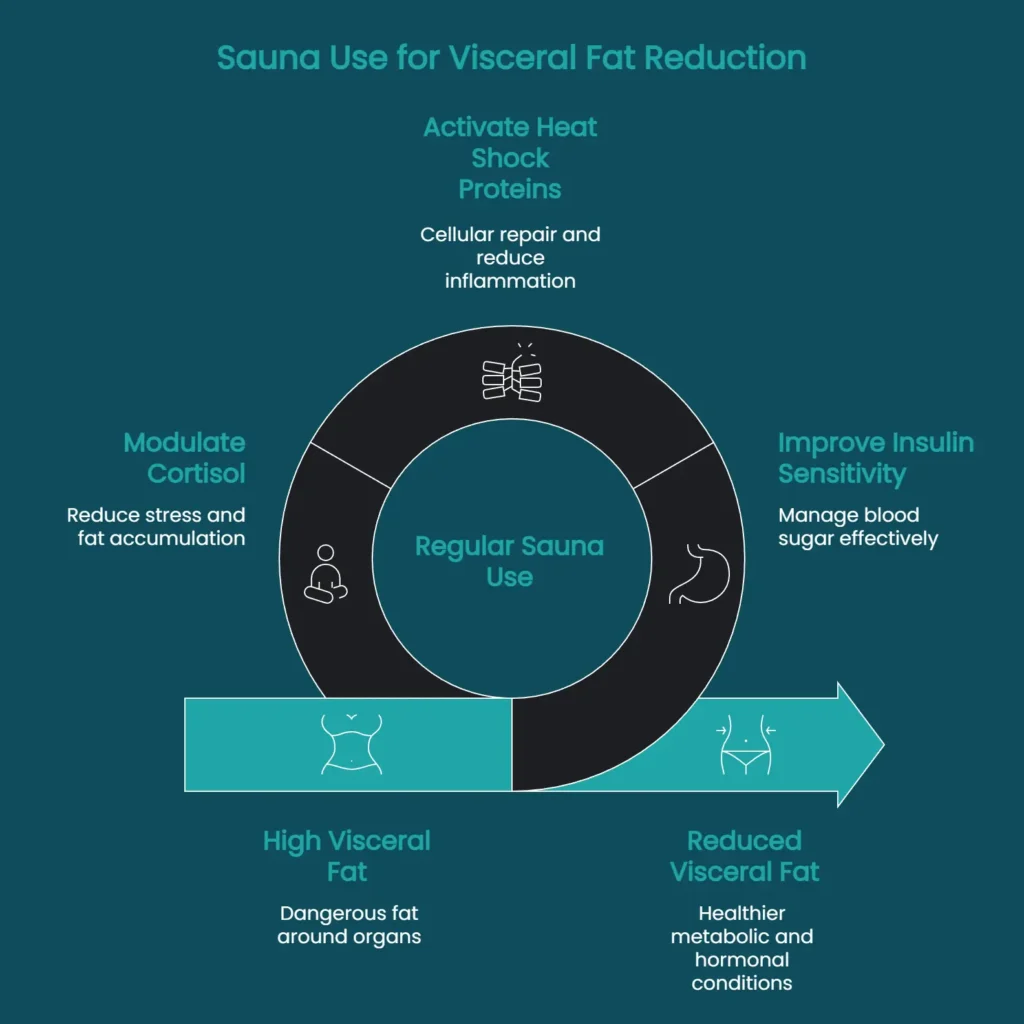
This process is multifaceted. Sauna heat stress can:
- Improve Insulin Sensitivity: Regular sessions may improve sauna for insulin sensitivity, which is crucial for managing blood sugar and preventing the body from storing excess energy as fat, particularly around the midsection. This makes it a potential therapy for metabolic syndrome.
- Activate Heat Shock Proteins (HSPs): Intense heat stimulates the production of heat shock proteins. The relationship between heat shock proteins and metabolism is complex, but they play a role in cellular repair and reducing inflammation, both of which are important for a healthy metabolic function.
- Modulate Cortisol: For some individuals, the relaxing effects of a sauna can lead to sauna and cortisol reduction for belly fat management. Chronic stress and high cortisol levels are a known driver of visceral fat accumulation, so managing them is key.
So, can you lose visceral fat in a sauna? Not directly, but you can certainly support the metabolic and hormonal conditions that allow your body to burn it more effectively when combining sauna with a calorie deficit and exercise.
How to Maximize Fat Loss With Sauna Therapy
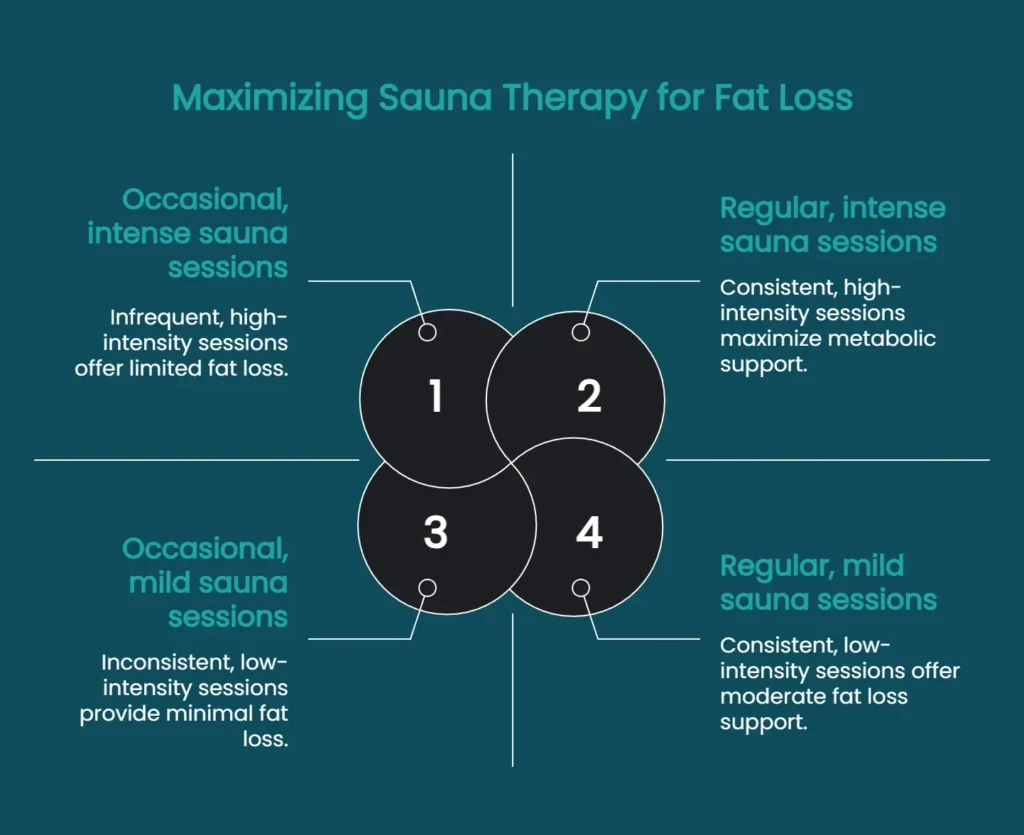
To use a sauna effectively for weight management, you need a strategy. Simply sitting in the heat occasionally won’t move the needle. Here’s how to use a sauna to lose stomach fat as part of a larger plan.
Finding Your Sauna Routine for Weight Management
Consistency is paramount. For general health benefits, many studies, including the famous Finland sauna study weight loss research, point to 3-4 sessions per week. How long should you stay in a sauna for fat loss? Start with 15-20 minutes per session and gradually work your way up as your tolerance improves. Listen to your body and never push yourself to the point of dizziness or nausea. Frequency is more important than duration, so regular, shorter sessions are better than one long, grueling session per week.
Best Type of Sauna for Burning Fat: Infrared vs. Traditional
The debate between infrared sauna vs traditional sauna for fat loss often comes down to personal preference and how the heat is delivered.
- Traditional Dry Sauna: A dry sauna heats the air around you, which in turn heats your body. They operate at higher temperatures (150°F-180°F). Many people enjoy the intense, enveloping heat.
- Infrared Sauna: An infrared sauna uses infrared light to heat your body directly. In an infrared sauna, approximately 80% of the heat directly warms the body, while only about 20% heats the air. This allows them to operate at a lower, more comfortable temperature (120°F-140°F) while still achieving a deep, penetrating heat that can raise the core body temperature effectively. Many users feel that an infrared sauna for belly fat reduction is superior due to this direct heating mechanism.
Ultimately, the best sauna is the one you will use consistently. Both types induce the necessary heat stress to trigger the passive cardio effect.
Pairing Sauna Use with Diet and Exercise
A sauna is an amplifier, not a magic bullet. The real benefits of sauna for body shaping are unlocked when you combine it with proven fat-loss methods.
- Calorie Deficit: You must consume fewer calories than you burn. Using a sauna can increase the “burn” side of the equation, making your deficit easier to maintain.
- Exercise Timing: The question of sauna before or after workout for fat loss is common. A post-workout sauna for fat burning is generally recommended. Your muscles are already warm, and the sauna can help with recovery and may prolong the elevated metabolic state from your workout.
- Hydration: What to do after sauna for weight loss is critical. Rehydrate with water, not sugary sports drinks. Proper hydration supports metabolism and helps with the sauna for detoxification and weight loss process by flushing toxins through the lymphatic system.
A combined approach, such as using a sauna with diet and exercise, is the only path to sustainable results. You could even explore combining intermittent fasting with sauna sessions for potentially synergistic effects on fat metabolism, though you should proceed with caution and professional guidance.
A Critical Warning: The Cardiovascular Strain is Real
While the passive cardio effect is a benefit, it’s also a warning. The heat forces your heart to work significantly harder. This strain is not to be taken lightly. Research indicates that this cardiovascular stress is most intense for individuals who are overweight or have a higher percentage of body fat, as their bodies have to work harder to dissipate heat.
For this reason, it is absolutely essential to consult with a healthcare professional before beginning a sauna routine for weight loss, especially if you have any pre-existing cardiovascular conditions, high blood pressure, or are pregnant. The risks of using sauna for rapid weight loss without medical supervision can be severe. This is not a shortcut; it is a powerful therapeutic tool that must be used responsibly.
Comparing Approaches: Myth vs. Reality
Let’s clearly stack the common beliefs against the scientific reality to help you understand the sauna’s role in losing belly fat.
Direct Fat Loss (The Myth)
This is the belief that heat can literally “melt” fat cells or that you can “sweat out” fat. This is biologically impossible. The weight lost immediately after a session is water, and fat is metabolized through complex chemical processes, not heat application.
Indirect Metabolic Support (The Reality)
This is the scientifically supported mechanism. Sauna use supports fat loss by increasing metabolic rate, improving insulin sensitivity, modulating stress hormones, and placing a calorie-burning demand on the cardiovascular system. It creates an internal environment where your efforts—like diet and exercise—are more effective.
Passive Cardio Effect vs. Active Exercise
While a sauna session can mimic the heart rate of light cardio, it does not replace active exercise. Exercise builds muscle, strengthens bones, and engages large muscle groups in a way that passive heating cannot. The sauna is a supplement to, not a substitute for, an active lifestyle. However, for those unable to perform traditional exercise, it can be a vital tool for cardiovascular conditioning. Consider the impact of combining both: a study on exercising with a sauna suit, which simulates sauna-like heat stress, demonstrated that participants had a 13.8% decrease in body fat, compared to an 8.3% decrease in the exercise-only group.
What This Means for Belly Fat and Long-Term Health
So, does sauna help with a flat stomach or reduce your waist size? It can, but only as part of a holistic approach. The right way to incorporate sauna therapy depends on your individual goals and lifestyle.
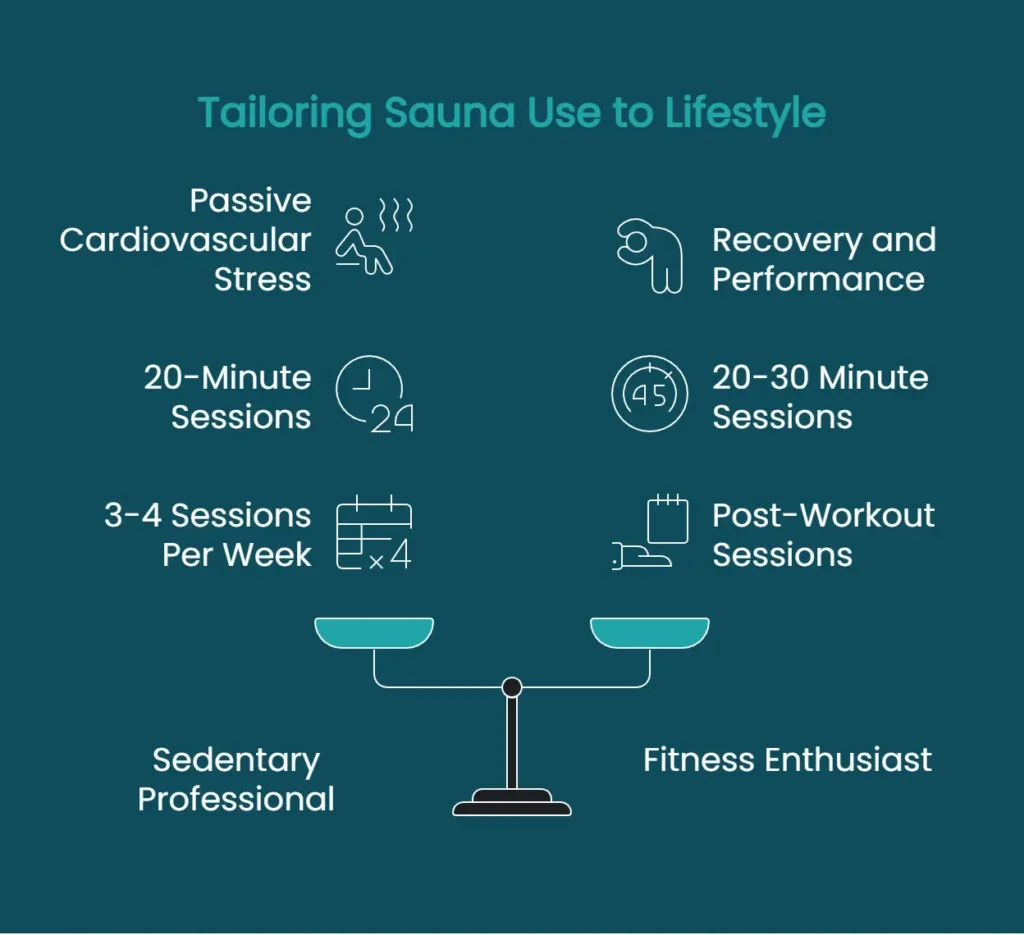
For the Sedentary Professional
Need: A low-impact method to boost metabolism and support weight management goals without strenuous activity.
Advice: For you, a personal sauna for home weight loss could be a game-changer. Starting with 3-4 sessions of 20 minutes per week can introduce a “passive cardio” effect into your routine, helping to increase daily energy expenditure and improve cardiovascular health without the impact of exercise. Focus on consistency and pair it with dietary improvements for the best results.
For the Fitness Enthusiast
Need: A recovery and performance-enhancing tool to complement an existing workout routine and potentially accelerate fat loss.
Advice: Use the sauna as a powerful recovery tool after your workouts. A 20-30 minute post-workout sauna can help soothe sore muscles, reduce inflammation, and may prolong the metabolic benefits of your exercise session. The potential for saunas to increase human growth hormone release could also aid in recovery and body composition changes. You are in the best position to leverage the combined power of active exercise and passive heat stress.
For the Wellness Seeker
Need: A holistic health practice to improve cardiovascular function, reduce stress, and support overall metabolic health.
Advice: Your focus is on the broad spectrum of health benefits. Embrace sauna bathing as a ritual for stress reduction and cardiovascular wellness. The positive effects on cortisol levels, blood circulation, and insulin sensitivity align perfectly with a holistic health model. The support for weight management and visceral fat reduction becomes a welcome side effect of a practice aimed at improving your overall well-being.
Ultimately, the decision to incorporate sauna therapy into your life is a personal one, but it should be based on a clear understanding of its role. It is not a quick fix for losing belly fat, but a powerful, science-backed tool that supports the very physiological processes your body needs to become healthier, leaner, and more resilient.
When viewed through a holistic lens, sauna bathing becomes part of a broader wellness framework focused on resilience, recovery, and long-term health. For readers interested in exploring the full scope of evidence-based sauna practices, protocols, and research-backed guidance, you can find a comprehensive overview of sauna wellness on Sauna Health.
Medical Disclaimer: This article provides educational information about infrared sauna safety and is not intended as medical advice. The content should not be used to diagnose, treat, cure, or prevent any medical condition. Individual responses to heat therapy vary based on health status, medications, and underlying conditions. Always consult with a qualified healthcare provider before beginning infrared sauna use, especially if you have cardiovascular disease, are pregnant, take prescription medications, or have any chronic health conditions. The information presented here is for educational purposes only and does not replace professional medical guidance.