
Are infrared saunas safe? risks, contraindications, and guidelines

Short answer: For most healthy individuals, the immediate physical dangers of using an infrared sauna are low and manageable, primarily relating to dehydration and overheating. The more significant risk is a ‘misplaced reliance’ on unproven health claims, which can lead people to substitute sauna use for scientifically validated medical treatments for serious conditions.
Key Takeaways
- Acute physical risks are manageable for healthy adults: dehydration, overheating, and electrolyte imbalance
- The greater risk is relying on unproven claims rather than evidence-based medical treatment
- Contraindications exist for cardiovascular conditions, pregnancy, medications, and implanted devices
- Safety depends on individual health status, session duration, hydration, and medical supervision when needed
Understanding the Immediate Physical Risks
When people ask if using an infrared sauna is “safe,” they are typically thinking about immediate, acute harm. Will I overheat? Could it affect my heart? These are valid concerns with any form of heat therapy. The good news is that for most people, the body is well-equipped to handle the radiant heat of an infrared sauna. In fact, research shows that sauna bathing is generally well tolerated by most healthy adults and children according to a comprehensive review of scientific literature.
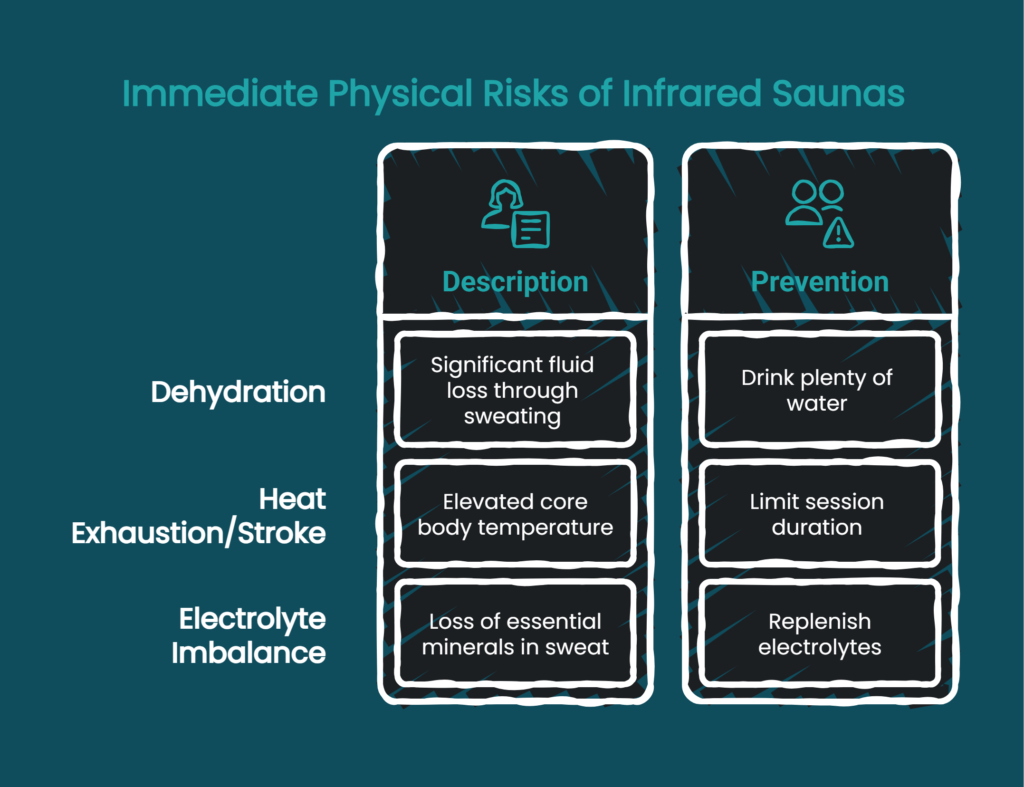
The primary physical risks are straightforward and preventable. They include:
- Dehydration: This is the most common issue. Your body cools itself by sweating, and you can lose a significant amount of fluid during a session. Failure to replenish these fluids can lead to dizziness, headache, and fatigue.
- Heat Exhaustion or Heat Stroke: While less common in the controlled temperature of a modern infrared sauna compared to a traditional Finnish sauna, staying in too long can elevate your core body temperature to dangerous levels. Symptoms like nausea, lightheadedness, and vertigo are warning signs to end your session immediately.
- Electrolyte Imbalance: Sweat contains more than just water; it also contains essential minerals like sodium and potassium. Excessive sweating without proper replenishment can disrupt your body’s electrolyte balance, affecting everything from muscle function to heart rhythm.
Proper pre-sauna preparation and post-sauna care are crucial. Hydration is non-negotiable. Drinking plenty of water before, during, and after your session is the single most important step you can take to mitigate these risks. For most healthy people, using an infrared sauna safely is a matter of listening to your body and practicing common sense—starting with shorter session duration and moderate temperature settings.
For detailed information on how infrared wavelengths create these physiological responses at the tissue level, see our technical guide to infrared heat mechanisms and cellular effects.
The Evidence-Hype Gap: Separating Marketing from Medical Science
The most profound safety concern with infrared saunas is not an acute burn risk, but a chronic risk to your long-term health strategy. This risk stems from the vast gap between the marketing claims promoted by some manufacturers and the actual body of scientific evidence. When users believe a sauna is a curative therapy for specific diseases, they may delay or abandon proven medical treatments, and this is where the real danger lies.
The Myth of ‘Detoxification’
Perhaps the most pervasive claim is that saunas provide a deep “detoxification” by sweating out heavy metals and toxins. This idea sounds intuitive, but it misrepresents human physiology. The body’s primary filtration system involves two highly sophisticated organs: the liver and the kidneys. These organs process substances and excrete them through urine and feces.
While sweat does contain trace amounts of various compounds, it is not a significant pathway for eliminating harmful toxins. In fact, the claim that sweating provides a ‘deep detox’ is untrue; sweat releases an insignificant amount of substances like heavy metals, and relying on it can be counterproductive as it may reduce urine production, hindering the liver and kidneys’ primary role in toxin excretion as explained by medical experts. True detoxification is a complex metabolic process, not something that can be achieved simply by inducing sweat.
Weight Loss and ‘Passive Cardio’
Another popular claim is weight loss. While you will certainly weigh less after a sauna session, this is almost exclusively due to water loss from sweating. This weight is quickly regained once you rehydrate.
Some proponents also claim infrared saunas provide “passive cardio” because the heat increases your heart rate. While your heart does work harder to pump blood to the skin to dissipate heat, this physiological stress is not equivalent to the benefits of active exercise, which builds muscle, improves insulin sensitivity, and strengthens the cardiovascular system in a more comprehensive way.
While manufacturers claim numerous health benefits, the published evidence to substantiate them is limited; there is only weak evidence from single studies supporting infrared sauna use for chronic fatigue syndrome or obesity according to a 2009 review of clinical trials.
The Non-Negotiable Contraindications
While generally safe for the healthy, there are specific medical conditions and circumstances where using an infrared sauna poses a significant health risk. These contraindications are not suggestions; they are firm guidelines that should be followed to avoid serious complications. If you have any of the following conditions, you must consult your medical doctor or a specialist like a cardiologist before considering sauna use.
Critical Contraindications for Infrared Sauna Use:
Unstable Cardiovascular Conditions: This is the most critical category. The heat from a sauna places stress on the cardiovascular system by increasing heart rate and affecting blood pressure. For this reason, people with uncontrolled high blood pressure and heart disease should check with their doctors before using a sauna as advised by experts at Harvard Medical School. This includes conditions like unstable angina, recent heart attack, severe aortic stenosis, and certain arrhythmias. Individuals with hypotension (low blood pressure) may also experience dizziness or fainting.
Pregnancy: Elevating the core body temperature during pregnancy, especially in the first trimester, has been linked to neural tube defects. It is widely recommended that pregnant women avoid using saunas, steam rooms, and hot tubs.
Use of Certain Medications: Many prescription medications can be impacted by heat stress and dehydration. Diuretics, for example, increase fluid loss and can lead to severe dehydration when combined with sweating. Some blood pressure medication can also be affected, potentially leading to dangerous drops in pressure. Always consult your healthcare provider or pharmacist.
Medical Implants: Individuals with medical implants, such as a pacemaker, defibrillator, or metal or silicone implants, should consult their physician. Heat can potentially interfere with the function of electronic devices or affect the tissues surrounding implants.
Acute Illness or Fever: If your body is already fighting an infection and has a fever, using a sauna can raise your core body temperature to dangerously high levels. Avoid sauna use when you are sick.
Neurological and Heat-Sensitive Conditions: People with conditions that impair their ability to sweat or sense heat, such as severe multiple sclerosis or neuropathy, are at higher risk of overheating without realizing it.
Alcohol Consumption: Drinking alcohol before or during a sauna session is extremely dangerous. Alcohol is a diuretic, which accelerates dehydration, and it impairs judgment, making it harder to recognize the warning signs of heat exhaustion.

Medical Perspective: Evidence-Based Benefits vs Marketing Claims
So, what do doctors say about infrared saunas? Most medical professionals, including organizations like the Mayo Clinic, view them through a lens of risk versus benefit. For healthy individuals, they see a low-risk activity with potential benefits for relaxation and temporary pain relief. For those with underlying health conditions, they urge extreme caution and mandatory medical advice.
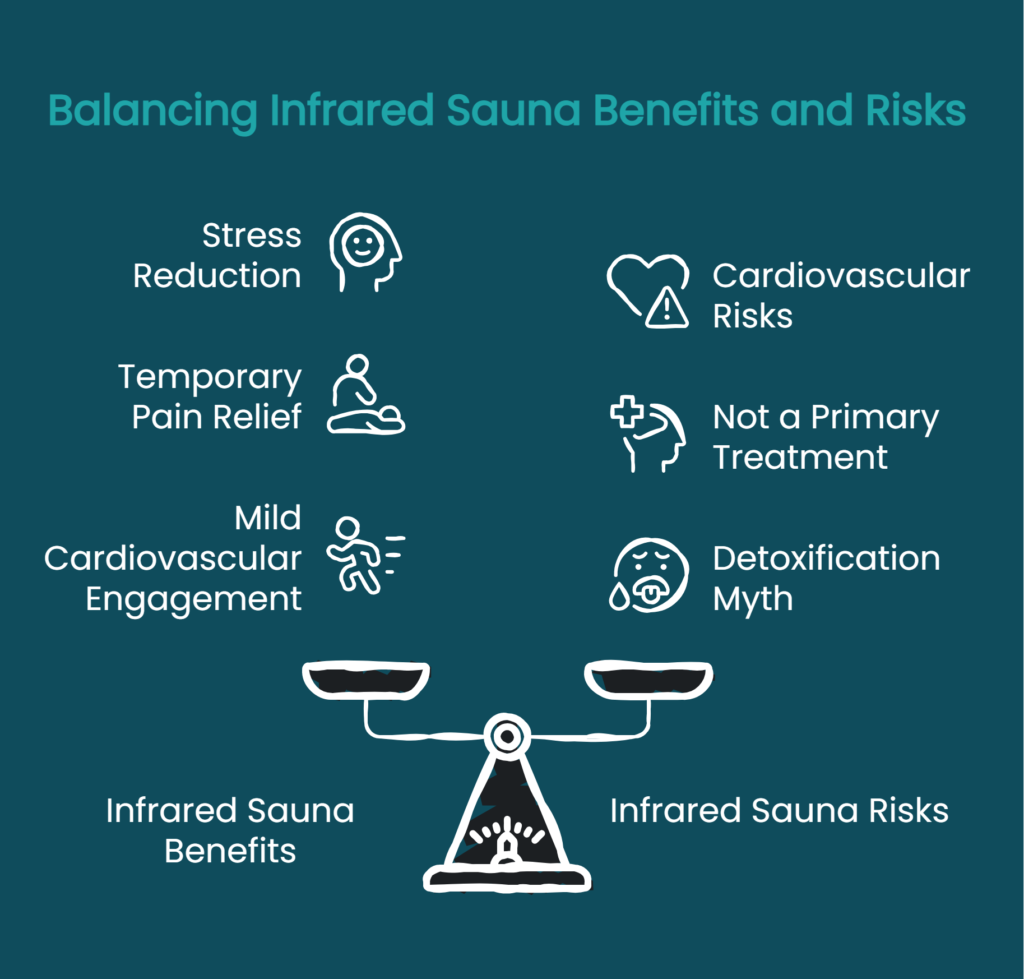
The most constructive way to approach sauna use is to position it as a complementary tool for wellness, not a curative therapy. Think of it as an adjunct to a healthy lifestyle, much like stretching or meditation. Its strengths lie in:
Stress Reduction: The gentle, radiant heat can be profoundly relaxing, helping to lower cortisol levels and promote a sense of well-being. This is a significant and valid benefit in our high-stress world.
Temporary Pain Relief: The infrared wavelengths penetrate tissues, which may help increase circulation and temporarily soothe muscle soreness and joint pain from conditions like arthritis. The effect is similar to using a high-tech heating pad on your entire body.
Mild Cardiovascular Engagement: While not a replacement for exercise, the heat-induced increase in heart rate can provide a light challenge to the cardiovascular system, akin to a moderate walk. In fact, emerging research is exploring how heat therapy, including saunas, is being explored as a potential adjunctive management strategy for cardiovascular diseases, particularly for patients with peripheral arterial disease (PAD) who face barriers to traditional exercise according to a 2025 study in Frontiers in Cardiovascular Medicine. This highlights a potential future use, but one that would be conducted under strict clinical supervision.
The physiological responses to infrared heat—including vasodilation, increased heart rate, and thermoregulation—occur through specific tissue-level mechanisms. Understanding how infrared light penetrates tissue and triggers cellular responses helps clarify both the benefits and the risks associated with sauna use.
Safety Considerations: Key Decision Factors
When deciding if an infrared sauna is right for you, it’s crucial to move past the marketing hype and focus on what the science actually supports.
Effectiveness for Specific Health Conditions
The effectiveness of an infrared sauna depends entirely on the goal. For relaxation, stress reduction, and temporary relief from minor muscle and joint pain, it may be effective. For treating chronic diseases like heart disease, managing cholesterol, or achieving significant weight loss, it should not be considered a primary or standalone treatment. Its role is supportive at best, and should only be undertaken after getting medical advice from a qualified healthcare provider.
Validity of Marketing Claims
The claim that you can “sweat out toxins” is not supported by scientific evidence. The body’s detoxification systems are the liver and kidneys. Using a sauna for this purpose is based on a fundamental misunderstanding of human physiology. A healthy diet, proper hydration, and limiting exposure to harmful substances are the only scientifically validated ways to support your body’s natural detoxification processes.
Presence of Contraindications
This is the most critical factor. For healthy adults and even children, the acute risks are low and manageable with proper hydration and session limits. However, for individuals with certain pre-existing conditions—especially related to the cardiovascular system, pregnancy, or those on specific medications—the risks are significant. For these groups, a direct consult with a doctor is not just recommended, it is essential for safety.
When to Avoid Infrared Sauna Use or Seek Medical Guidance
While infrared saunas are generally considered well-tolerated for healthy adults, certain individuals may need to avoid use or consult a healthcare professional before starting regular sessions. This is particularly relevant for people with cardiovascular conditions, heat sensitivity, autonomic nervous system disorders, or those taking medications that affect blood pressure, hydration, or thermoregulation.
Infrared sauna exposure increases core temperature and alters circulation, which may not be appropriate in cases of uncontrolled hypertension, recent cardiac events, or conditions involving impaired heat dissipation. Pregnant individuals and those with implanted electronic medical devices should also seek medical guidance before use.
As with any heat-based intervention, safety depends on individual health status, session duration, temperature, and hydration practices. Medical supervision is recommended when uncertainty exists.
Populations Requiring Medical Consultation:
- Individuals with cardiovascular disease (past or present)
- Those taking medications affecting blood pressure, circulation, or fluid balance
- Pregnant women or those planning pregnancy
- People with implanted medical devices (pacemakers, defibrillators)
- Anyone with chronic conditions affecting thermoregulation (MS, neuropathy)
- Individuals recovering from recent surgery or acute illness
- Those with a history of heat intolerance or fainting
Key Safety Takeaways
To summarize the critical safety considerations:
- Infrared saunas expose the body to lower ambient heat than traditional saunas, but still raise core temperature and trigger thermoregulatory responses
- Safety depends on session length, hydration practices, and individual health status—not just the type of sauna
- Evidence supports general tolerability in healthy adults, with necessary caution for specific populations outlined above
- The primary risk is misplaced reliance on unproven health claims rather than immediate physical danger for most users
- Medical consultation is essential for anyone with cardiovascular conditions, pregnancy, medications, or heat-sensitive disorders
Infrared sauna use should be approached as a complementary wellness practice for relaxation and temporary symptom relief, not as a medical treatment for chronic conditions. When used appropriately by healthy individuals with proper hydration and session management, the acute physical risks remain low and manageable.
Medical Disclaimer: This article provides educational information about infrared sauna safety and is not intended as medical advice. The content should not be used to diagnose, treat, cure, or prevent any medical condition. Individual responses to heat therapy vary based on health status, medications, and underlying conditions. Always consult with a qualified healthcare provider before beginning infrared sauna use, especially if you have cardiovascular disease, are pregnant, take prescription medications, or have any chronic health conditions. The information presented here is for educational purposes only and does not replace professional medical guidance.